“Guild Wars 2 gives new players freedom, but its community provides the context. Here’s how guilds, raids and meta events changed my experience.”
In my previous article about Guild Wars 2, I wrote that after all those years of quitting somewhere around level 30, I was no longer thinking about when I would stop playing. Instead, I was thinking about what I would discover next.
In the time between these two articles, I finished the core game, completed the Heart of Thorns expansion, spent time in Fractals of the Mists, started collecting Ascended gear, and tried to understand dozens of systems that, until then, had mostly been names I occasionally saw in chat or somewhere online.
In other words, I had finally reached the part of MMORPGs that we traditionally call the endgame. Except unlike World of Warcraft, Guild Wars 2 doesn’t tell you what to do once you hit level 80. It gives you everything. And that is exactly where my problems began.
Guild Wars 2 has a very unusual relationship with new players. ArenaNet has built an enormous world, filled it with more than a decade’s worth of content, and then places raids, fractals, strikes, meta events, elite specializations, achievements, collections, Legendary gear, Masteries, mounts, World vs. World, crafting, and hundreds of different currencies in front of you.
If you are coming from another MMORPG, this can feel like one of Guild Wars 2’s biggest weaknesses. Or maybe it isn’t.
Because it was precisely within that space the game leaves for you to figure things out that I discovered something else: how important the right guild and the right community are to the Guild Wars 2 experience.
Level 80 means you’ve basically finished the introduction
In many MMORPGs, reaching the maximum level has a very clear meaning. That is when the endgame begins.
From that point onward, the game usually places a fairly understandable progression path in front of you. Run these dungeons. Get this gear. Increase your item level. Go into a raid. Wait for the next reset. Repeat.
Guild Wars 2 does almost the opposite at level 80. Suddenly, countless doors are open.
You can continue the story. You can play through the expansions. You can start running Fractals of the Mists. You can look for a raid group. You can enter World vs. World. You can start working on an elite specialization. You can hunt for Mastery Points. You can complete maps. You can gather materials. You can begin a collection. You can explore Legendary crafting. You can chase achievements. You can follow world bosses and participate in massive meta events.
Guild Wars 2 doesn’t lock you behind an enormous vertical gear progression system.
Instead, it asks something else from you: Learn how its world works.
At one point, I was researching Guild Wars 2 more than I was playing it
I think almost every new player who gets seriously invested in Guild Wars 2 eventually reaches the stage where they need a second monitor, a browser, and a million Guild Wars 2 tabs open at the same time.
And that created an even bigger problem for me. Every answer I found seemed to create three new questions I didn’t understand. So I would open another three tabs. And then another three.
Guild Wars 2 is such a huge game that after twenty minutes you can easily end up with ten websites open, a 38-minute YouTube guide playing on another screen, and Guild Wars 2 sitting in the background while you try to remember what you originally wanted to accomplish.
I’m not saying this as criticism of the community resources. Quite the opposite. Guild Wars 2 has an incredible amount of documentation created by its own players. The problem was that I was trying to reconstruct more than ten years of MMORPG development by myself.
The game gave me freedom. The internet gave me information. But I was missing context.
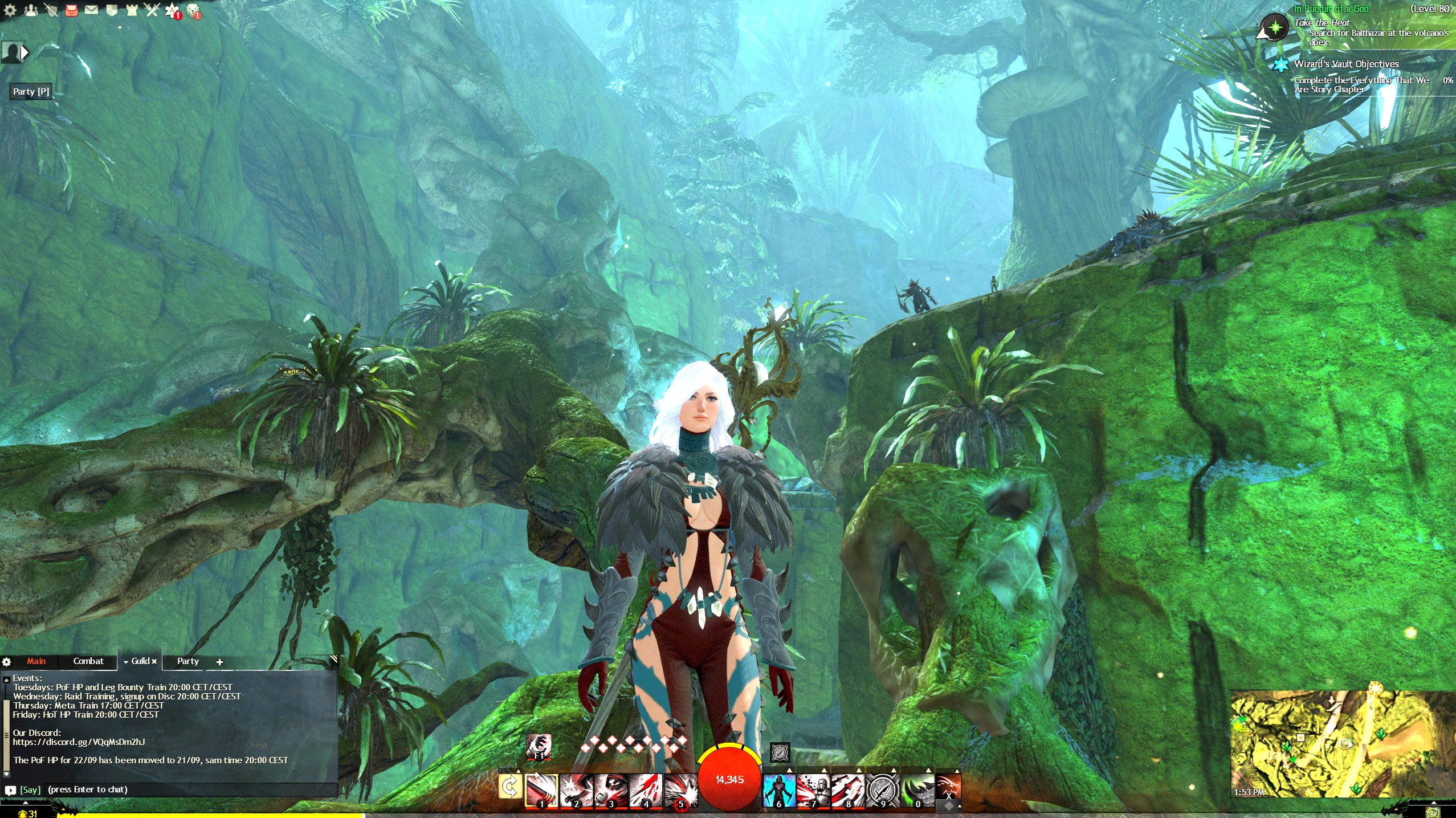
Heart of Thorns showed me how deep Guild Wars 2 really is
Core Guild Wars 2 taught me to stop expecting World of Warcraft. Heart of Thorns expansion taught me that I still didn’t really understand Guild Wars 2.
Heart of Maguuma was the first time I truly felt how much ArenaNet enjoys building content around the idea that players should learn how to navigate and understand a world rather than simply move through it.
The maps no longer felt like flat spaces where I was supposed to move from one icon to another.
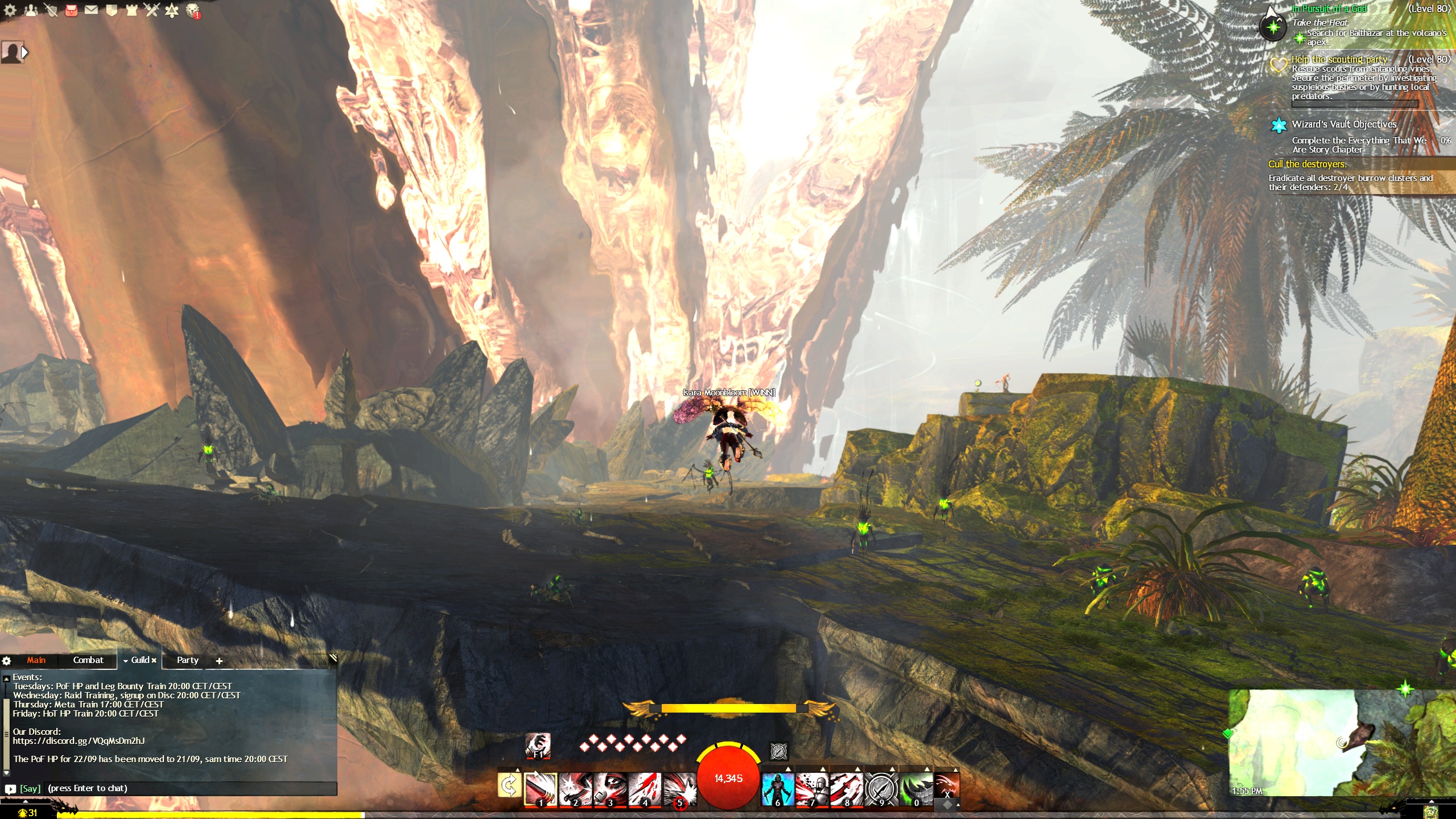
Verticality, gliding, different Masteries, meta events, and the entire structure of the zones completely changed how I approached exploration.
That was also when I started collecting Mastery Points. At first, I viewed the Mastery system almost as a replacement for traditional leveling after level 80. Fill the XP bar. Spend points. Unlock something new. But the more I played, the clearer it became that this was a completely different kind of progression.
I wasn’t simply becoming stronger. My account was becoming more capable. I was unlocking new ways to move through the world. New interactions. New possibilities.
Something I had looked at yesterday while wondering, “How am I supposed to get there?” could suddenly become accessible today because I had unlocked a new Mastery ability.
In that sense, Guild Wars 2 creates a fantastic feeling of progression without needing to throw your current equipment into the trash every few months.
But there is one problem. The game often explains what something is. It is much less effective at explaining why it should matter to you right now.
The Waypoint Inn changed the way I play Guild Wars 2
The very meaning of MMORPG is Massively Multiplayer Online Role-Playing Game. The entire concept is built around players sharing a world, playing together, and completing parts of the game together.
As someone who spent a long time playing World of Warcraft, I would argue that community has gradually become a less important part of the WoW experience.
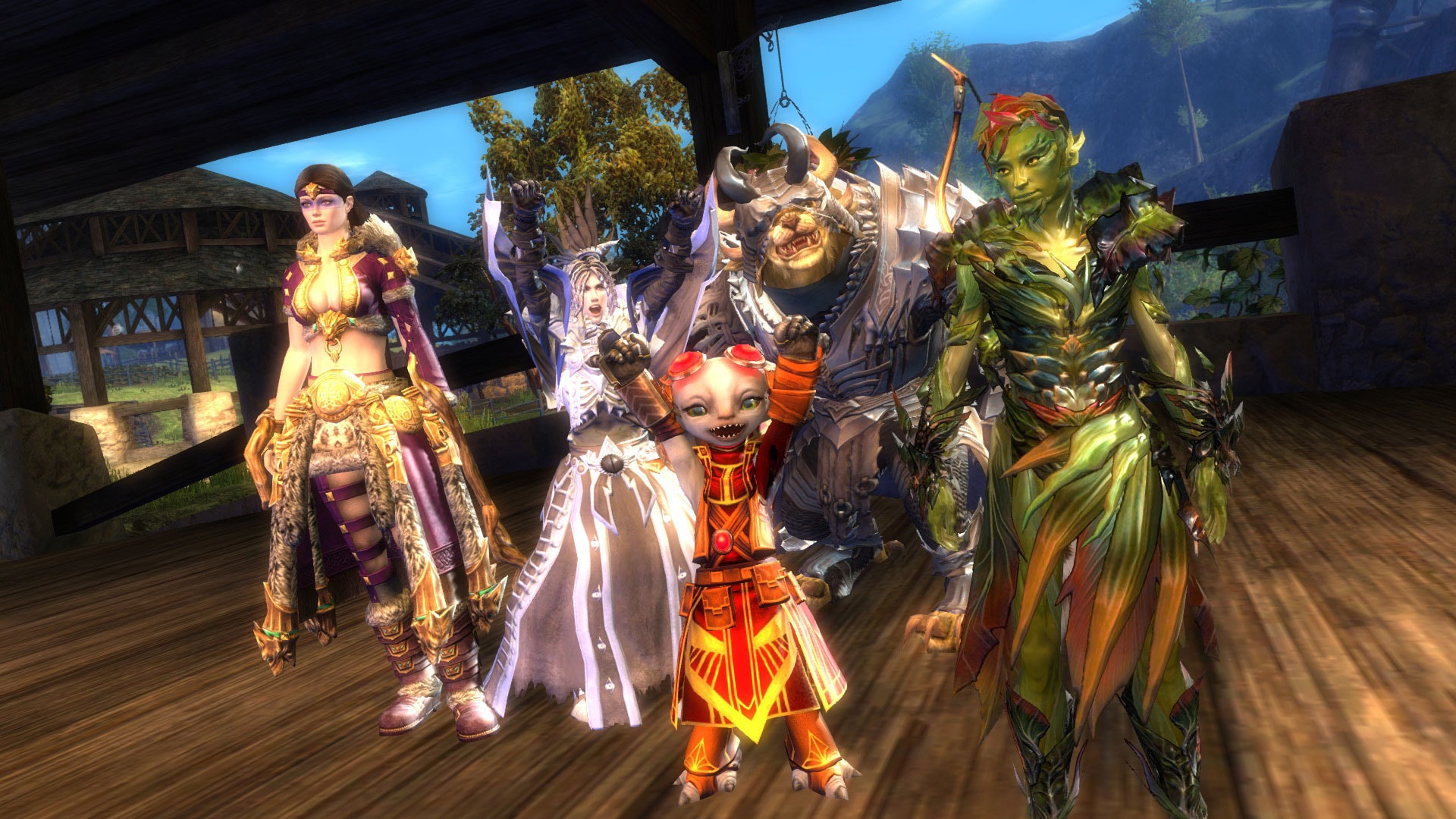
In Guild Wars 2, however, community is everything. Guild Wars 2 itself didn’t technically change when I joined The Waypoint Inn. No new maps suddenly appeared. Nobody added new quests to my account. I didn’t receive better gear simply because I had joined a guild.
But suddenly, I started understanding things that had been sitting in front of me the entire time. A huge part of that came from Yun, the guild’s leader and commander, and from the people who regularly organize different activities for the community. Raid training. Meta farms. Hero Point trains.
On paper, these are simply activities. In practice, for a new player like me, they became windows into entirely new parts of Guild Wars 2. And that is when I realized what I had been missing. I didn’t need another YouTube guide. I needed someone to say: “Come with us.”
Your first raid can teach you more than ten guides
If you have never raided in Guild Wars 2, the entire experience can seem fairly intimidating from the outside.
People talk about boons, DPS, healing, mechanics, builds, and encounters as if they are speaking a language everyone understands except you.
Coming from World of Warcraft, raids themselves were obviously not a foreign concept to me.
But a Guild Wars 2 raid is not the same thing as a World of Warcraft raid simply because both involve bosses and an organized group of players. Combat works differently. Roles work differently. Boons are enormously important. Positioning, dodging, and understanding encounters all have a different rhythm.
And there is a huge difference between watching a video explaining those things and actually standing inside a raid while a commander explains what is happening.
Raid training completely changes the experience because it removes one of the biggest obstacles facing a new player: The fear that you are going to ruin the run for everyone else.
When you know beforehand that the group is there to learn, making a mistake stops feeling like a disaster.
A Hero Point train showed me how much a good Commander can change an entire map
A Hero Point train is a completely different experience, but it might demonstrate the value of the community even better. Technically, I could have opened the map and searched for Hero Challenges myself. I could have used the Wiki. I could have tried to reach every location individually. And eventually, I probably would have succeeded.
But then you join an organized train. There is a commander tag on the map. Dozens of players start moving together. Someone knows the route. They know where to stop. They know where everyone needs to teleport. They know which Waypoints you should have unlocked. They know the correct order for completing the challenges.
Suddenly, a map you experienced yesterday as a confusing space becomes a shared adventure. That is the kind of experience the term MMORPG was created to describe. “Massively multiplayer” isn’t simply about how many people a server can display on your screen.
The point is that the presence of other players changes the way you experience the world.
Guild Wars 2 does this exceptionally well. But only once you actually connect with those people.
Meta Farms finally helped me understand why veterans keep returning to load maps
In my first article, I wrote about how surprised I was that old Guild Wars 2 zones didn’t feel completely dead.
Now I understand why much better. Meta events aren’t simply another activity to complete. They are one of the main engines that make Tyria feel like a living multiplayer world. What I find particularly interesting is how content that is many years old can suddenly stop feeling old.
That is probably one of the greatest strengths of Guild Wars 2’s horizontal progression. ArenaNet doesn’t need to turn every previous part of the game into a museum simply because a new expansion has been released.
Of course, not every event is equally popular and not every map is equally active. But the simple fact that a veteran player can still have a reason to return to content that I am discovering for the first time creates something incredibly valuable for a new player.
You don’t feel like you are exploring the ruins of an old game alone. There are people standing beside you who have known that world for years.
The Guild Wars 2 Wiki can explain the game. The Community can teach you how to play it.
I think this is the most important thing I have learned since writing my first article. Information and understanding are not the same thing. I can read exactly what a certain Mastery does. I can look up the location of every Hero Point. I can find an optimal build. I can learn the theory behind an encounter. I can discover the most efficient way to obtain a particular item.
But none of that necessarily means I understand where that thing fits into my own journey through the game. A good community can do something no Wiki ever can. It knows the player.
If you tell someone that you have just finished the core game, they won’t explain ten different systems you might need six months from now. And I think I am only now beginning to understand why so many Guild Wars 2 veterans describe the community as one of the game’s greatest strengths.
ArenaNet might rely too much on players teaching each other
Still, I don’t want to turn this into a romanticization of poor onboarding. Guild Wars 2 has a genuine problem when it comes to explaining its enormous amount of content to new players.
The existence of an excellent Wiki is not an excuse for the in-game user experience to remain confusing.
The existence of a fantastic community does not mean that community members should be responsible for explaining every fundamental system. A game that has existed for more than a decade will naturally accumulate layers of complexity. But that makes good onboarding more important, not less.
A new player shouldn’t feel as though they need to spend half of their evening on Google simply to figure out what they should do during the other half.
ArenaNet could definitely do a better job of connecting its systems, presenting endgame opportunities more clearly, and giving players a more understandable overview of everything available after level 80.
At the same time, however, I think Guild Wars 2 would lose something important if every part of the experience were reduced to a giant arrow pointing toward the next objective.
Because part of its appeal is exactly that sense of discovery.
It’s just that discovery becomes much better when you don’t have to do it alone.
They say he never sleeps! He lives in the blur between code and screen. While the world rushed through levels, he transcribed the cries of fallen bosses and the whispers of the machine. After 30 years in the digital trenches, his ink is binary. He isn't here to review games—he's here to archive the chronicle of our digital existence.
Great article!
I'm always happy, when new players don't give up so quickly, because the game can be very intimidating, due to the vast amount of possibilities it gives you. Glad you found a home at the Waypoint Inn. After all, it's an MMO and not a single player game. And the more people you get to know, the more fun it is!
Hey Adi (Chroniclus in game ^^), Yun here!
Thank you so much for writing such an amazing and thoughtful article! Reading through your journey and experiences really resonated with me. Hearing how players discover their place in the game and seeing the impact our community has had on your journey makes every raid training, HP train, and meta run so worth it!
The Guild Wars 2 community is truly something special, and you captured that feeling perfectly in your writing. It’s an absolute pleasure having you with us at The Waypoint Inn, and I can't wait to share many more adventures with you in Tyria!


Discussion(3)