
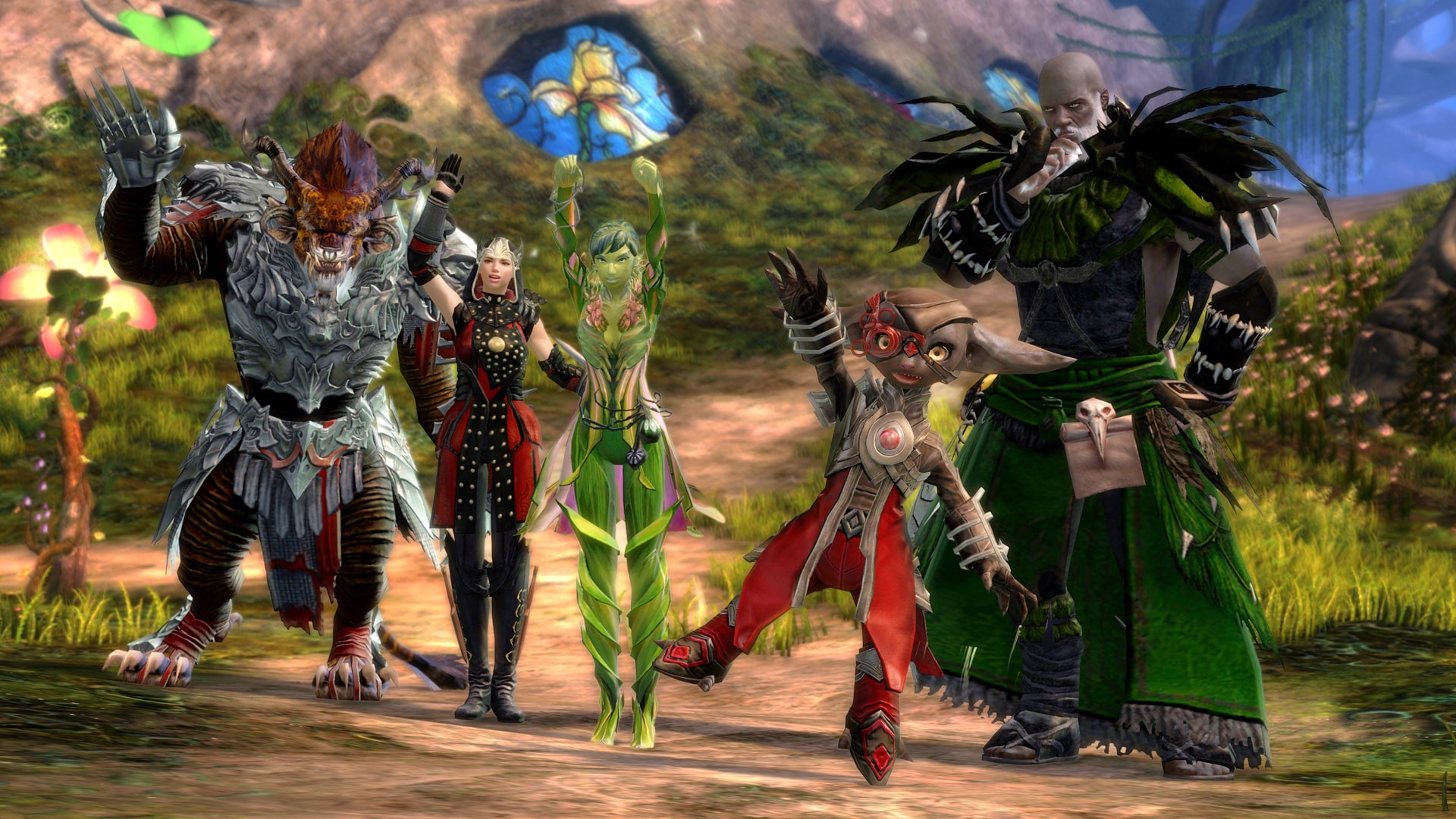
As a longtime World of Warcraft player, I spent years trying to fall in love with Guild Wars 2. Every attempt ended somewhere around level 30. Now I have finally given it a real chance — and realized the problem was never the game, but the way I approached it.
There are games we do not reject because they are bad. We reject them because they do not open up to us immediately, because we expect the wrong things from them, or because we enter them with habits we built somewhere else over many years. For me, Guild Wars 2 was exactly that kind of game for a long time.
As someone who has spent a huge part of his MMORPG life in World of Warcraft, I have always had a very specific kind of problem with games that do not follow the familiar WoW logic. World of Warcraft, whether we want to admit it or not, became the measuring stick for the entire genre for many of us. Not only because of its quality, nostalgia, or historical importance, but because it taught us what an MMO is “supposed” to look like.
You enter a zone. You pick up quests. You go to the marked area. You kill ten enemies. You collect five items. You return to the NPC. You get a piece of gear. You unlock a dungeon. You reach max level. The real grind begins. Item level. Mythic+. Raids. Seasons. Resets. A new patch. A new meta. A new goal.
That rhythm gets into your blood. After enough years, you no longer experience it as a system. You experience it as the natural form of an MMORPG. And then, when a game appears that does not follow that pattern, the first reaction is not always curiosity. Sometimes, the first reaction is resistance.
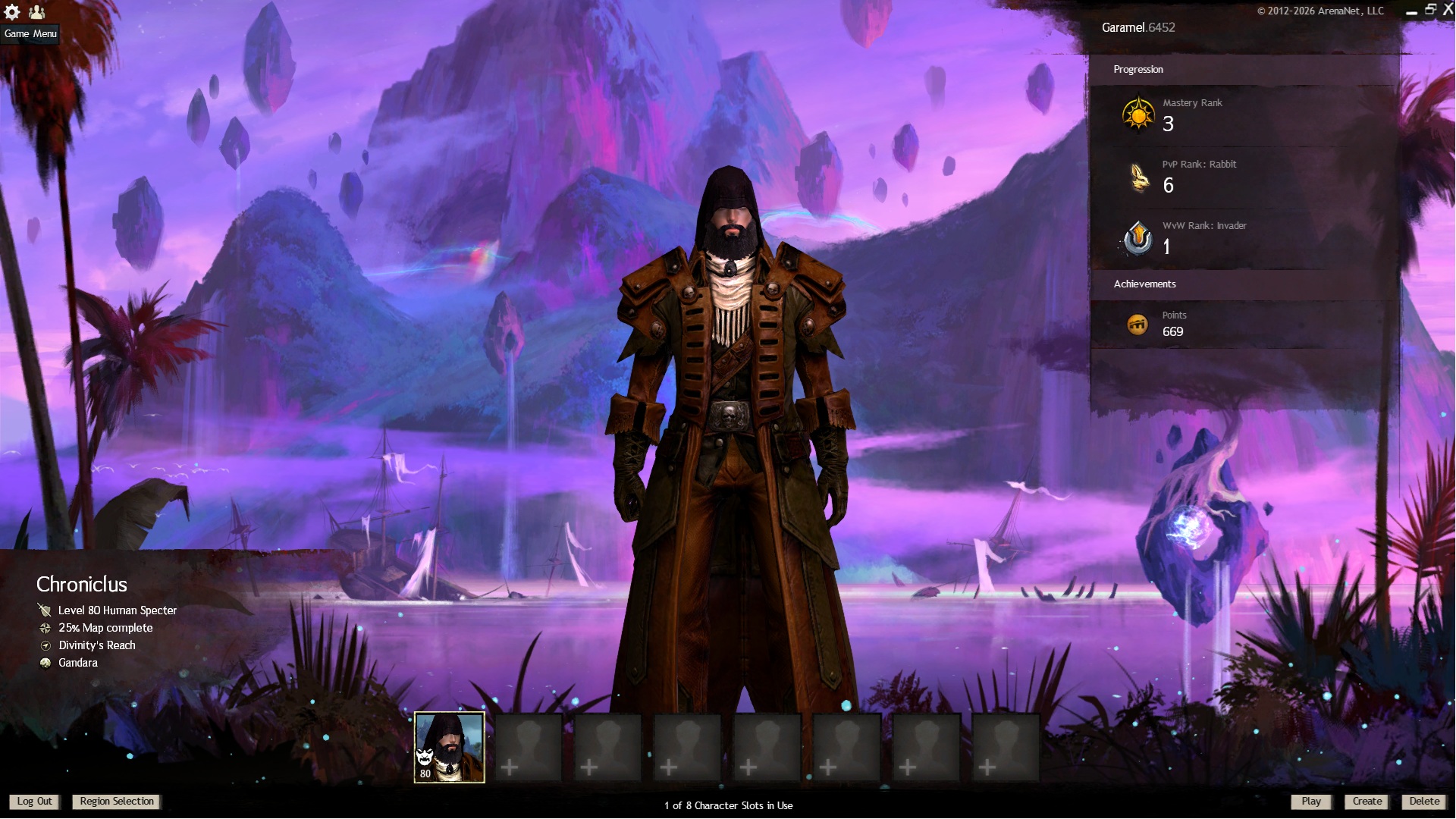
That is why I kept Guild Wars 2 at a distance for years. I knew it was respected. I knew it had a loyal community. I knew people talked about its world, mounts, combat, events, and the way it respects players’ time. But every attempt I made ended in a very similar way. I created a character, entered the world, played for a while, reached somewhere around level 30, and slowly lost interest.
The game did not push me away with one big problem. There was never a moment where I said, “This is bad.” It was more subtle than that. I simply did not feel the same sense of direction. I did not know what the “main” thing was. I did not have that familiar feeling of linear progression. I could not tell when the “real game” began. I missed WoW’s pace, WoW’s structure, and WoW’s feeling that the game always had a firm hand on my shoulder, constantly pushing me toward the next objective.
Today, after finally deciding to play Guild Wars 2 with an open mind, I can clearly see how wrong I was. The problem was not that Guild Wars 2 failed to be World of Warcraft. The problem was that I kept trying to play it like World of Warcraft.
And Guild Wars 2 becomes most interesting precisely when you stop looking for WoW inside it.
Guild Wars 3 sparked my interest, but Guild Wars 2 is the reason I stayed
The announcement of Guild Wars 3 arrived at the perfect moment for the franchise. Not only because fans have been waiting for years to find out what comes next for Tyria, but because the entire MMORPG genre is in a place where it desperately needs new energy.
There are not many major MMO games left. There are even fewer that are genuinely trying to move the genre forward. Most modern online games have borrowed live-service elements from MMOs, but very few have kept the most important thing: the feeling of a world. The feeling that you are entering a place that exists even when you are not there. The feeling of community. The feeling that adventure is not just a checklist of daily tasks.
That is why Guild Wars 3 immediately became an important topic. ArenaNet is not talking about it merely as another sequel, but as a modern evolution of the MMORPG. That is a big statement, maybe even a dangerously big one, but that is exactly why it is interesting. The genre does not need another game that simply repeats old formulas with newer graphics. It needs developers willing to ask what an MMO should feel like now, for players who love online worlds but no longer have unlimited time to live inside one game.
Still, what interests me most right now is not only the question of what Guild Wars 3 will be. The more interesting question is why anyone should play Guild Wars 2 right now. At first glance, someone could easily say: “Why would I jump into an older MMO when the new one has already been announced?” But with Guild Wars, that logic does not work so simply.
Guild Wars 2 is not a game you should skip while waiting for the third entry. On the contrary, right now it feels like the best possible preparation for understanding why this franchise is special. If Guild Wars 3 is going to build the future of the series, Guild Wars 2 is currently the most important way to understand its philosophy.
You do not have to play Guild Wars 2 because you are afraid of missing the lore. You do not have to play it as homework before Guild Wars 3. You should play it because it is still one of the most unique MMORPGs on the market. And maybe, like me, you just need to give it a chance in the right way.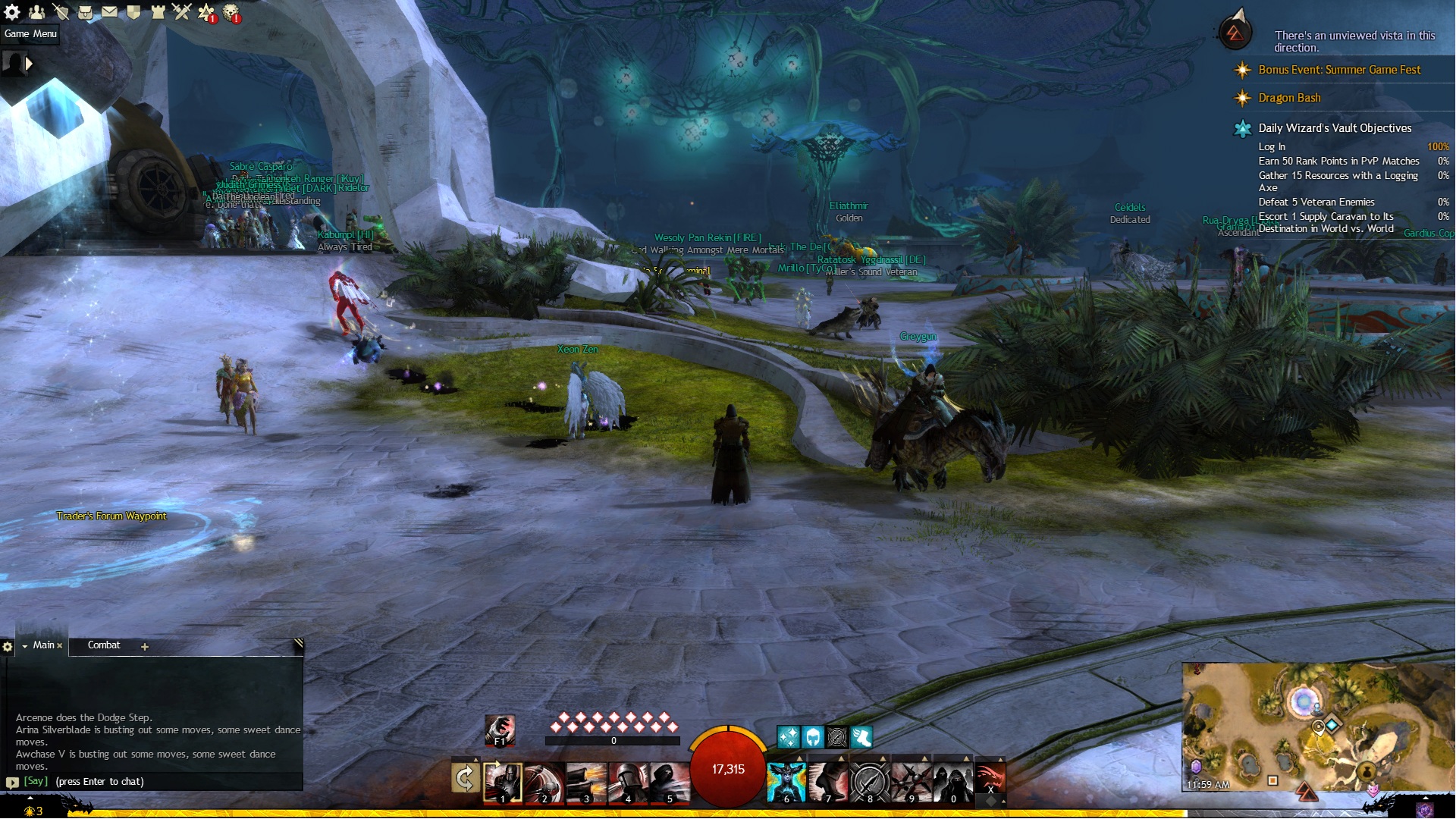
First lesson: Guild Wars 2 does not want you to rush through its world
World of Warcraft taught me for years that MMORPG progression means moving forward. Faster leveling, better gear, higher item level, stronger dungeons, harder raids, bigger numbers, higher rankings. Guild Wars 2, on the other hand, quickly taught me that progression does not always have to mean climbing the same vertical ladder.
In Guild Wars 2, you do not constantly feel like you are standing on a treadmill. That may be the strangest, but also the most refreshing part of the game. The world is not just the space between quest givers and endgame. The world is the game.
That sounds like a phrase, but once you actually start playing, it becomes clear what it means. In a traditional MMO, you often enter a zone and immediately treat the map like a task list. Where are the quests? What is the optimal order? How do I finish this region as quickly as possible and move on?
In Guild Wars 2, you often enter a zone and something is already happening. Players are running toward an event. An NPC needs help. Enemies are attacking a village. An event appears on the map. Someone in chat calls out a world boss. While you are heading toward one objective, another pulls you away. Then a third. Then you realize you have spent an hour in the game without doing anything you originally planned.
And that is not wasted time. That is the point.
Guild Wars 2 is a game that constantly tries to pull you out of the habit of playing only for the reward at the end. It wants to bring you back to the act of playing itself: moving through a zone, taking part in events, cooperating spontaneously with other players, exploring maps, discovering small stories, and entering a world without feeling that every minute has to be optimized. For someone coming from World of Warcraft, that can be a shock. Not because it is bad, but because it is different.
Second lesson: new players in Guild Wars 2 are not as late as they think
One of the biggest fears when entering any long-running MMO is the feeling that you are too late. Guild Wars 2 launched in 2012, which means it carries a massive amount of content behind it: expansions, systems, stories, currencies, builds, collections, mounts, masteries, and terms a new player does not understand. When you open the game for the first time, especially if you look at forums, YouTube guides, or conversations between veterans, it is very easy to feel like you are boarding a train that left the station a long time ago.
But in practice, Guild Wars 2 is much kinder to new players than it appears from the outside. The reason is its more horizontal approach to progression. In many MMO games, old content quickly becomes nothing more than a stepping stone toward the new. You enter, fly through old zones, skip old systems, buy a boost, or follow the fastest route to the current patch, because the “real game” only happens at the top.
Guild Wars 2 does not work quite like that. Yes, there is a max level. Yes, there are expansions. Yes, there is endgame. But the game does not treat all earlier content as trash to be stepped over. Maps remain relevant. World bosses are still played. Meta events gather players. Collections, achievements, mounts, mastery systems, and skins give old content a reason to live.
As a new player, that changes the feeling of entry. You do not constantly feel like you have to rush to the end in order to “catch up” with everyone else. You can play more slowly. You can learn your profession. You can explore. You can make mistakes. You can enjoy the world without the pressure of understanding everything immediately.
That is huge, especially today, when so many games demand our attention as if we do not have work, family, responsibilities, and a life outside the screen. In that sense, Guild Wars 2 felt almost unusually civilized to me. It is a game that does not constantly scream: “Log in every day or you will miss something.” Of course, there are daily and weekly systems. Of course, there is an economy and grind if you want them. But the basic feeling is not punishment. The basic feeling is freedom.
And that is rare.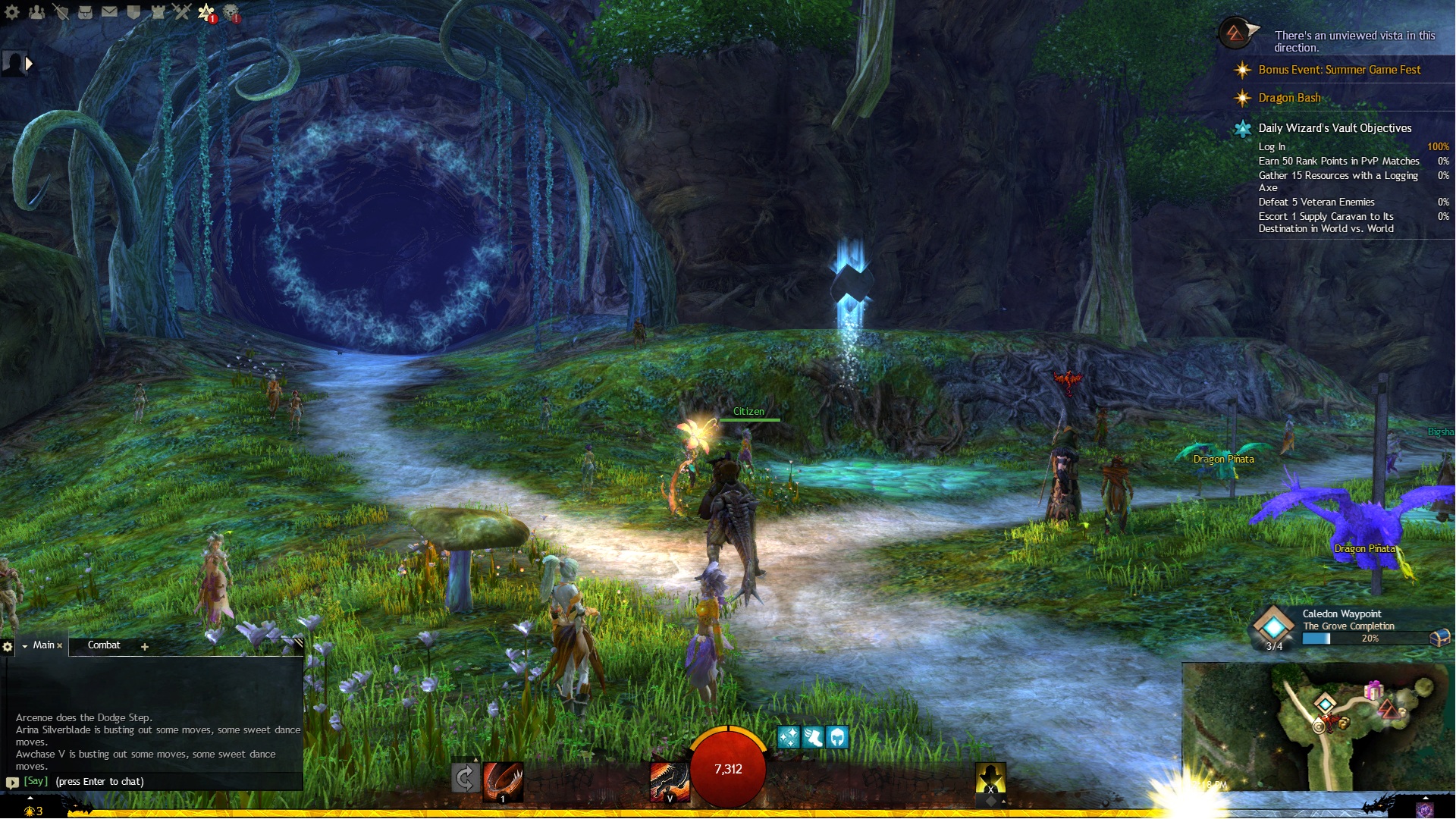
Third lesson: Guild Wars 2 is confusing because it gives you too much freedom too early
I have to be honest: Guild Wars 2 is not a perfect game for new players. Its greatest strength is also one of its biggest problems — freedom.
The game does not always guide you clearly enough. It does not explain every system as well as a modern game perhaps should. After years of expansions and updates, Guild Wars 2 can feel like a city that grew organically, piece by piece, without every entrance being redesigned for new visitors.
A new player can easily feel overwhelmed. Your inventory fills up quickly. You receive materials you do not understand. You unlock currencies whose purpose is unclear. You see players on mounts who look like they are playing an entirely different game. You hear terms like fractals, strikes, raids, World vs. World, Living World, masteries, legendary crafting, elite specializations, and meta events, and you have no idea which of them should matter to you now, which later, and which maybe never.
That is a real issue. But what I learned is that you do not have to understand Guild Wars 2 completely right away. In fact, maybe you should not even try.
The first few dozen hours are best played almost old-school. Create a character. Choose a race that interests you. Pick a profession that appeals to you, not the one currently labeled “best.” Step into the world. Follow your personal story. Explore maps. Try different weapons. Join events. Do not treat every system as an obligation.
That may be the most important advice I can give a new player: do not try to swallow all of Guild Wars 2 at once. The game is too big for that. Let it open up gradually.
How I finally found my footing
For me, the turning point came when I stopped asking, “What am I supposed to do now?” and started asking, “What feels interesting right now?” That sounds simple, but as a WoW player, it took me time to flip that switch in my head.
In World of Warcraft, I am used to the game always having a clear answer to what comes next. If I am leveling, I know where I am going. If I am at max level, I know which system I am pushing. If I am playing a season, I know the goal. Even when I dislike the design, the structure is clear.
In Guild Wars 2, I initially felt like I was constantly missing something, as if there was a “correct” way to play that I had not discovered yet. Then I realized that a big part of the magic is that there is not just one correct way.
One day, you can focus on the story. The next, you can work on map completion. Another day, you can simply participate in events. Then you can spend time experimenting with your profession and swapping weapons. You can spend an hour in a major city looking at other players’ outfits, because fashion in Guild Wars 2 is practically an endgame of its own. Or you can jump into PvP or World vs. World and realize there is an entirely different layer of the game waiting beneath the surface.
What pulled me in the most was the feeling that the game always had some small hook on the horizon. It is not always a huge cinematic moment. It is not always an epic boss. Sometimes it is just a vista at the top of a cliff. Sometimes it is an event that starts by accident while you are passing through. Sometimes it is a group of players who gather spontaneously and finish something together without saying a word. Sometimes it is simply the feeling of moving through a world that was not designed only as a corridor toward the next reward.
And that kept me playing.
What attracted me the most
The first thing that truly attracted me was the dynamism of the world. Guild Wars 2 has a very particular sense of life. Not because every zone is full of players at every moment, but because the world feels like it has a rhythm. Dynamic events may be a familiar concept today, but Guild Wars 2 still uses them in a way that feels natural. You do not always have to accept a quest. You do not always have to speak to an NPC. Sometimes you simply find yourself in a situation and decide to help.
That changes the psychology of play. Instead of treating the world as a list of instructions, you begin to treat it as a place. That is one of the biggest differences between Guild Wars 2 and many other MMOs. It does not always ask you to follow the path. Sometimes it rewards you for noticing that there is something happening off the path.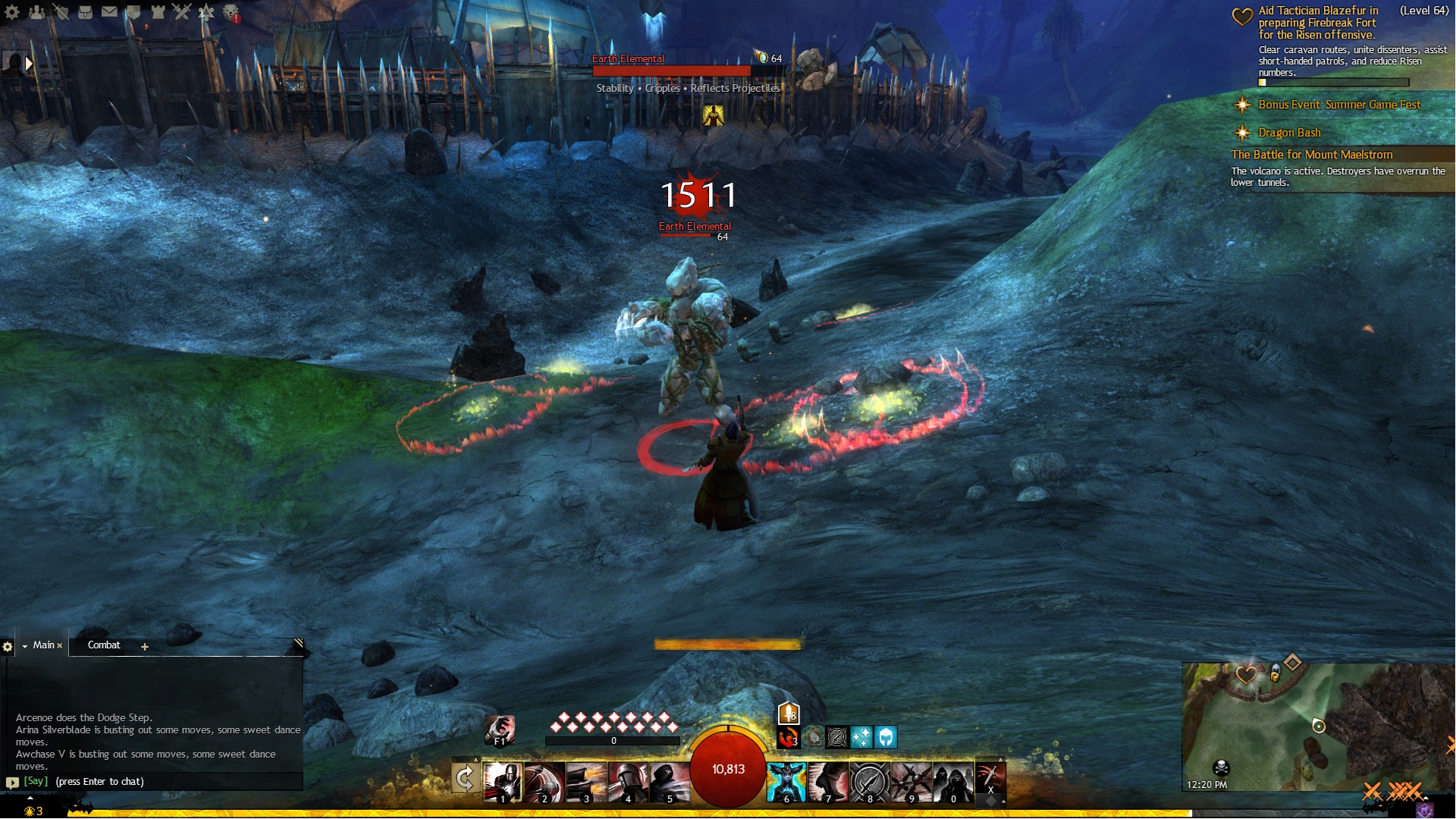
The second thing was combat. At first, it felt strange to me. It did not feel like WoW. It was not a pure action game either. But over time, I started appreciating how important movement is. Dodge is not decoration. Positioning matters. Weapons change the way a profession breathes. The same character can have a different rhythm depending on weapon choice, build, and specialization.
The third thing was the mount system. Guild Wars 2 mounts are not just a faster way to travel. They are tools for exploration. Each mount has its own identity, purpose, and feel. In many games, a mount is a cosmetic object with speed attached. In Guild Wars 2, mounts are almost a gameplay system of their own. You understand that very quickly when you see veterans moving through the world. They are not just traveling faster. They are moving differently.
The fourth thing was the absence of a subscription fee. That may sound practical, but for me it is also psychological. An MMO with a monthly subscription often creates the feeling that you have to play because you are paying for time. Guild Wars 2 does not apply that pressure. You buy expansions if you want to, play when you want, and return when you want. In an era where so many games constantly demand money, time, and attention, that is a major advantage.
The fifth thing was the community. Of course, every online game has good and bad people. But Guild Wars 2 has a reputation for having one of the more approachable MMO communities, and my experience so far largely matches that. The game’s design often encourages cooperation without much conflict. When you participate in an event, other players are not obstacles to your progress. More often, they are help. That feeling matters.
Guild Wars 2 compared to World of Warcraft
This comparison is inevitable, but it needs to be made carefully. Guild Wars 2 is not a “better WoW.” Nor is WoW a “better Guild Wars 2.” They are two games that understand the MMORPG differently.
World of Warcraft is a master of structure. It knows how to create a strong seasonal goal, how to organize endgame, how to guide players through clear activities, and how to build spectacle around dungeons and raids. WoW is still the king when it comes to the feeling of large-scale PvE competition, raid progression, and a clearly defined endgame path.
But that structure has a cost. WoW can often feel like a game where everything you do is tied to the current season. When the season ends, a large part of your effort loses value. Gear changes. The meta changes. Numbers reset. The game constantly pulls you back into a new cycle of climbing. For some players, that is perfect. For others, it becomes exhausting.
Guild Wars 2 is different. It focuses less on vertical climbing and more on breadth. Instead of constantly chasing a bigger number, you are often chasing new possibilities: a mount, a skin, a mastery, a build, a specialization, a collection, a map, an achievement, a piece of legendary equipment, a new way to move, or a new way to play.
WoW often asks: “How strong is your character right now?” Guild Wars 2 more often asks: “What does your account know, own, and enable you to do?”
That is a huge difference. In WoW, you often feel like part of a clearly directed adventure. In Guild Wars 2, you more often feel like an explorer choosing your own pace. WoW has a better sense of traditional MMO authority. Guild Wars 2 has a better sense of free wandering. WoW can be more spectacular. Guild Wars 2 can be more relaxed. WoW guides the player better. Guild Wars 2 rewards curiosity better.
WoW is often a game of destination. Guild Wars 2 is often a game of the journey.
And that is exactly why I think WoW players should not enter Guild Wars 2 looking for a replacement. That is the wrong approach. It is much better to enter with the question: “What can this game show me that WoW is not trying to?” Once I started thinking that way, Guild Wars 2 became ten times more interesting.
Why the first 30 levels do not tell the whole story
I now understand that my earlier attempts were unfair. Quitting Guild Wars 2 around level 30 is like leaving a huge city after only seeing the outskirts. Technically, you were there, but you did not understand what the place really was.
The first 30 levels of Guild Wars 2 can feel strange. The game is still introducing basic systems. You do not yet have a full sense of your profession. You do not have elite specializations. You do not have mounts, unless you unlock them through expansions. You do not yet understand the structure of the world. You do not have the context for why players love certain maps, events, or activities.
If you expect the game to grab you in the same way as WoW during that period, you may end up leaving. But Guild Wars 2 is not a game that always sells itself best in the first few hours. Its strength comes from accumulation. The more you understand the world, the more you see how the systems connect. The more possibilities you unlock, the more you enjoy movement. The more you take part in events, the more you understand why players love its open world.
That does not mean we should ignore the weaknesses of the beginning. The new player experience could be better. The game could explain more clearly what matters, what does not, and in what order it makes sense to approach content. But if you give it time, Guild Wars 2 begins to reveal a depth that you only glimpse at the start.
And that is part of the reason I now want to make this series of articles. I do not want to write from the perspective of a veteran who knows everything. I want to write from the perspective of a WoW player who is finally beginning to understand why something different is worth paying attention to.

Discussion(0)