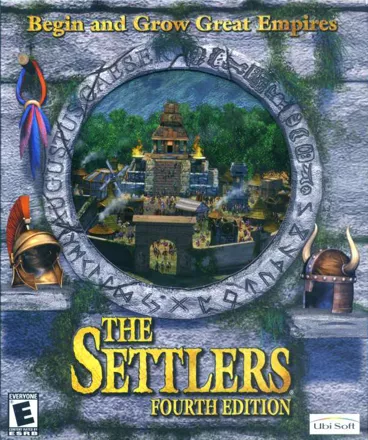
The Settlers: Fourth Edition
by Blue Byte Software·published by Blue Byte Software, Ubi Soft Entertainment, Acer TWP
Reader score
7.4/ 10
28 votes
Where to get it
Community
Trailer
Gallery
23Screenshots
Key art
About
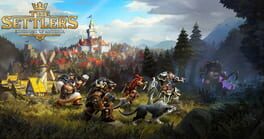
The Settlers IV is the 4th real-time strategy game in The Settlers series, building upon its predecessor with some graphical improvements, new buildings and features. You now can zoom in and out without steps and the game supports resolutions up to 1280x1024. Also there are enhanced multiplayer features and the game supports built-in voice chat, so Roger Wilco is not needed anymore.
The world the settlers live in is threatened by Morbus who wants to turn the land into a wasteland with the help of his Dark Tribe. There are 3 normal short campaigns where the player controls either the Romans, the Vikings or the Mayans. In a much longer campaign you switch between the three races to combat the threat of the Dark Tribe. The tribe sometimes abducts setters and puts them to work on their fungus farms. To defeat them you have to destroy their fungus farms that maintain a toxic barrier around their dark fortress where they also build their troops. After the fortress is destroyed you win the game. You can turn the wasteland back to greenland with your gardeners and priest's.
During the game you have to build a working economy usually starting with a stonemason and woodcutter. The logs from the woodcutter are reworked in a sawmill to make planks. Most buildings require planks and stone to build. Your settlers also need food which can be acquired by a fisherman, hunter, a farm producing animals that can be slaughtered at the butcher or building a grain farm that requires a windmill to make flour. The flour is used by a baker to make bread. To build an army and additional tools you need iron, coal and sulfur. A suitable location for a mine can be found by a geologist on a mountain range. With the iron and coal the blacksmith and tool smith can make weapons and tools after the iron ore from the mines has been reworked in bars by the smelter. To produce stronger fighting units, you need gold which can also be mined and melted into bars. The number of settlers can be increased by building more houses. You can only build in your own territory. To expand your territory you can train pioneers or build towers. Conquered enemy towers also gain additional territory. With ports and harbors a shipping line can be maintained between different islands. In addition to warriors there are also priests that can use spells like summoning raw materials, tools, weapons and supports your armies in battle with spells that turn enemy troops in your own troops. These spells need mana that can be produced after building a certain chain of buildings.
Ways to play
Modes
Perspective
Players
8 online
Editions
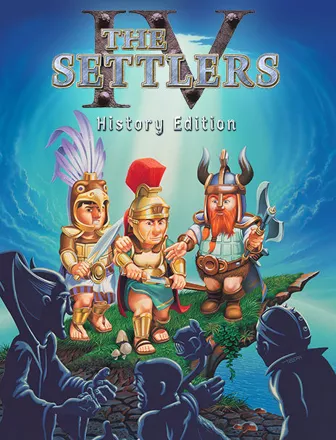
Expansions

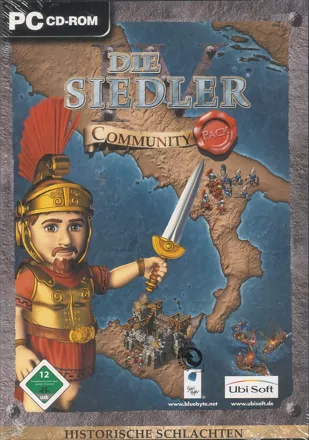
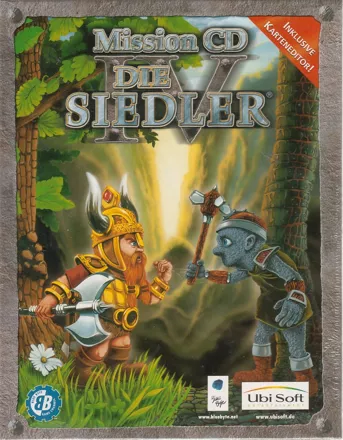
Included in
Game details
Business Model
Commercial
Supported Systems/Models
x86 (32-bit)
Drivers/APIs Supported
DirectDraw
Media Type
CD-ROM, DVD-ROM
Input Devices Supported/Optional
Keyboard, Mouse
Multiplayer Options
Internet, LAN
Multiplayer Game Modes
Co-Op, Free-for-all / One-on-one (VS)
Number of Offline Players
1 Player
Number of Online Players
2-8 Players
System requirements
Min. CPU Class Required
Intel Pentium MMX
Min. OS Class Required
Windows 95b (OSR2 / 2.1)
Min. RAM Required
64 MB
Min. DirectX Version Required
DirectX 7.0
Min. CD-ROM Drive Speed Required
4X (600 KB/s)
Min. Video Memory Required
4 MB
Video Modes Supported
Full screen
Video Resolutions Supported
800×600, 1280×1024
Box art
Also known as
Die Siedler IV — German title
Gongren Wuyu IV — Simplified Chinese title
The Settlers IV — European title
Reader ratings
Rate this game
Nobody has rated this yet.
Facts
Developer
Publisher
Blue Byte Software, Ubi Soft Entertainment, Acer TWP, 1C Company, MediaKite, ak tronic
Released
2001
Series
The SettlersPlatforms
Age ratings
Standing
Top 16% by visits