
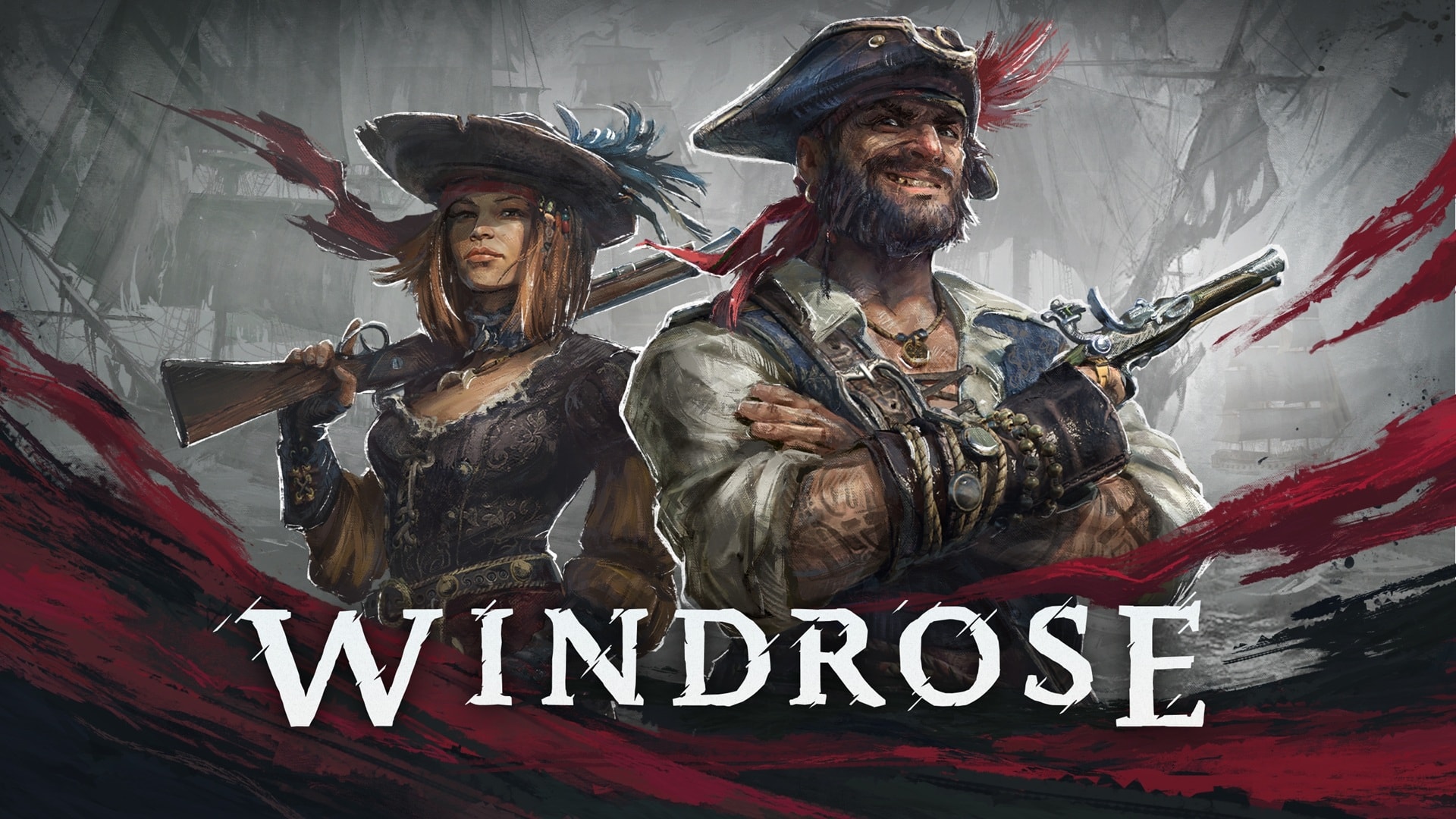

I have to admit that I have a rather complicated relationship with pirate-themed survival games. It is not a genre I automatically approach with excitement, no matter how appealing the idea may sound on paper. The sea, ships, islands, exploration, cannons, sword fighting, hidden treasures, and your own crew — all of that seems like the perfect recipe for a game in which you can easily lose dozens of hours. But in practice, this subgenre very often ends up buried under excessive grinding, tedious survival systems, and mechanics that exhaust more than they entertain.
Fortunately, after spending several weeks with Windrose, I can say that I am glad I gave it a chance. This is a survival game that understands very well what a large part of the audience actually wants from the genre: depth, exploration, progression, and a sense of adventure, but without the unnecessary grind that often exists only to artificially extend the game’s runtime. Windrose does not try to be the hardest survival title on the market. Instead, it tries to find a healthy balance between challenge and accessibility, and for the most part, it succeeds.
Windrose follows the philosophy that survival systems should enrich the player’s experience rather than punish them, placing that idea within a pirate world that can be explored solo or with friends — which, realistically, is probably the best way to experience everything the game has to offer.
One of the best examples of this design philosophy is the hunger system. In many survival games, hunger is a constant threat that slowly drains your health, forces you to constantly think about food supplies, and often interrupts the flow of gameplay. Windrose handles this more intelligently. If you are hungry, the game does not punish you with direct death or constant health loss. Instead, your maximum health pool is reduced. When you eat, you not only increase the amount of health available to you, but also receive useful buffs that help you in combat and exploration.
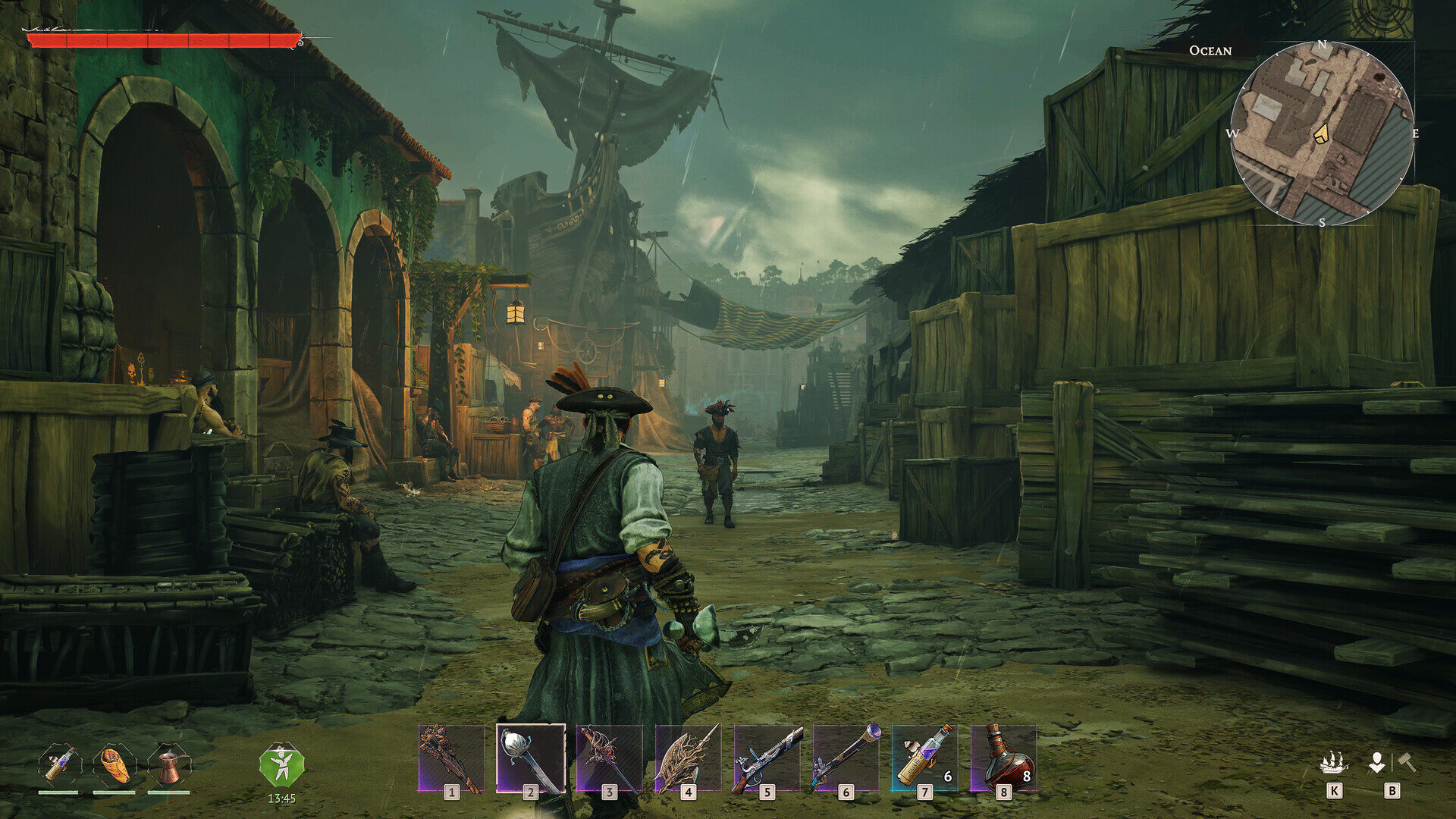
Windrose also has a gentler, but still meaningful, system for retrieving your body after death. In hardcore survival games, death often means losing everything, which can be brutally demotivating. Here, you will not lose your most important items such as food, equipment, or weapons, but you will drop part of the resources and loot you collected during your adventure. This means that death has consequences, but the game does not send you completely back to the beginning.
You still keep your weapons, flintlock pistol, and basic means of defending yourself against pigs, sailors, pirates, and other dangers roaming the world. There is no sense that the game is humiliating you for making a mistake. Instead, it gives you a chance to return, recover your things, and learn a lesson.
Still, do not think that Windrose is easy. The fact that it removes some unnecessary frustration does not mean the experience is without challenge. The world is full of enemies that can very quickly send you back to your spawn tent if you are not careful. More times than I would like to admit, I had to return to my body while being attacked by a group of Azure Dodo birds. In those moments, the game can be comically brutal. Every time one of those birds sent me back to respawn, I felt like I had failed at the most basic level of pirate survival.
Combat, however, is one of Windrose’s pleasant surprises. For an early access title, the combat system feels surprisingly solid. It is not perfect, but it has enough weight, responsiveness, and tactical depth to avoid becoming simple weapon-swinging.
Weapons differ enough for your choice to actually matter. Rapiers, halberds, sabers, and other weapons do not feel like mere variations of the same basic attack. Each has a different rhythm, range, and feel. The rapier is more precise and elegant, the saber feels more aggressive and direct, while longer weapons give you more space but require better control. Combat does not reward you for simply rushing forward and spamming attacks. You need to be patient, use blocks, dodge, and choose the right moment for a counterattack.
Character progression is not tied to killing enemies, which is another smart decision. You gain experience through exploration and completing quests that you pick up in different faction settlements. By leveling up, you receive skill points that you invest into a skill tree shaped like a compass, as well as attribute points that strengthen core stats such as stamina and health.
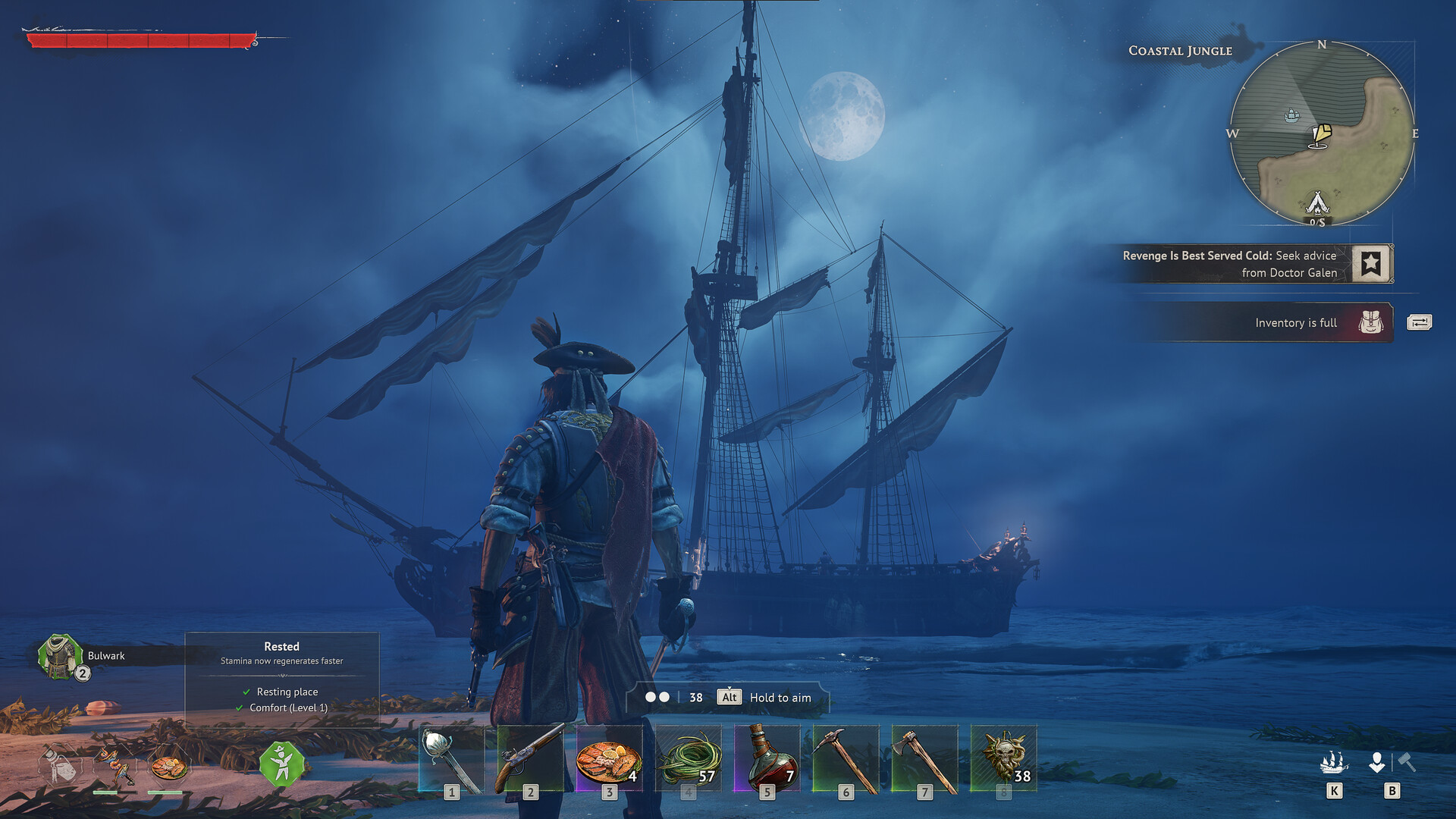
And once you finally set sail, Windrose begins to show just how much potential it has. Sailing is one of the central elements of the game and, especially with friends, can be extremely fun. I particularly liked that the game gives every player their first small ship very early on. You do not have to spend hours gathering resources just to leave the starting island. You are not trapped in the opening zone until you complete dozens of boring tasks. Windrose tells you relatively early: here is a ship, go see what lies beyond the horizon.
Even better, that starting ship is practically indestructible, which further reduces stress in the early hours. This does not mean you can mindlessly ignore danger, but it does mean that exploration is not held back by the fear of losing your only means of transportation. The game encourages you to move forward, which is extremely important for a pirate adventure.
In Windrose, sailing does not depend too heavily on wind direction, which is a double-edged sword. On one hand, it means you can always move toward your destination at a relatively consistent speed. This is practical, especially during combat, because you do not have to think about wind changes while trying to sink three enemy frigates. On the other hand, the open sea sometimes feels less alive because of it. I would have liked some kind of middle ground where the wind plays a role, but does not become the only factor determining the pace of sailing.
Naval combat is fun, but it is probably the weakest part of the overall combat system. It is not bad, far from it, but compared to land combat, it feels simpler and more repetitive. It often comes down to circling around the enemy ship, finding the right angle for broadside cannon fire, and constantly repairing your own ship in order to stay in the fight. You can use different types of cannon ammunition, including chain shot, which is useful for destroying the masts and equipment of an enemy ship, allowing you to slow it down or stop it entirely. This adds a bit of tactical depth, but the basic rhythm of combat can still become monotonous.
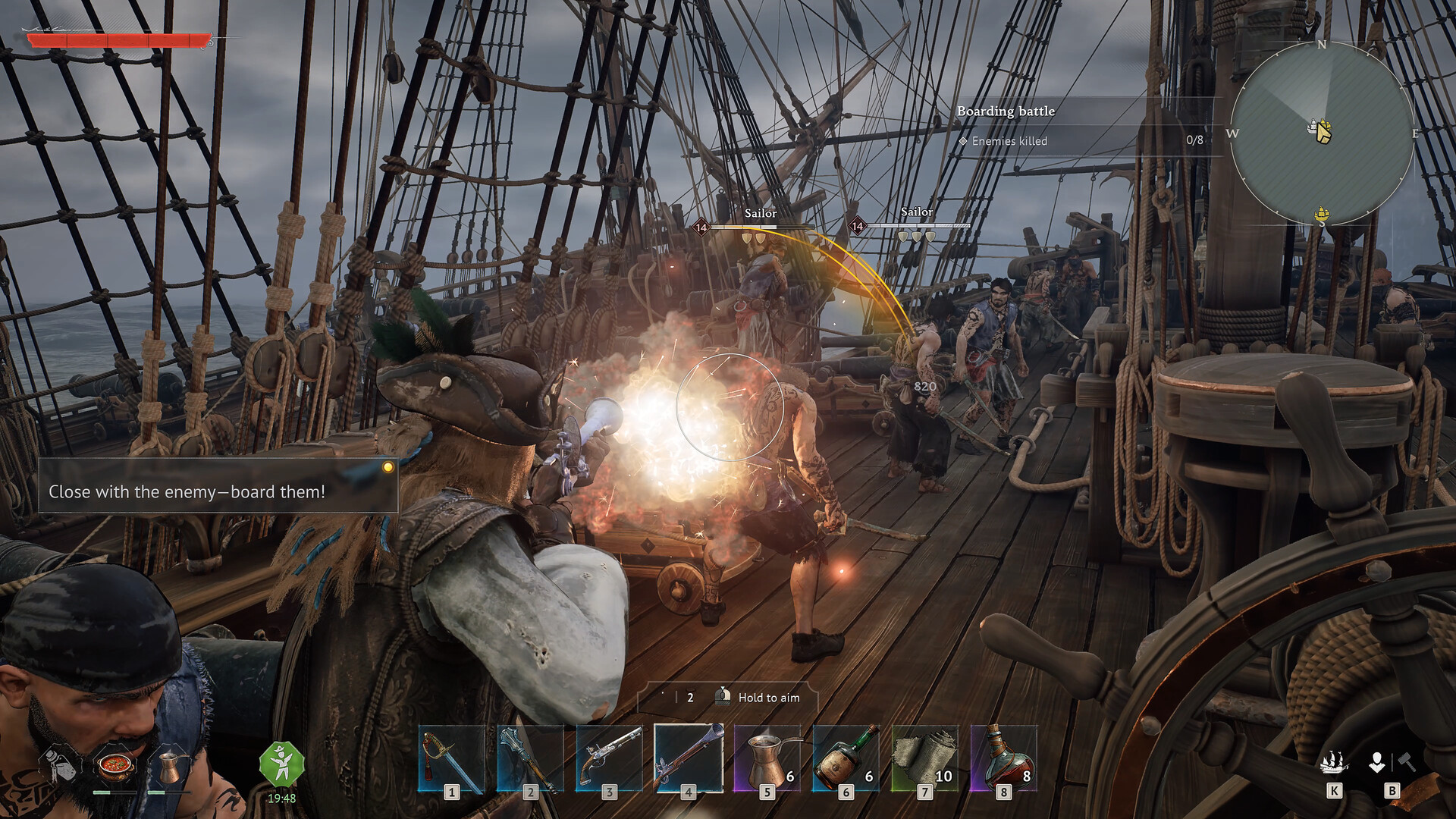
On the other hand, boarding an enemy ship is excellent. Once you damage the hull of an opposing ship enough, you can launch a boarding party and cross over with your crew to finish off the enemy crew and claim additional rewards. These moments are chaotic, loud, and tense — exactly how we imagine cinematic pirate clashes from the sixteenth and seventeenth centuries. Swords flash, gunshots echo, people fall overboard, and you try to survive long enough to collect the loot.
But boarding also carries serious risk. You cannot set a respawn point on your own ship. If you die on the enemy ship, you do not just lose your current progress through the world, but also part of the loot that motivated you to attack in the first place. This gives extra weight to the decision to board. It is not just an attractive finishing move, but a gamble that can bring a great reward or a painful return to your body.
Overall, sailing and ship combat are fun, even if they are not the most realistic parts of the game. Shipbuilding is also very accessible. Instead of a complicated construction system, you simply gather the required materials and build a ship at the Wharf station like any other craftable item.
Windrose is quite generous when it comes to traveling between points of interest. Fast travel is available while controlling your ship and allows you to quickly move to previously discovered locations. Some players will certainly feel that this is contradictory in a game largely built around world exploration. And I understand that argument. If the point is to sail, explore, and feel the distance between locations, too much fast travel can reduce the sense of adventure.
But on the other hand, as someone who does not have unlimited time to play, even when I am playing for work, I appreciate this quality-of-life feature. Sometimes I simply do not want to spend ten minutes sailing from my base to Tortuga just to turn in a quest or buy something. Fast travel allows me to reach the goal I set for that session more quickly.
Another element I enjoyed was base building. Windrose clearly takes inspiration from games like ARK and Valheim, especially when it comes to its physics-based building system. If something would not make sense in the real world, you cannot simply place it here either. You have to think about structural stability, supports, and the shape of your building. This adds enough logic without making things overly complicated.
What Windrose does better than many survival games is the cost of building. Building elements are not excessively expensive, so relatively early on, you can create something larger and more ambitious. The game allows you to be creative without forcing you to spend hours collecting thousands of pieces of wood and stone.
Better building designs and more advanced options are tied to exploration and progression. And once again, that is a smart decision. As you explore ruins, forts, and hidden places, you find items that can be sold to faction merchants for currency. You then use that currency at reputation vendors to buy new ship plans, equipment recipes, or building blueprints. Everything in Windrose feels connected. Exploration leads to resources, resources lead to reputation, reputation leads to new possibilities, and those new possibilities motivate you to keep exploring.
That may be the game’s greatest strength: its systems feed into one another. Nothing feels completely isolated. When you head out to sea, you are not doing it only because the map says there is a marker there. You go because you might find new materials, quests, plans, treasure, or enemies that will allow you to progress further. Windrose understands well that survival games work best when the player always has several parallel reasons to do something.
Technically speaking, Windrose is surprisingly stable for an early access game. Of course, there are issues, as expected, but performance is better than I anticipated. The world looks attractive enough, ships and the sea carry a large part of the visual identity, and the game mostly manages to maintain a sense of adventure without major technical problems constantly pulling the player out of the experience.
Most importantly, Windrose has a clear vision. This is not a survival game that simply tries to combine every popular mechanic into one package. It has a very recognizable focus: pirate fantasy, exploration, more accessible survival systems, solid combat, building, sailing, and cooperative adventure. Not every element is equally strong, but most of them work well enough to make the overall experience very appealing.
That is exactly why Windrose succeeds where many similar games have stumbled. Instead of constantly placing obstacles in front of the player, it pushes them toward adventure. Although it is still in early access, Windrose already feels like a game with great potential. If Kraken Express continues adding new regions, content, better balance, and additional server options, this could develop into one of the more interesting survival adventures for fans of pirate-themed games.

Discussion(0)