
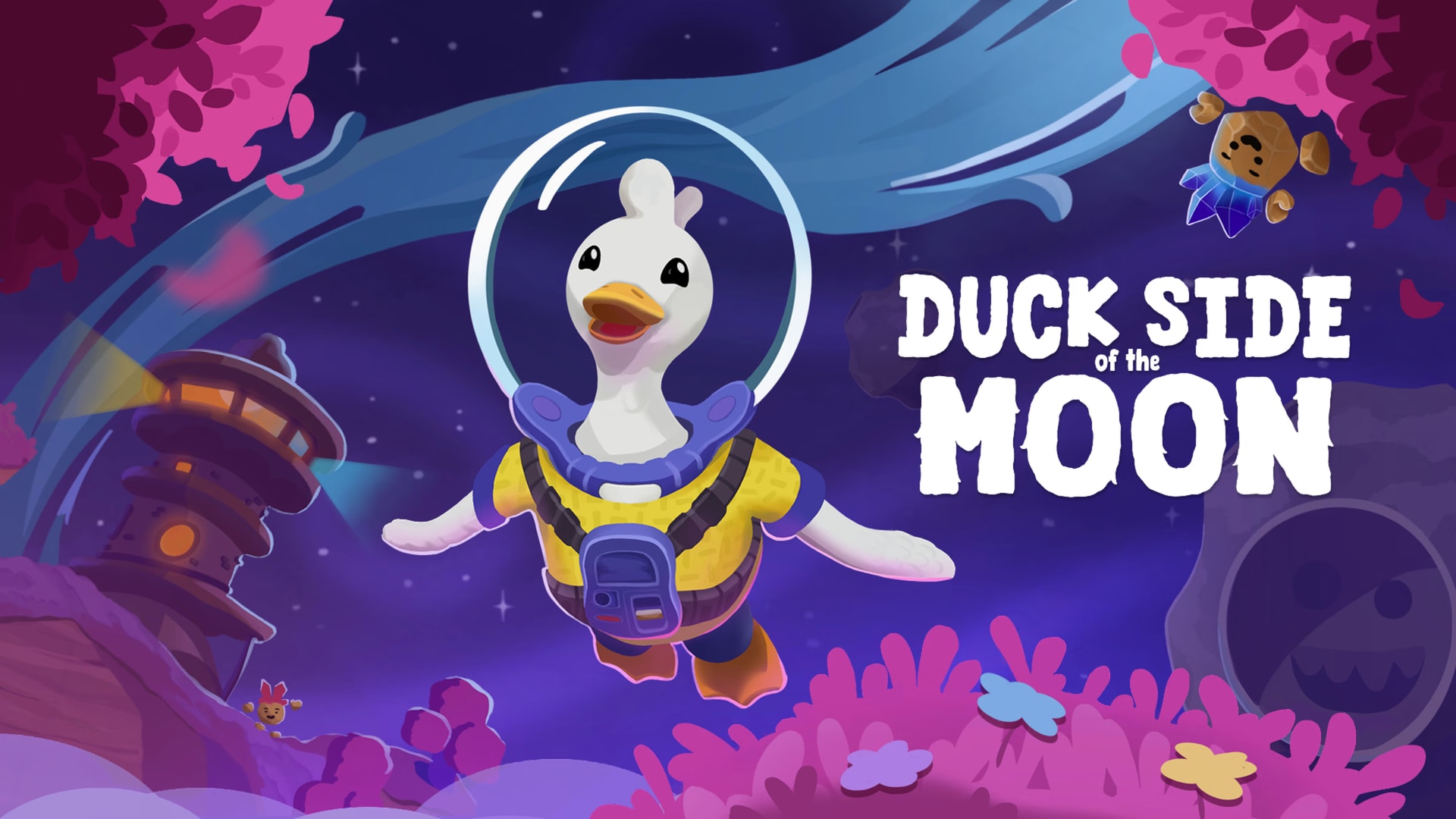
There is a very specific kind of game that does not try to challenge you, punish you, or overwhelm you. Instead, it simply invites you in, gives you a charming world to explore, and lets you settle into its rhythm at your own pace. Duck Side of the Moon, developed and published by Starbrew Games, understands that feeling very well.
At the center of this cozy space adventure is Doug, an adventurous duck who finds himself stranded after crash-landing on an alien planet. His ship needs repairs, a new homeworld is waiting somewhere beyond the stars, and the strange world around him is filled with friendly faces, small tasks, materials to gather, and places to discover. It is a simple setup, but one that works because the game never tries to be bigger or louder than it needs to be.
This is not an action game, and it does not pretend to be one. There is no combat, no death, and no real danger in the traditional sense. Duck Side of the Moon is built around exploration, collecting, crafting, light questing, and a wholesome story that gradually pulls you into its world. For players who come to cozy games for atmosphere and comfort rather than difficulty, that approach is exactly the point.
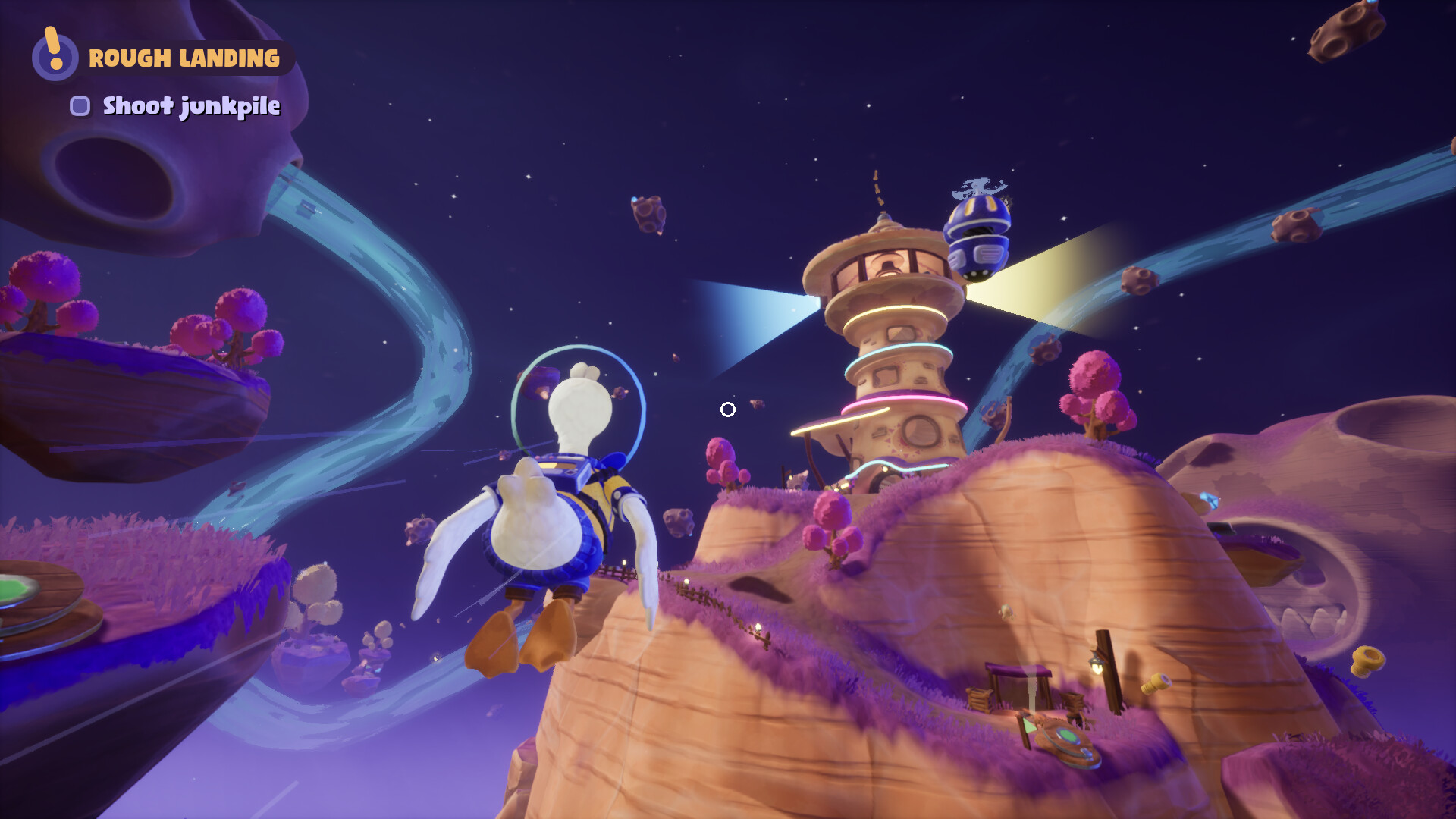
The adventure is spread across two main areas, Lightholm and Boogiedale. Some players may look at that and wonder whether the game is too small, but in practice both locations feel more open than the number suggests. For a game of this scale, the maps offer enough room to wander, search for materials, meet characters, and get distracted by optional objectives. It is not an enormous experience, but it does not feel empty either.
After the crash, Doug quickly meets the ship’s computer, Chippy, before heading out into Lightholm to figure out what went wrong and how to get moving again. The game gives you a clear main objective, but it never pressures you with timers or urgency. That relaxed pacing is one of its strengths. You always know what you should probably be doing, yet the game leaves enough space for you to explore, gather resources, take on side quests, and simply enjoy the atmosphere.
Movement is also handled with a nice sense of simplicity. Doug can walk, fly, and quack, while the gadgets you unlock and use throughout the adventure fit naturally into the game’s relaxed structure. Nothing feels overly complicated, and the controls support the kind of soft, frictionless experience Duck Side of the Moon is clearly aiming for.
The real charm, though, comes from the way the game presents its world. The characters, known as Geodes, are welcoming and friendly, and conversations with them help give the planet a gentle sense of community. Doug may be a duck in space, but the game does not rely only on that premise for charm. Starbrew Games has created a world that feels warm, carefully assembled, and easy to care about.
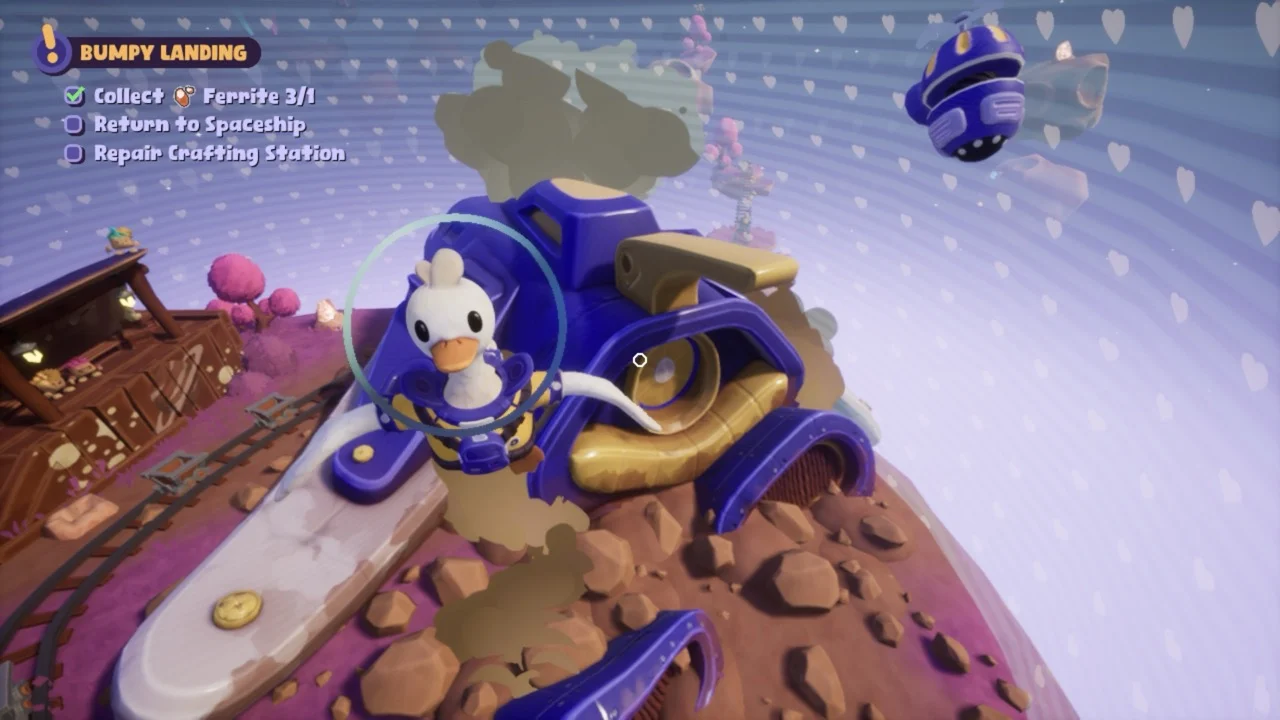
That warmth is supported by the presentation. The visual design is colorful and pleasant, the characters have an inviting personality, and the music by Joost Rol gives the journey a calm, memorable backdrop. Around an hour in, when the main quest, side activities, exploration, and soundtrack all begin to settle into place, Duck Side of the Moon becomes the kind of game you stop trying to finish quickly. You start treating it as something to enjoy slowly.
That matters because this is not a long game. The main story can be finished in roughly five hours, depending on how much time you spend with optional content. A more completion-focused run, with side quests, achievements, mining, crafting, and collectibles, can stretch closer to seven hours. That length has already led to some discussion around value, especially when comparing price and playtime, but the experience itself feels complete rather than unfinished.
There is also more to collect than the game’s size might suggest. Doug can find clothing, materials for crafting new gadgets, decorations for the ship, music discs for the onboard jukebox, and other rewards. Resource gathering never becomes stressful, partly because there are enough gems and materials available to craft what you need. The game wants you to engage with its systems, not worry about optimizing every step.
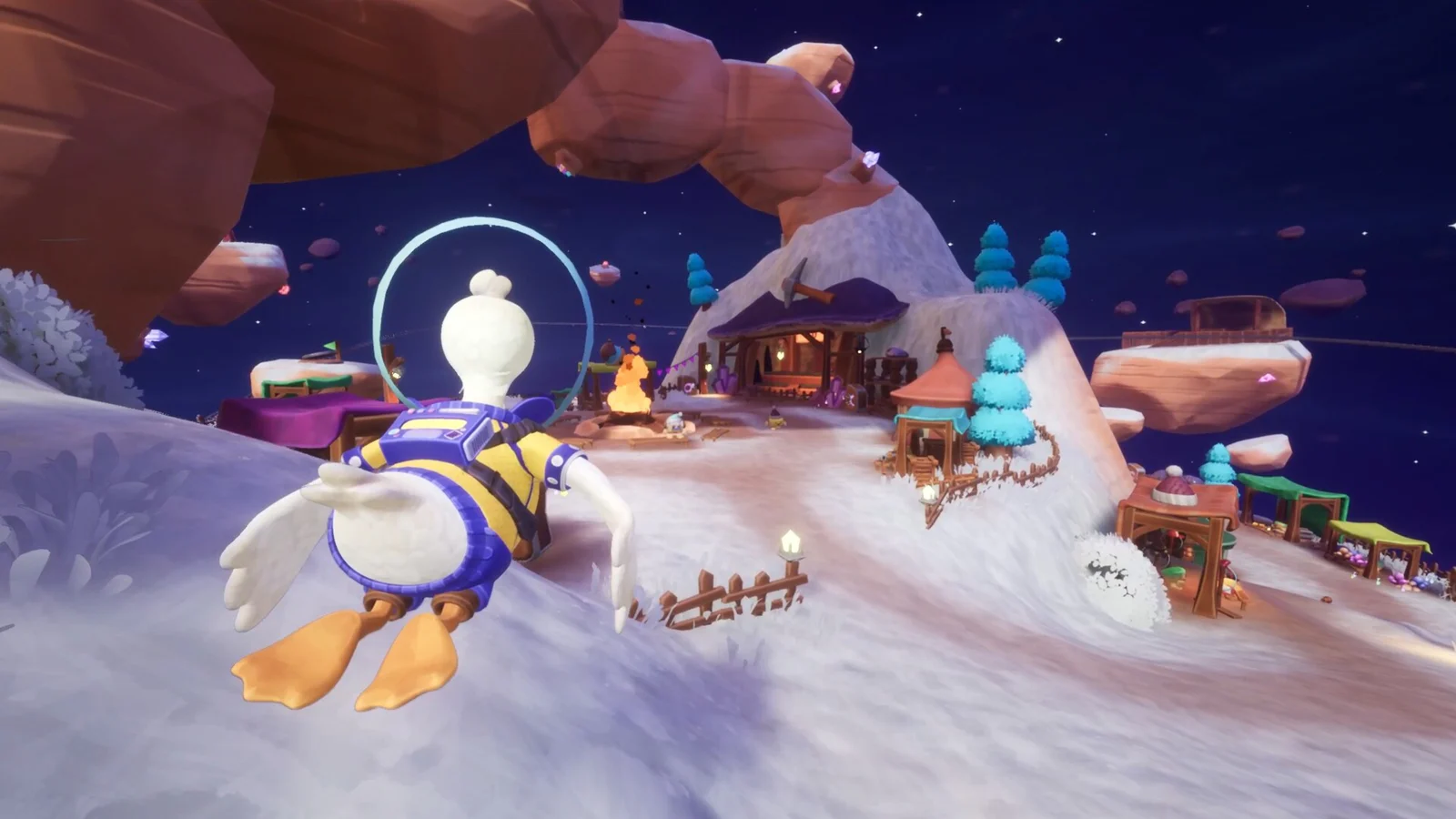
One important improvement worth mentioning is a recent update that allows players to travel back and forth between Lightholm and Boogiedale. That may sound like a small quality-of-life change, but it matters. Previously, missing side quests or achievements in the first area could be frustrating because returning was not possible. With the update, players have more freedom to clean up unfinished tasks and revisit earlier parts of the adventure.
By the time Duck Side of the Moon reaches its later moments, including scenes involving snowy danger, volcanic trouble, and a wonderfully cute disco sequence, the game has fully embraced what it wants to be. It is not trying to compete with larger adventures. It is not chasing difficulty, spectacle, or endless content. It is a compact, cozy journey about helping others, repairing what is broken, and finding comfort in unexpected places.
Duck Side of the Moon is available on Nintendo Switch and PC via Steam and the Epic Games Store. Whether you are already a fan of cozy games or just curious about trying something gentler, this is an easy recommendation. Its short length may be a drawback for players who measure value mainly in hours, but for those who appreciate charm, atmosphere, and a well-paced little adventure, Doug’s journey is absolutely worth taking.

Discussion(0)