
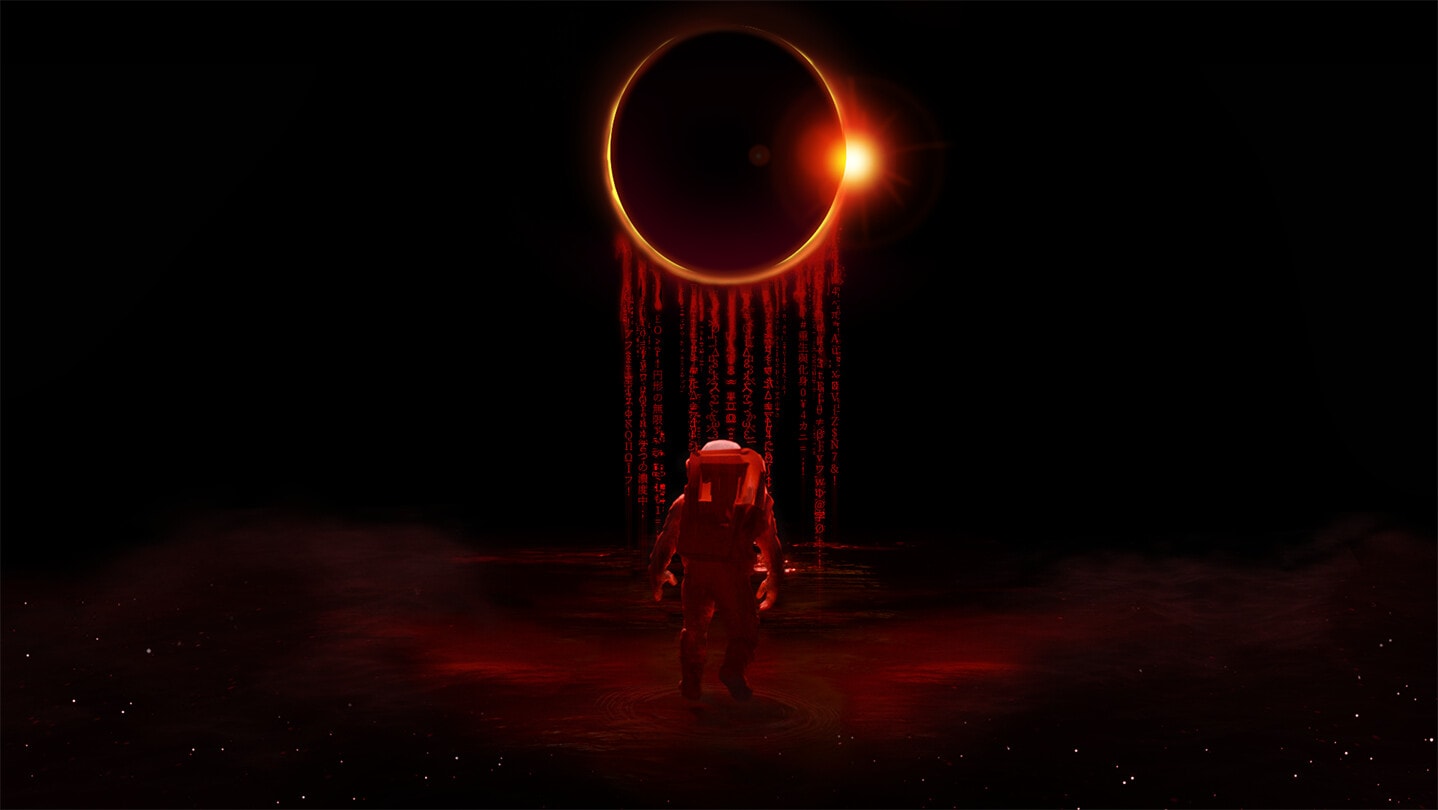

I must admit that I have become almost completely indifferent whenever a new title from the so-called "boomer shooter" genre appears, especially those running on the ancient Doom engine. Typically, most of them are characterized by repetitive shooting down long corridors with little emphasis on atmosphere or any deeper mechanics. My indifference lasted right up until I accidentally came across some rather dark screenshots from an ambitious project by developer Abraxaes, called Divine Frequency.
Although it originally started out as a Doom mod, over the years Divine Frequency has grown into a standalone experience that retains the characteristics of Doom while infusing them with elements of horror, action RPG, and immersive sims. Usually, we stick to the rule of not reviewing unfinished games, but this time I decided to make an exception. The studio has walked a fairly thorny path and managed to create an authentic product despite facing the tragic loss of their lead writer, Pablo Lampree.
Old Doom, new ideas
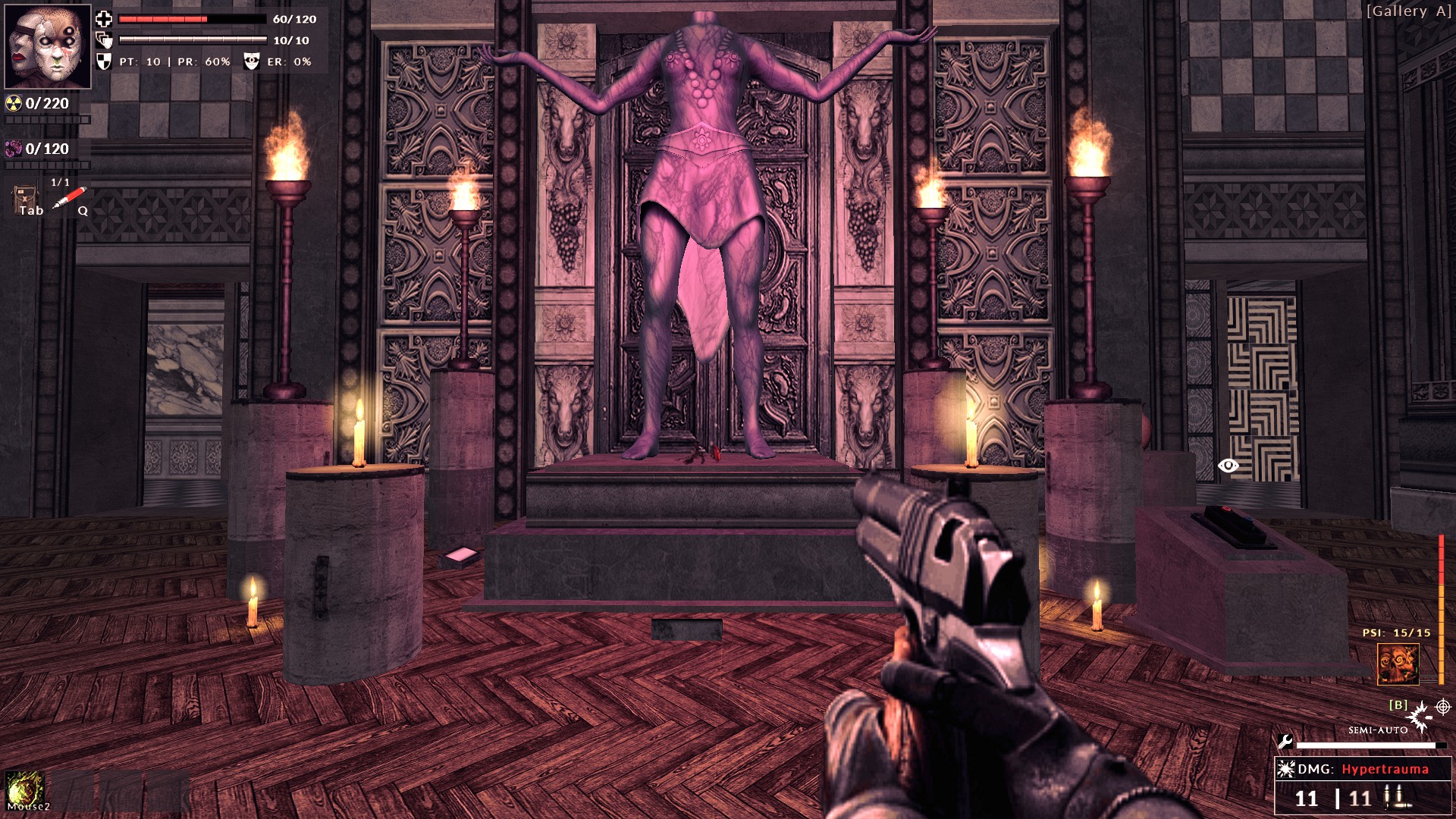
I have already pointed out that this is an authentic experience, but that does not mean the Doom hallmark is absent—far from it, since the game was built on that very engine. This entails extremely fast movement across the map and 2D models inhabiting a 3D world. Alongside standard movement, there is an omnidirectional dash that accelerates you even further. If that still is not fast enough for you, dashing during a jump turns you into Sonic on steroids.
Counterintuitively, rushing through the map is disastrous in most cases. The game features a specific structure and consists of sections with a complete focus on horror—which are mostly cramped and quite dark—and illuminated ones where there are mostly no enemies, shifting the focus to narrative or simply taking a breather from the action. In terms of action, our arsenal consists of bare fists and an array of firearms. Alongside classic punching, there is also a blocking mechanic that I personally never used, as it did not suit the character archetype I was playing.
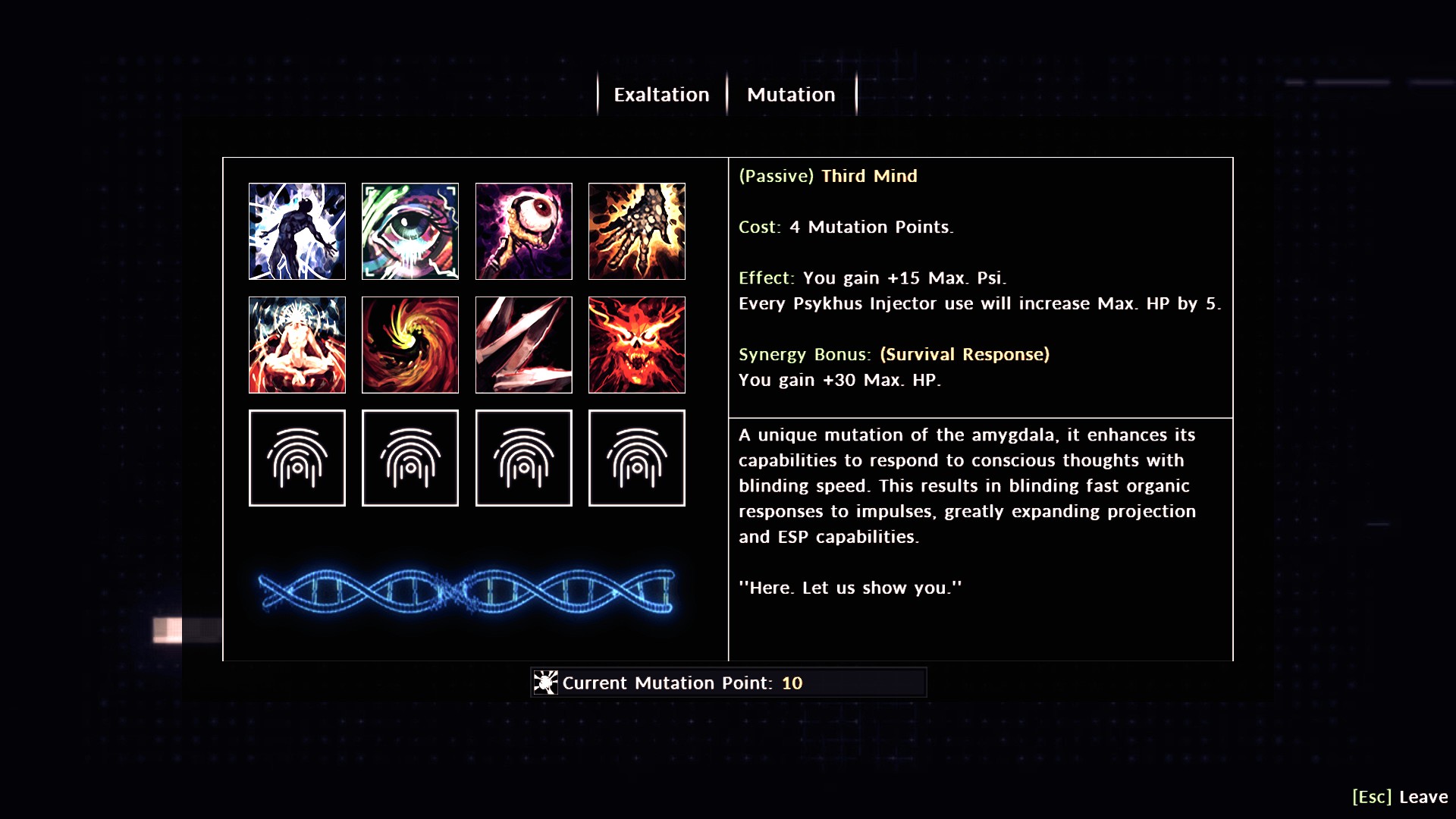
At the start, we are given a choice between three archetypes, each offering unique capabilities and focusing on one of three skills. The first focuses on melee combat and Strength, allowing you to regain health when killing enemies with your bare hands. The second is more tailored to the average gamer, offering slightly less maximum HP in exchange for a point in Wit and the ability to detect secret areas more easily. The third archetype—and the one I reached the end with—is the most unique, offering the ability to consume any corpse for extra points, which, once gathered in sufficient numbers, unlock unique biological traits.
Why not spice up Doom with a little RPG?
Beyond obvious combat implications, your choice of archetype also affects how you solve certain situations. For instance, if your primary skill is Strength, you can force some doors open with brute strength, whereas with another character you would have to find a key or take an alternative route. Other RPG elements are primarily implemented through the decisions you make in dialogue with NPCs, where different choices can yield entirely different outcomes.
In this psychedelic world, conventional money does not exist; instead, there is something called Exaltation, awarded for slaying enemies. You can use it to upgrade your stats or your weapons. Speaking of weapons, the arsenal is not particularly broad—consisting of a pistol, a shotgun, a necrotic spray, and a sort of super shotgun whose ammo is scarce and which serves as dedicated anti-boss weaponry. Those make up the mandatory tools; to my knowledge, there is only one additional optional weapon obtained by completing a specific side quest.
Firearms also feature durability, meaning every shot wears the weapon down, requiring constant repairs. Here we run into the first underutilized mechanic that, in the grand scheme of things, feels somewhat pointless. Divine Frequency features an inventory slot system similar to Resident Evil 7 that can be expanded, with the initial idea being to put pressure on the player to decide whether to bring extra health items or repair kits. However, this mechanic largely loses its purpose once you consider the absurd abundance of resources at your disposal.
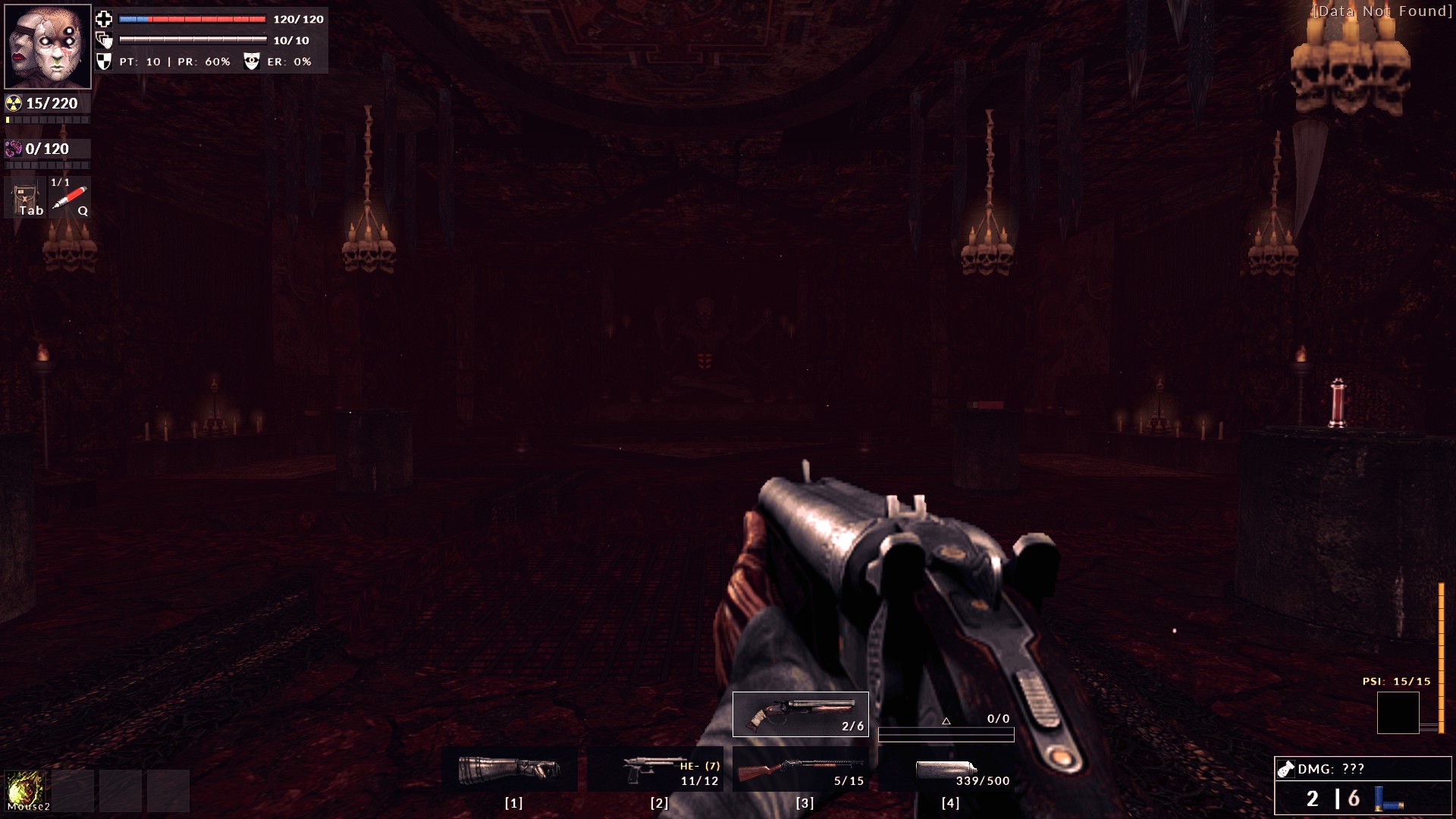
There was practically never a moment where I felt backed into a corner regarding resources; on the contrary, there was always plenty to spare, which begs the question: why have weapon durability in the first place? One could similarly argue that even consumable items are underutilized and poorly integrated into the gameplay loop, simply because there are far too few sections where you can actually fill your radiation or toxicity meters.
Another aspect where retro shooter inspiration is clearly visible—yet poorly exploited—is secret areas. They are one of my favorite staples of the genre, but here they lack both quality and quantity. There are not many of them, they are not hidden in particularly creative ways, and they rarely contain interesting items or encounters.
Where the frequency peaks
Now we move on to what is undeniably the strongest aspect of the game: its horror elements and atmosphere. It is obvious that a game with these visuals cannot rely on cheap horror tricks like scripted chase sequences and jump scares, and the developers clearly understood that. Divine Frequency builds tension with great success and instills an uncomfortable sense that "something is wrong" through clever lighting manipulation and an exceptional soundscape. While there are a few excellent musical themes, most of the playthrough is drenched in an uneasy silence, punctuated every so often by distant, eerie noises.
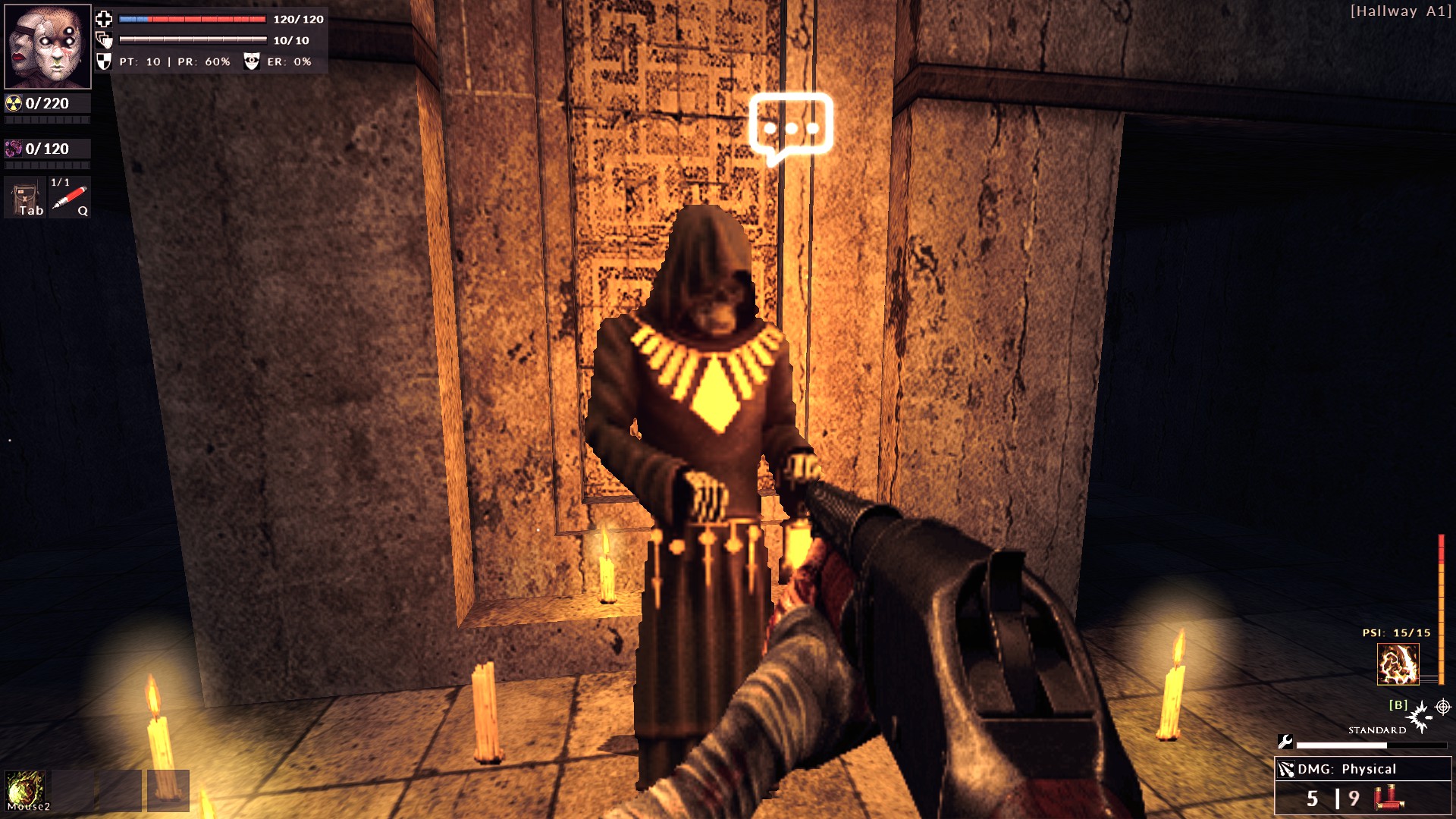
The 2D sprites are also used very smartly within a horror context; non-hostile NPCs constantly track the player with their gaze, adding a lingering dread of potential conflict. Another area where the game excels is enemy variety, both in design and mechanics. While the visual design of standard foes might not be overwhelmingly memorable, the mechanical execution is fairly well-developed: some enemies are extremely fast and zig-zag towards you while remaining fragile; others move sluggishly but can end you in a single hit; while a third variety teleports around the room, becoming vulnerable only in the exact split-second before executing an attack.
Where the Frequency drops
I wish I could extend the same praise given to ordinary monsters to the boss encounters, but that simply is not the case. In this world, there are optional elite bosses known as Meso-Divinities; while fighting them can be quite fun, practically all of them share very similar attack patterns and demand the exact same approach. More optional encounters like this would have been welcome, perhaps even a dedicated game mode for veterans looking to enjoy the fluid combat after beating the campaign.
The next issue I would like to bring up is the most subjective of all, but one I feel is worth mentioning: the humor and the way it is implemented, which actively harms immersion. For instance, the character you interact with the most is named "Actor Dude Bro" for no sensible reason whatsoever, which severely undermines an already strange story.
Welcome to the DMT trip
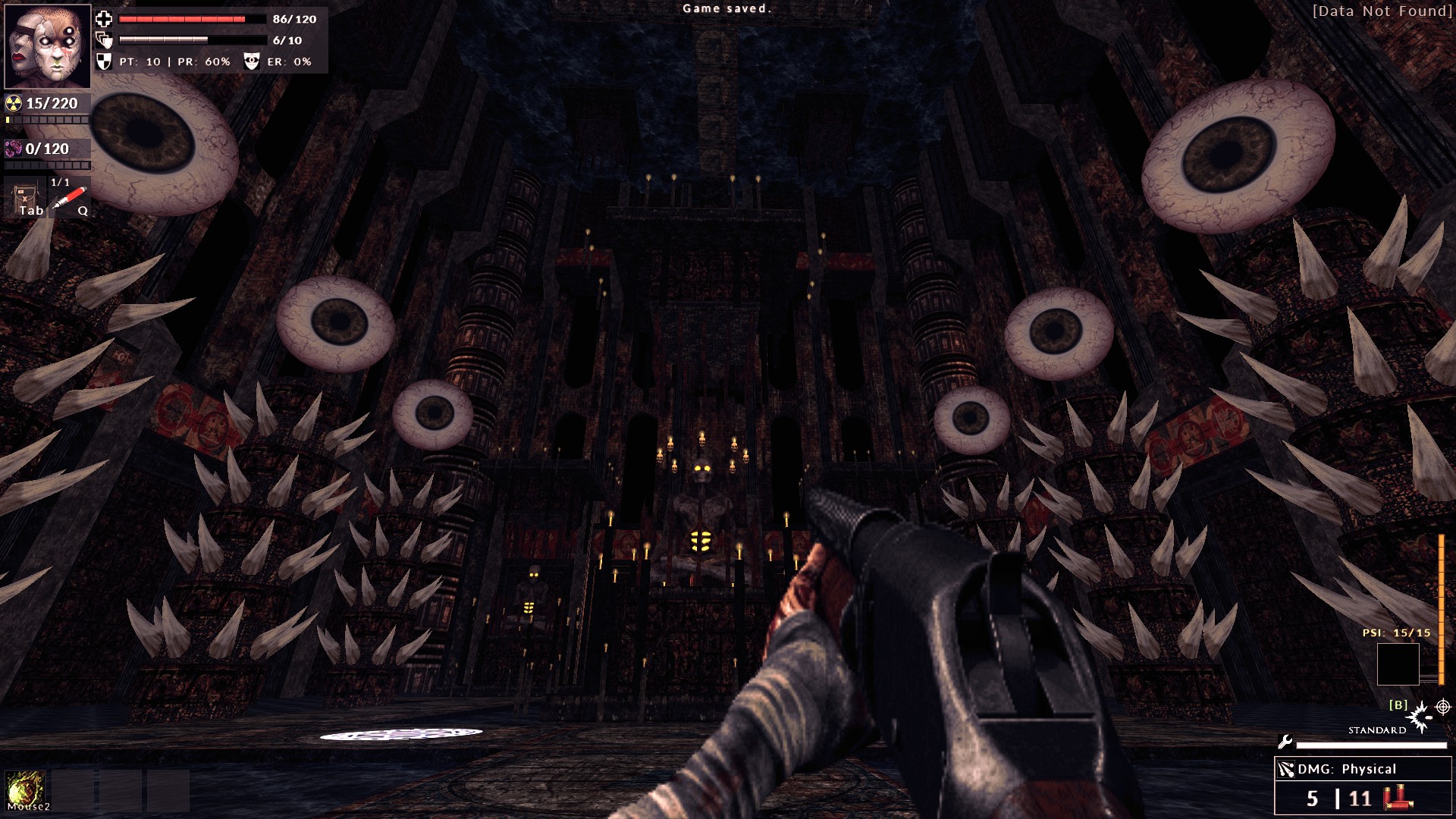
In narrative terms, the game leans more on abstract interpretation than on a classic linear plot. The world is conceived as an enigmatic nightmare where the boundary between reality, the occult, and cosmic horror is thoroughly erased. Information about the world is conveyed through imagery, written notes, and dialogues with the most bizarre characters imaginable—ranging from refrigerators and eggs to one-legged astronauts and the like.
Generally speaking, as the narrative progresses, the game becomes less grounded and veers increasingly towards a somewhat pretentious "DMT trip," where you will repeatedly find yourself as a passive observer watching disjointed psychedelic hallucinations. It is difficult to comment on the actual quality of the writing, as everything is exceptionally cryptic and feels like a state of mind under the heavy influence of narcotics. It is worth emphasizing that we are currently looking at only two of the three planned acts; with a third of the overall experience missing, I do not want to be overly harsh with my words.
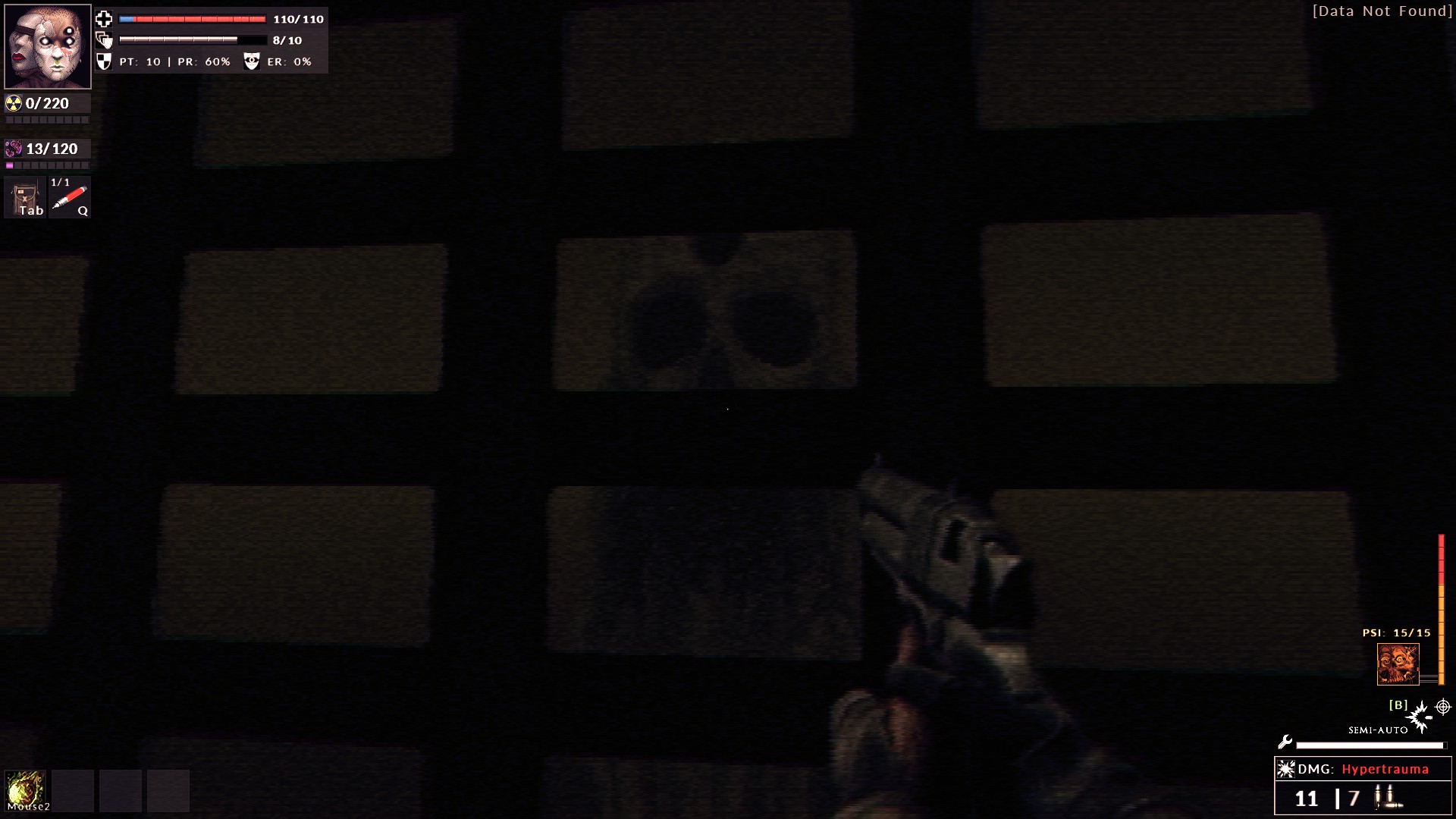
If nothing else, that psychedelic experience is visually magnificent. While it embraces the nostalgic hallmarks of the early PlayStation era and 90s PC gaming, beneath the surface lies a modern graphical foundation. Low-resolution "grimy" textures are blended with modern dynamic lighting and aggressive screen-glitch distortions. Fans of the morbid marriage between H. R. Giger and Zdzisław Beksiński will undoubtedly find plenty of visual ecstasy here.
Almost Divine
When all is said and done, Divine Frequency definitely does not lack authenticity or authorial vision. The blend of fast-paced shooter gameplay, RPG elements, and psychedelic horror has resulted in a game that stands out, primarily thanks to a well-executed horror atmosphere and a striking visual style merged with the grotesque nature of its world.
It would be hyperbolic to paint it as a flawless game, but it would be equally unreasonable to expect perfection from an Early Access build—especially considering we are only experiencing two-thirds of the intended journey. Certain mechanics clearly require fine-tuning to better fit the somewhat paradoxical nature of a game that fuses seemingly incompatible genres, as in their current state they detract more than they add.
Be that as it may, even in its current state, Divine Frequency is easily one of the best indie games of the year, and it remains to be seen whether Abraxaes will manage to round out this truly extraordinary package in the manner it rightfully deserves.

Discussion(0)