
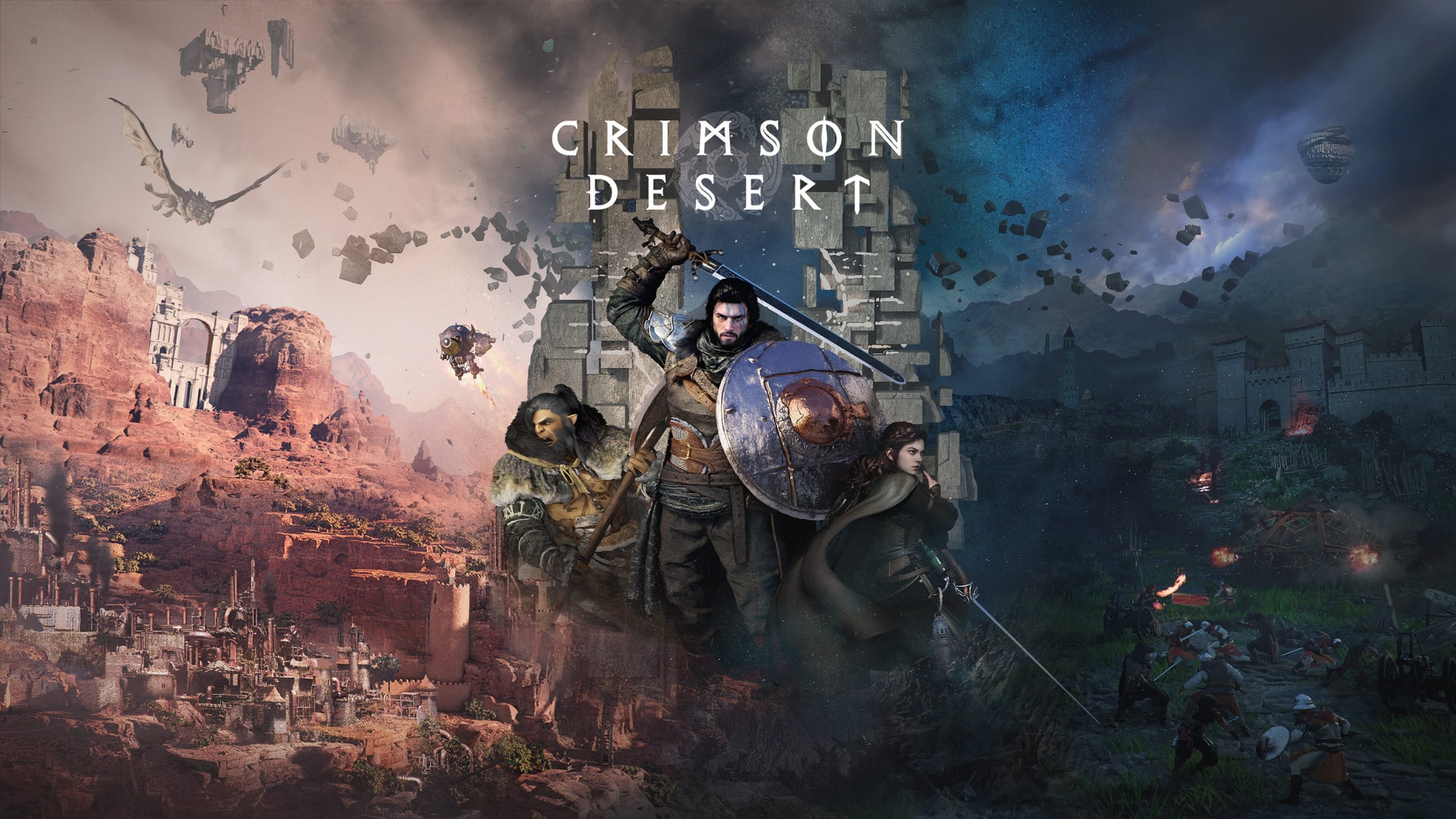
Pearl Abyss has never been shy about presenting Crimson Desert as something enormous. Before launch, the game’s trailers made it look almost unreal in scope, shifting from dragon-riding spectacle to mechanical suits, colossal boss encounters, fantasy warfare, and high-speed traversal across a vast continent. For a studio stepping into single-player territory for the first time, that is a bold statement of intent. The surprising part is that a lot of it works.
Crimson Desert is at its best when it stops trying to guide you too tightly and simply lets the world breathe. Its greatest strength lies in the moment-to-moment rhythm of seeing something strange on the horizon, deciding to investigate it, climbing, gliding, fighting, stumbling into trouble, and emerging with a story that feels entirely your own. It does not always hold together as cleanly as it should, but when exploration and combat take over, Crimson Desert becomes an exhilarating open-world adventure with a real sense of scale and danger.
Early in the game, after leaving the opening area around the Duchess of Hernand, I wandered east and noticed an unusual structure high above the valley. From a distance, it looked almost like some kind of platform or launch point built into the mountain. Naturally, I wanted to know what it was.
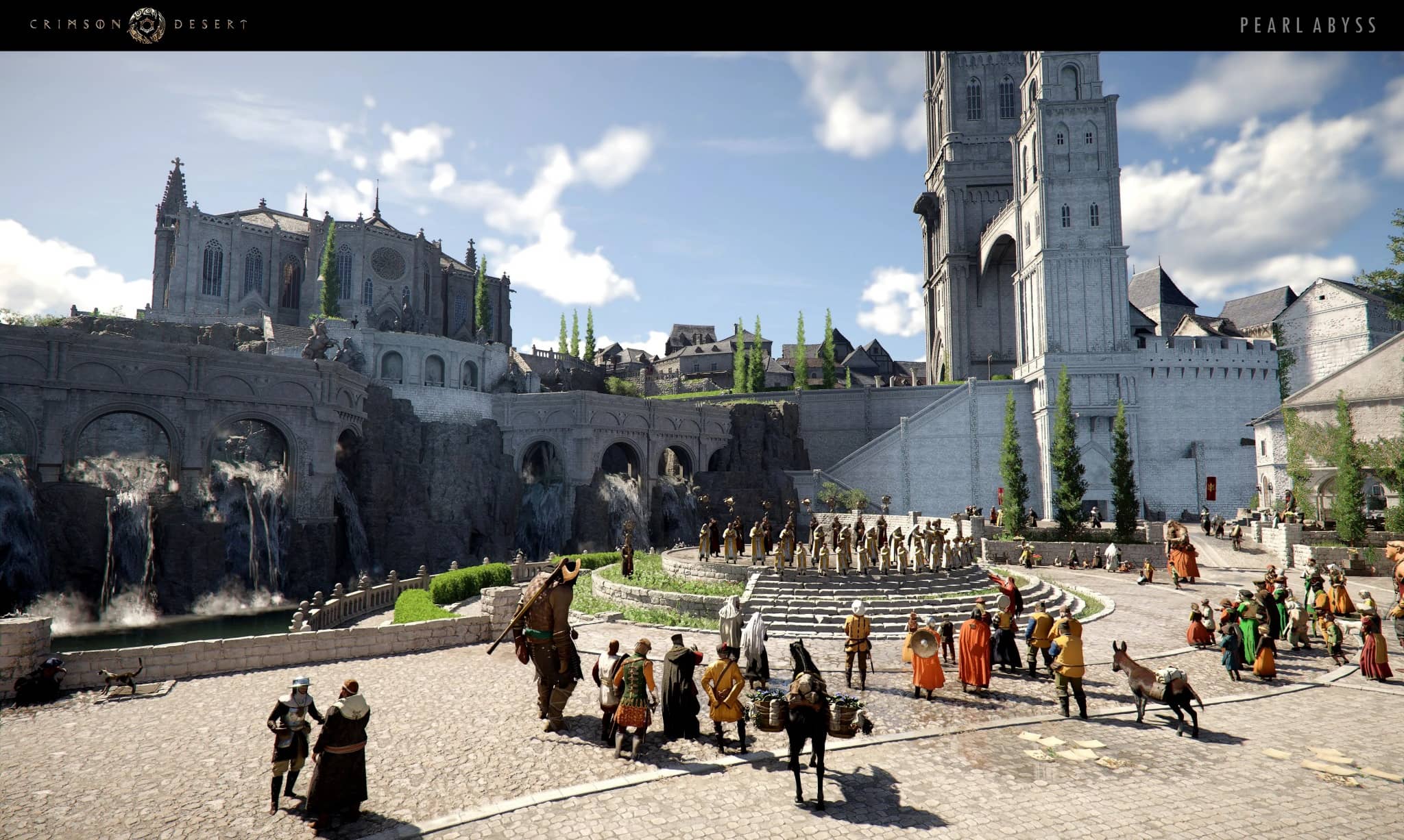
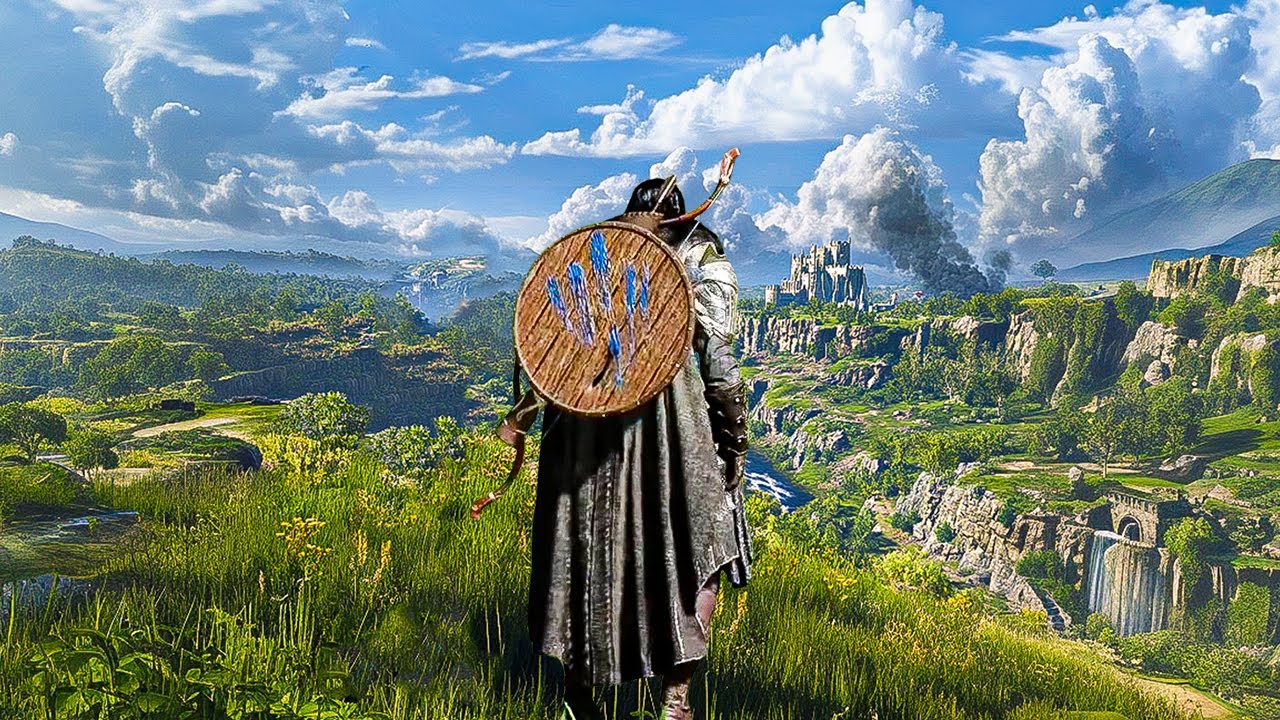
Getting there became its own small adventure. The climb required patience, careful stamina management, and a bit of route-finding as I searched for ledges where Kliff could pause before pushing higher. When I finally reached the top, the structure turned out not to be what I expected, but that hardly mattered. The reward was the view. Hernand stretched below in all directions, with countryside, villages, fields, forests, distant castles, and snowy peaks forming the kind of landscape that makes an open-world game feel genuinely inviting.
Then I jumped.
Using the wingsuit to glide down from that height gave me a perfect view of a group of soldiers below. They wore black and red armor, and after several quiet minutes of climbing and sightseeing, I was more than ready for a fight. I landed nearby and charged straight into them, knocking enemies aside and cutting through the group with Kliff’s heavy, aggressive swordplay. Moments later, a much larger enemy entered the fight and sent me flying so hard that I crashed through a tree. I recovered, healed with a bowl of vegetable porridge, then used Nature’s Grasp to lift the fallen trunk and smash it into him.
That single sequence captures Crimson Desert at its most entertaining. It is ridiculous, cinematic, technically impressive, and driven by player curiosity rather than a checklist. The game does not reinvent open-world design, but it gives you a vast and visually striking space where movement, discovery, and combat often combine beautifully.
The problem is that Crimson Desert is not always operating on that level. Its grander systems can be thrilling, but its smaller frustrations are difficult to ignore. Inventory management becomes a constant annoyance. Healing is tied to cooking in a way that often feels more irritating than meaningful. Quest design frequently pulls the player away from the game’s strongest qualities. The result is an adventure I enjoyed a great deal, but also one that repeatedly reminded me how much stronger it could have been with cleaner design decisions.
The story is one of the weaker parts. Crimson Desert takes place on the continent of Pywel and follows Kliff, a hardened mercenary tied to the Greymanes. After an attack by the Black Bears, a rival mercenary group with far fewer scruples, Kliff’s allies are left wounded and scattered. Kliff himself is seemingly killed and thrown into a river, only for the game to quickly push him into much stranger territory.
At first, Crimson Desert presents itself with the rough texture of dark fantasy. The dialogue, accents, violence, and blunt language all point toward a familiar medieval fantasy tone. Then the game begins layering in more unexpected elements. Kliff is revived by a mysterious technologically advanced force, taken to a floating fortress in the sky, given futuristic tools such as a wingsuit and grappling hook, and informed that the fate of reality rests on his shoulders.
The issue is not that Crimson Desert mixes fantasy with science fiction and technology. That combination can be exciting, and the game’s world often benefits from its lack of restraint. The issue is that Kliff accepts all of it with very little hesitation. So much happens so quickly, and the character rarely reacts in a way that makes these revelations feel grounded. Instead of pulling the player deeper into Pywel, the writing often skips over the emotional and narrative weight of its own ideas.
Crimson Desert’s storytelling is broad, direct, and frequently too thin for the world surrounding it. Villains like to explain themselves at length, especially around major encounters, but the game is often less effective at giving context before those moments arrive. Names, locations, conflicts, and factions are introduced as if the player already understands their importance. Too often, the missing context is placed in the Knowledge menu rather than expressed naturally through quests, dialogue, or environmental storytelling.
That approach hurts some side content in particular. One quest eventually led me into a duel with Saigord, the Staglord. The fight itself had presence, but I had almost no understanding of who he was or why this confrontation mattered. Only afterward did the Knowledge entry explain that he had once ruled a forgotten kingdom, lost everything, and remained trapped by a duty he could not release. That is interesting material, but it should have been part of the quest’s dramatic buildup, not something discovered after the battle was over.
This kind of disconnect appears in the main story as well. Objectives sometimes feel like they exist because the quest log says so, not because the narrative has convincingly led you there. Giving money to a beggar, searching for a new outfit, or helping with seemingly unrelated errands can feel mechanical rather than motivated. Crimson Desert has a rich world, but it does not always create the connective tissue needed to make its story feel alive.
To the game’s credit, the quest variety itself is impressive. One moment you might be caught in a huge battlefield, the next you are dealing with killers obsessed with crows, searching for a child’s missing sheep, or challenging the authority of a corrupt merchant guild. Even when the writing fails to give every scenario the weight it deserves, the sheer range of situations helps keep the journey from feeling repetitive.
Outside of structured quests, Pywel is filled with distractions. You can pursue bounties, gamble, compete in arm wrestling, fight with your fists, take part in archery challenges, play rock, paper, scissors, race horses, trade goods, invest money, fish, cook, chop trees, mine ore, and more. Not every activity is deep, but together they make the world feel unusually busy. Crimson Desert understands that a convincing open world is not just about size; it is about giving players enough reasons to wander without always needing a main objective.
And wandering is where the game shines brightest.
There were long stretches where I ignored the quest log entirely and simply chose a direction. That is not something every open-world game can inspire. Crimson Desert does. Even the map, which shows the names of undiscovered areas, encourages curiosity. Places like Mistveil Forest, The Crimson Wall, Mountain of Frozen Souls, and Rattlesnake Steppe sound like destinations worth visiting before you know anything about them.
One journey took me to the edge of the map, where I found a cove filled with tall rocky formations. Because Kliff can climb most surfaces as long as his stamina holds, crossing that area became an improvised traversal puzzle. I used the wingsuit to glide between spires, searched for safe footholds, and gradually made my way across. From there, I noticed airships in the distance and followed them, eventually reaching a castle caught in a battle between orcs and mechanical insects.
That encounter felt almost absurd in the best way. Flying machines attacked from above while enormous steampunk creatures fought on the ground, including metal mantises and beetles towering over the battlefield. I was not ready for that fight, so I ran. After surviving long enough to escape, I stumbled into a valley and discovered Tinkerton, a strange town with electric streetlights, taverns, shops, tournaments, robots working in the fields, drones overhead, and a steam train passing nearby.
Crimson Desert is full of moments like that. It can shift from rural fantasy to technological oddity without warning, and while that sometimes damages the coherence of the story, it makes exploration feel wonderfully unpredictable. Forests are dense with wildlife and vegetation. Trees and grass react to the wind. Verticality gives the world dramatic shape. Nights can become properly dark, with Kliff’s lantern cutting through the blackness. Ruins, puzzles, cliffs, enemy bases, and hidden spaces constantly tempt you away from the obvious path.
Traversal is a major part of that pleasure. Double jumps, climbing, the grappling hook, gliding, mechanical tools, and even jetpack-like movement options all contribute to a sense of freedom. Crimson Desert does not want you to simply walk across Pywel. It wants you to launch yourself over walls, climb impossible surfaces, drop from absurd heights, and turn travel into a physical part of the adventure.
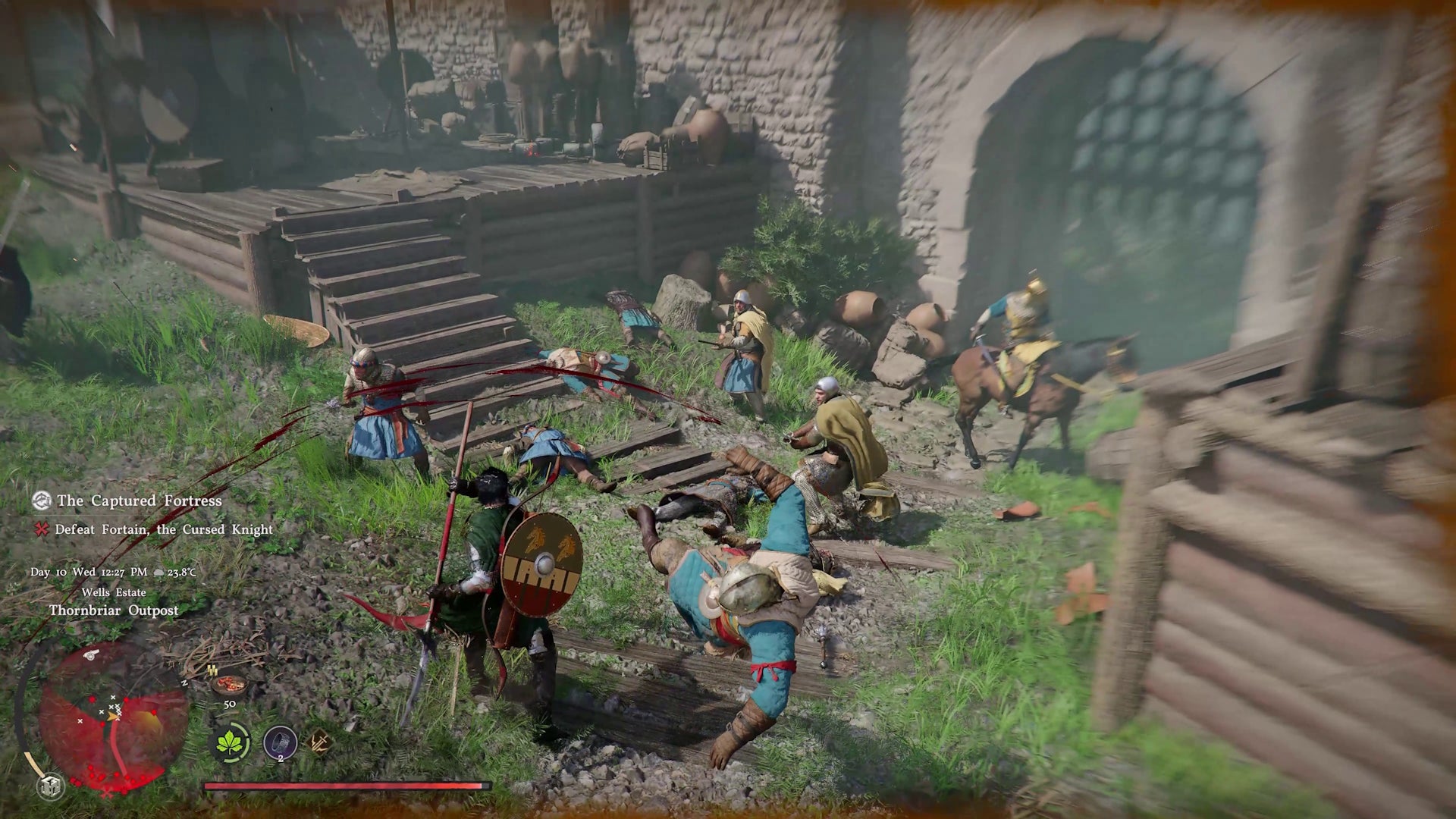
Combat carries that same energy. Kliff feels powerful in a direct, physical way. His attacks have weight, and the game quickly becomes more enjoyable as you learn how to chain abilities together. Sword strikes can lead into kicks, slams, grapples, shield attacks, and brutal finishing moves. Enemies do not politely wait for their turn, so fights often become chaotic, forcing you to parry, dodge, reposition, and stay aware of threats coming from multiple directions.
The best thing about the combat system is how much expression it allows. Kliff can launch enemies, throw them, drag them in with the grappling hook, knock them off cliffs, slam into groups from above, or use wrestling-style moves to humiliate them in the middle of battle. The skill tree supports this philosophy by focusing less on simple stat increases and more on expanding the number of tools available. New abilities make Kliff more versatile, not just numerically stronger.
That makes it all the more frustrating when the game interrupts its best qualities with awkward inventory restrictions. Kliff’s backpack starts with limited space, and although it can be expanded through side quests and extra pockets, nearly everything occupies a slot. Weapons, armor, crafting materials, tools, quest items, furniture, ingredients, prepared meals, books, notes, wanted posters, recipes, skill-related items, insects, flowers, and countless other objects all compete for room.
The lack of proper storage makes this much worse. Kliff has access to a camp and a house, but there is no straightforward stash system for keeping materials or items you may need later. This becomes especially irritating with upgrade materials, which are not always easy to obtain because you often have to mine them yourself. I regularly had to sell or discard items I wanted to keep simply because I needed space for something else.
Healing adds another layer of frustration. Food is the main way to recover health, but cooking requires ingredients, and recipes can demand more items than your early inventory can comfortably support. Some ingredients can be bought, while others come from looting enemies. That would be manageable if looting were more reliable, but enemy bodies can disappear after camps are cleared, and searching them may produce very little. Remaining loot can be sent to a chest at camp, which helps, but the process is still clumsy enough to become annoying over time.
The result is a system that frequently gets in the way of the adventure. Crimson Desert is thrilling when you are climbing cliffs, gliding across valleys, or tearing through enemy groups. It is far less exciting when you are pausing in the middle of a mission to manage backpack space or search for a cooking pot so you can prepare enough food to survive the next fight.
Some of these problems could be improved with balance changes or quality-of-life updates. A proper storage option, more flexible inventory rules, and a smoother approach to healing would make a noticeable difference. The weaker story structure and inconsistent quest writing are harder to solve, because they are tied to the game’s foundation.
Even so, Crimson Desert remains an impressive achievement. It is not the most elegant open-world game, nor the most focused. It is messy, excessive, and occasionally frustrating. But it is also bold, beautiful, and often genuinely exciting. Pearl Abyss has created a world that feels worth exploring not because every quest is excellent, but because the act of moving through Pywel can produce remarkable moments on its own.
Crimson Desert works best when it embraces its own strangeness. Fantasy castles, futuristic devices, mercenary drama, mechanical insects, floating fortresses, rural villages, and explosive combat all coexist in a game that rarely seems interested in restraint. That lack of discipline can weaken the storytelling, but it also gives Crimson Desert an identity. There are many open-world games with cleaner systems. There are not many that feel this unpredictable.
For all its flaws, Crimson Desert kept pulling me back into the world. Not always because of the next quest, and not always because I cared about the story, but because there was usually another mountain to climb, another strange place to discover, another fight waiting to go completely off the rails. That is enough to make it memorable, even when it falls short of greatness.

Discussion(0)