


It feels almost unbelievable to me that for nearly 40 years, and especially nowadays when most iconic movie characters get their own gaming adaptation, we haven't received a proper, standalone video game set in the Hellraiser universe featuring its frontman, Pinhead. That is, until now, with Clive Barker's Hellraiser: Revival.
Modern society is a strange construct where themes of nudity and sexuality still provoke far more controversy, disgust, and censorious outrage than any form of pure violence. Just remember: brutally tearing apart demonic bodies and spilling guts in Doom is taken for granted, whereas Stellar Blade, with its attractive protagonist Eve, stirred up such a storm that it was debated for months. Precisely because of that industry climate, I was quite skeptical about what Saber Interactive would ultimately deliver.
However, to the pleasant surprise of both myself and you, Revival is exactly what it should be—full of violence, nudity, explicit scenes, and everything that makes Hellraiser one of the most recognizable horror universes.
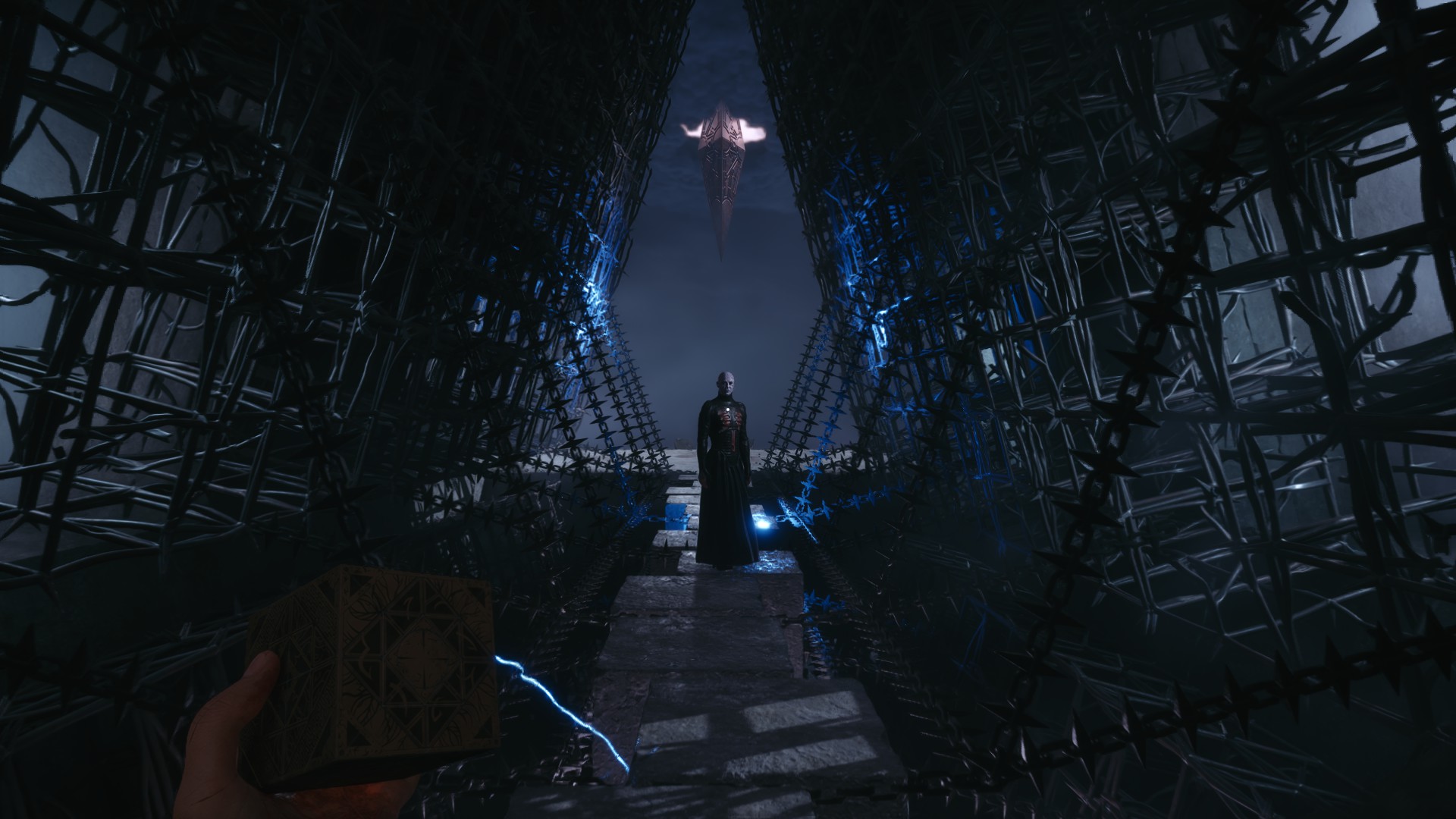
“The box. You opened it. We came.”
The story puts us in the shoes of Aidan Lynch, a biker whose intimate relationship with his girlfriend Sunny turns into a multidimensional nightmare after they, attempting to take their pleasure to the next level, accidentally reach for and open the puzzle box known as the Genesis Configuration. The Configuration opens a gateway to the Labyrinth, and Sunny is soon taken captive by beings who are “demons to some, angels to others” called Cenobites—and here we’re talking about the original ones, not those from the sequels we'll just pretend never existed.
Thus begins our search for Sunny, but on that path, Cenobites aren't our only threat; there is also a cult known as the Scarlet Church, which sees them as beings of a higher nature and has turned an obsession with suffering into a religion. The entire narrative premise boils down to that well-known thesis: man's thirst for experience is often the very road to his ruin. The focus isn't exclusively on the couple and their relationship—though that remains in the foreground, along with the retrospective unearthing of past fragments—but also on the leaders of the cult and how they arrived at such a state.
The storytelling techniques come down to well-acted, well-staged cutscenes and dialogue for the main plot, while additional lore about the world and other characters is conveyed through audio logs and classic, yet brief and concise, documents. Then there is the environmental storytelling, which is, to put it mildly, grotesque.
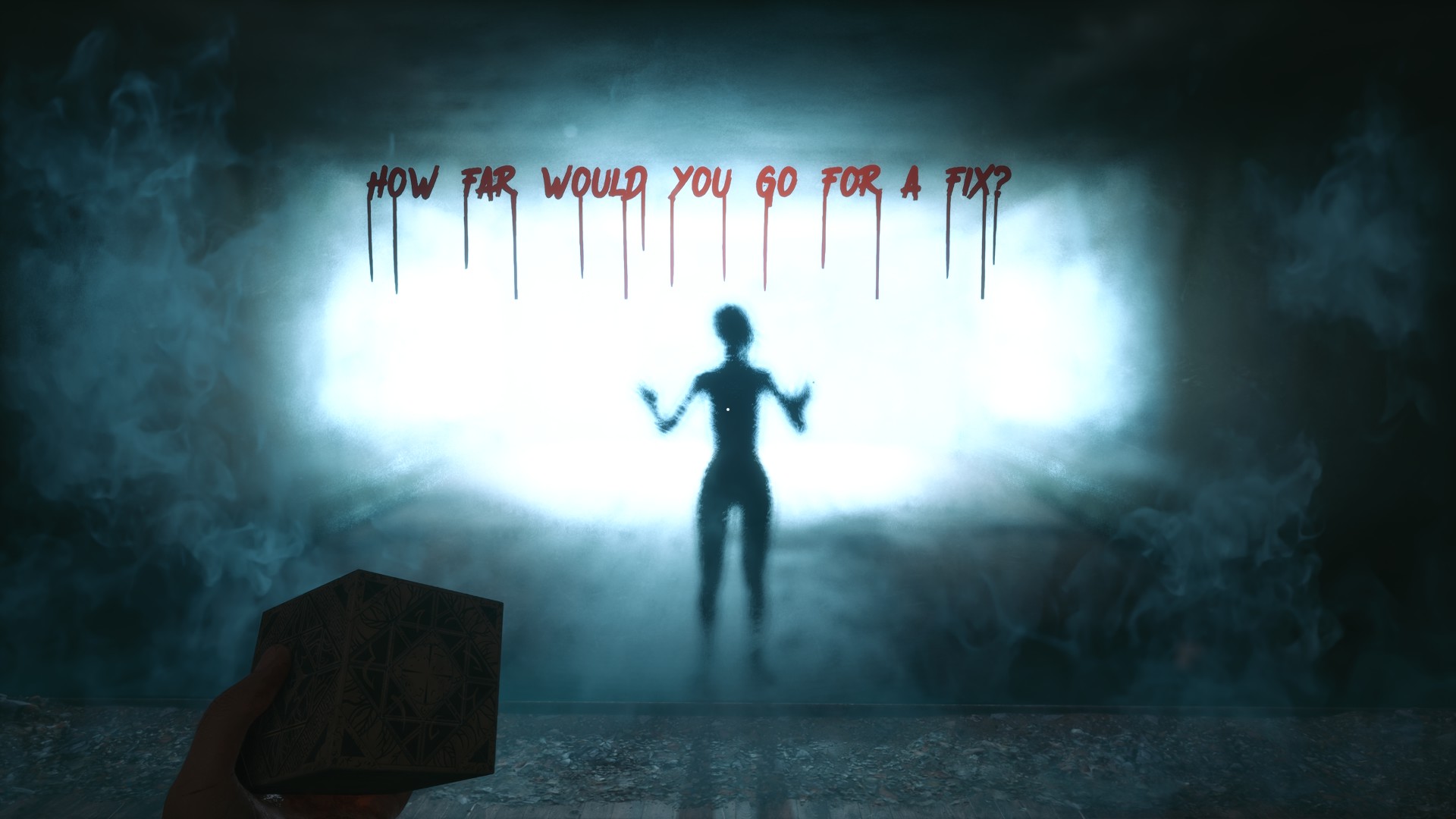
Hell has never looked this good
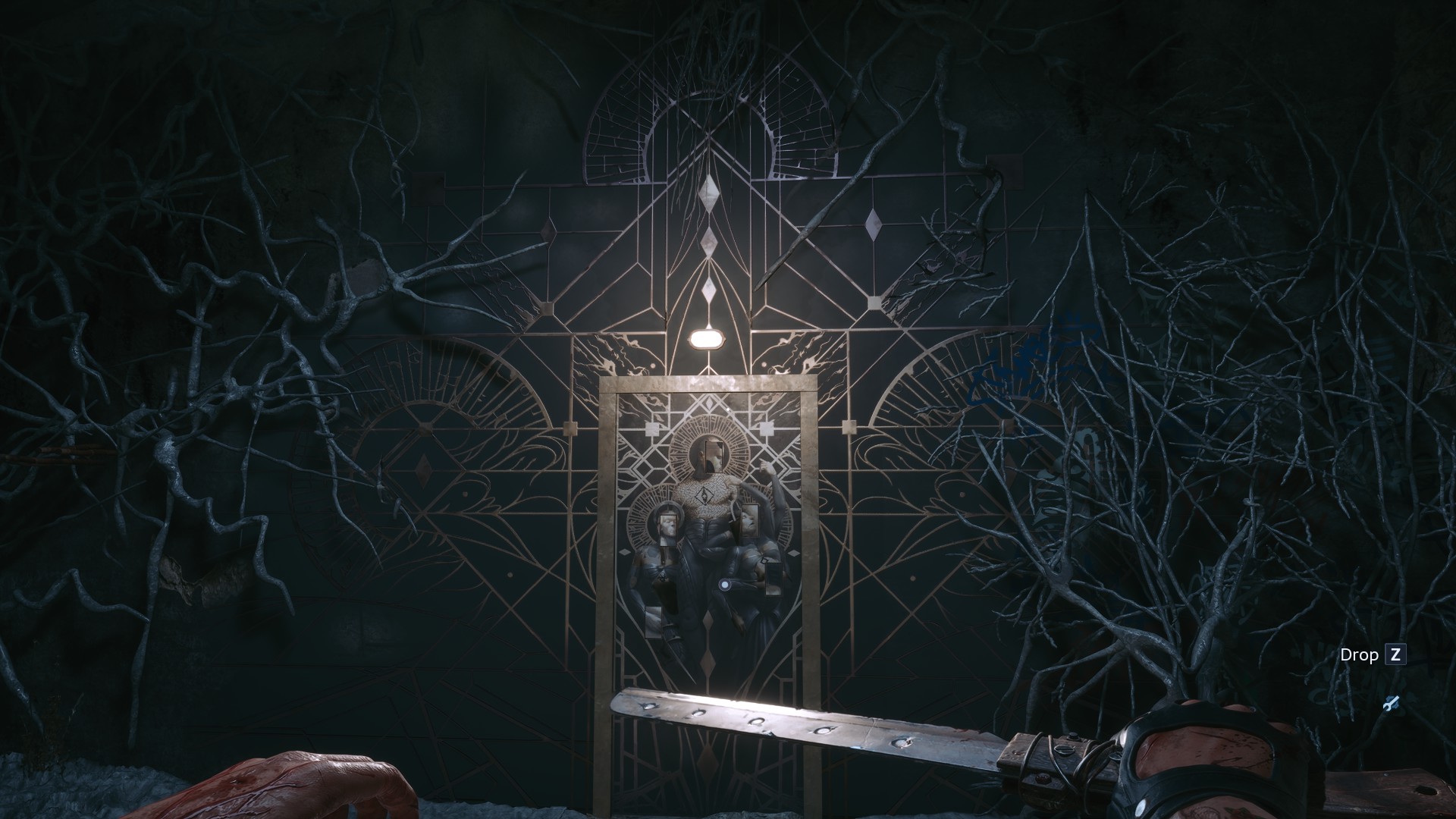
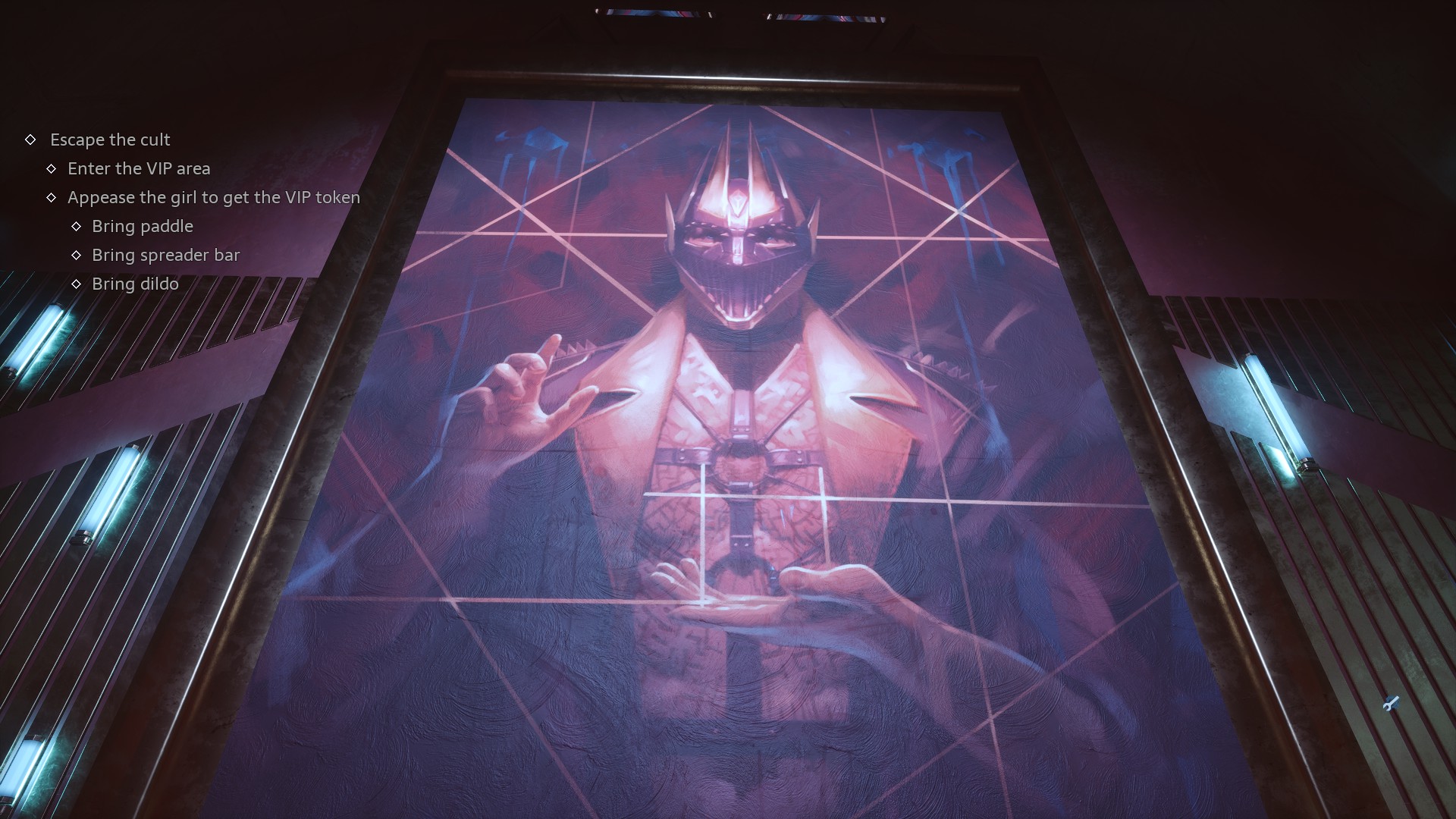
Speaking of which, it must be highlighted that Hellraiser boasts easily one of the most unique visual presentations in the entire industry. In the opening hours, we explore the rooms of a sex club where BDSM, mannequins, and dildos are the least shocking things you will encounter. Periodically, we are yanked from the present moment into the interdimensional space known as the Labyrinth, where time does not flow, the same laws of physics do not apply, and where we primarily interact with the Cenobites. The scenes in that dimension are arguably the crème de la crème of the game's presentation, where the blend of visual style and lighting work creates some truly impressive moments, even though we're talking about a mid-budget project.
Praise can also be extended to the audio side, where, although there aren't too many memorable musical themes, the sound design does an outstanding job contributing to the atmosphere and immersion. The voice acting is very solid, and it's worth highlighting that Pinhead is voiced by Doug Bradley—the British actor behind the original Pinhead. For those worried about technical performance, I can say it was great—optimization is solid, and bugs are virtually nonexistent.

What If BioShock and Resident Evil had a baby?
It’s probably obvious from the trailers that Hellraiser: Revival borrows plenty of familiar elements from several hit titles, and I’m not sticking a negative label on that. The structure of the game itself is a blend of modern Resident Evil titles: the opening leans heavily into atmospheric horror much like the beginning of RE7, the inventory demands grid-based management very similar to RE4, and the level and puzzle design echoes RE8. There are even smaller sections of the map that will undoubtedly look familiar to anyone who played those games.
I’ve thrown out a lot of information, so let’s take it one step at a time. The intro is slower and claustrophobic, focusing on the environment and building an eerie sense of discomfort and helplessness. Gradually, action layers are introduced, starting with melee combat that comes with a specific mechanic: every weapon can only be used a single-digit number of times before breaking, meaning there’s no sticking with a single favorite weapon to the end.
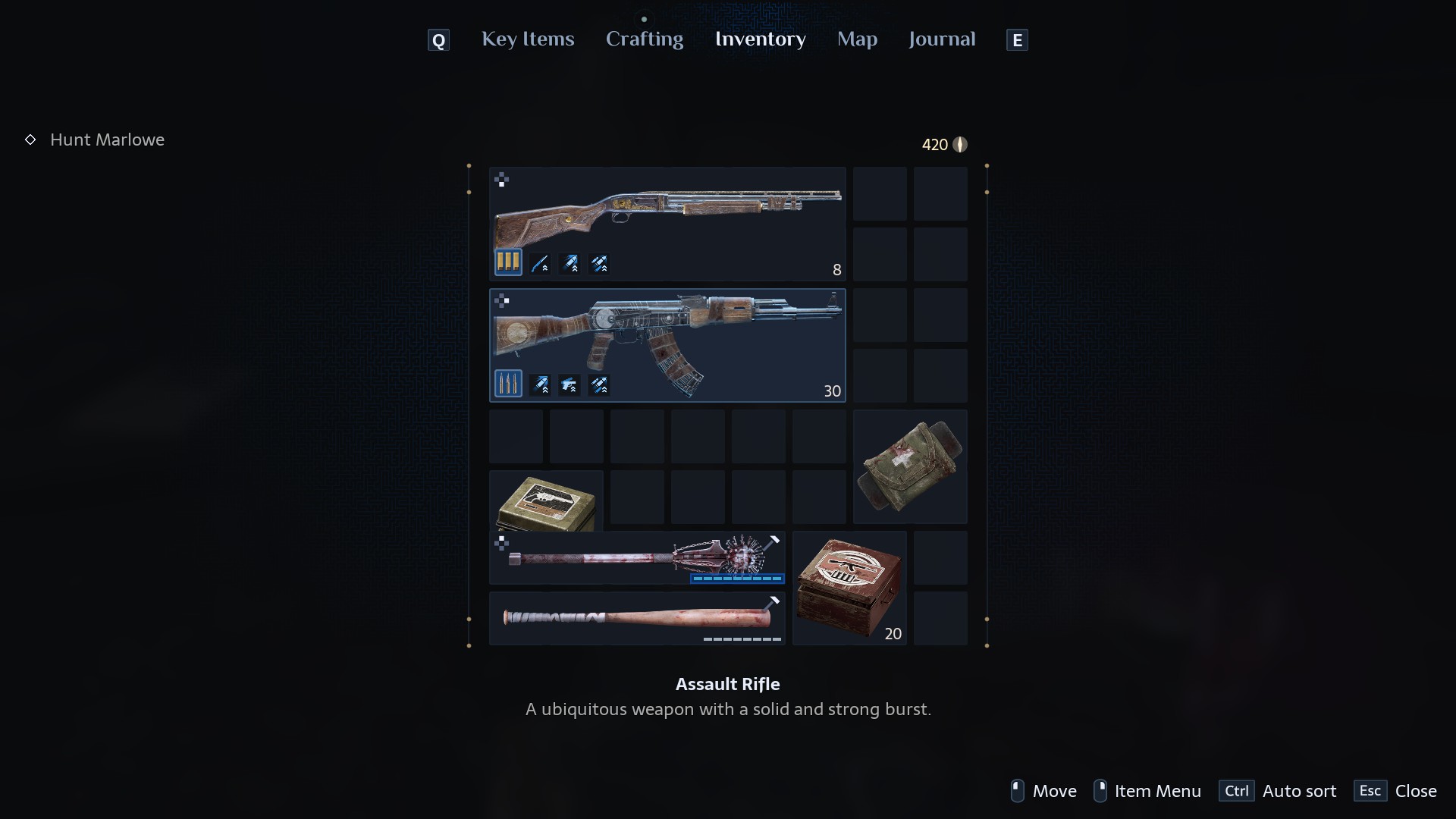
Filling that gap is an arsenal of firearms whose variety isn't particularly huge by modern standards, but I personally found it adequate, especially since I didn't even get to test every weapon thoroughly. Part of the reason is the ammo—there really isn't much of it, and when I say that, I mean it. You will be forced to juggle everything at your disposal because resources are scarce. If you can’t scavenge ammo or supplies anywhere, you can craft them through a very simplistic crafting system. And if even that isn't an option, you can buy extra gear from a merchant named Zora, who chimes in with remarks on current events as well as the transactions you make.
The final combat layer lies in the Genesis Configuration which, much like BioShock (albeit on a simpler level), offers extra depth through fire manipulation and telekinesis. You can ignite groups of enemies, or more interestingly, slice them in half by hurling sharp objects via telekinesis. This forces you to scan the environment and strategize, as such objects are scattered throughout the rooms. There is also an ultimate ability, but I’ll leave that for you to discover on your own.
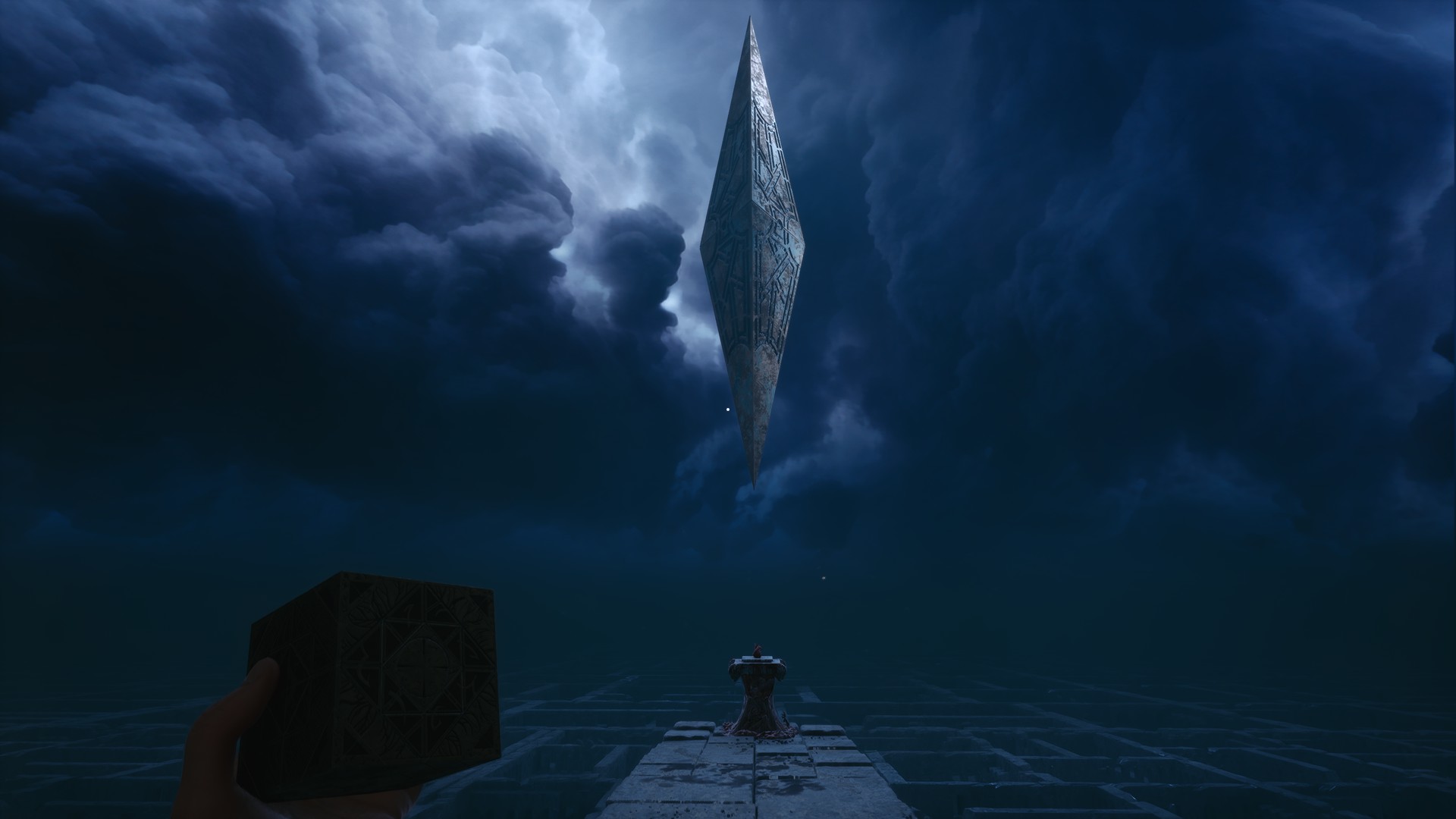
Shoot, run, solve, and sometimes Hide!
The aspect where the developers at Saber Interactive hit their stride within the genre is the gameplay pacing, alternating dynamically between two modes: action and puzzle segments. The action segment, though it also contains some puzzles, is described above, while the other involves Aidan's excursions into the alternate dimension. There, we get chase sequences where one of the godlike entities relentlessly pursues us through narrow corridors, leaving us to run, dodge environmental hazards, and solve small puzzles with the box on the fly. An average playtime of around 10 hours is ideal—neither aspect overstays its welcome, nor does the narrative drag out, resulting in great pacing.
What cannot be described as even remotely ideal, however, is the stealth mechanic. Sneaking around and scoring takedowns is another tool at our disposal, at least in theory. The issue is that the mechanic simply doesn't work well; enemies will spot you from an entirely different room and raise an alarm across the whole building in a split second. There are a handful of mandatory stealth sections, and they are undoubtedly the worst part of the entire experience, but luckily they only amount to a few minutes in total.
Parry? Not in this hell!
Since, much to my delight, Aidan has no parry or block mechanics to rely on, the dash becomes your sole defensive maneuver, allowing you to dodge in all directions. This proves crucial in confrontations with enemies who vary significantly in visual design, even if their underlying mechanics remain fairly similar. The ranks include cultists who come equipped with melee weapons, firearms, or even full-body armor, forcing you to strip their plates away with a blunt weapon first.
Then there are the so-called "The Unworthy"—grotesque, zombie-like creatures warped by the Labyrinth's influence. They share similar attack patterns and love forcing QTE sequences whenever they get too close and grab you. The second half of the game also introduces kamikaze-type enemies that sprint at you at breakneck speeds and explode upon a hit to the torso, dealing splash damage to everything nearby. The boss battles are a mixed bag; some bosses exist purely to drain every last round of ammo just when you thought you were safe, while others, like the final encounter, are genuinely great.
Is the Box worth opening?
When all is said and done, it’s clear that Clive Barker’s Hellraiser: Revival is neither a flawless game, nor does it try to reinvent the wheel when it comes to the survival horror genre. Saber Interactive definitely didn't deliver a mechanically immaculate title, but where they undeniably succeeded is in bringing one of horror's most iconic universes into an interactive format exactly as it deserves. There was no pandering to mainstream audiences here; instead, the world is portrayed exactly as it ought to be—brutal, grotesque, repulsive, and twistedly alluring in its uncompromising erasure of the line between agony and ecstasy.
I can gladly say that behind this game stands a team of talented people who genuinely understood the essence of Hellraiser and managed, with clear passion, to translate it into an interactive medium. The $40 price tag isn't insignificant, but I believe it is justified, as this is a truly unique experience you won't soon forget—both for its strengths and for what you will see and endure.

Discussion(0)