
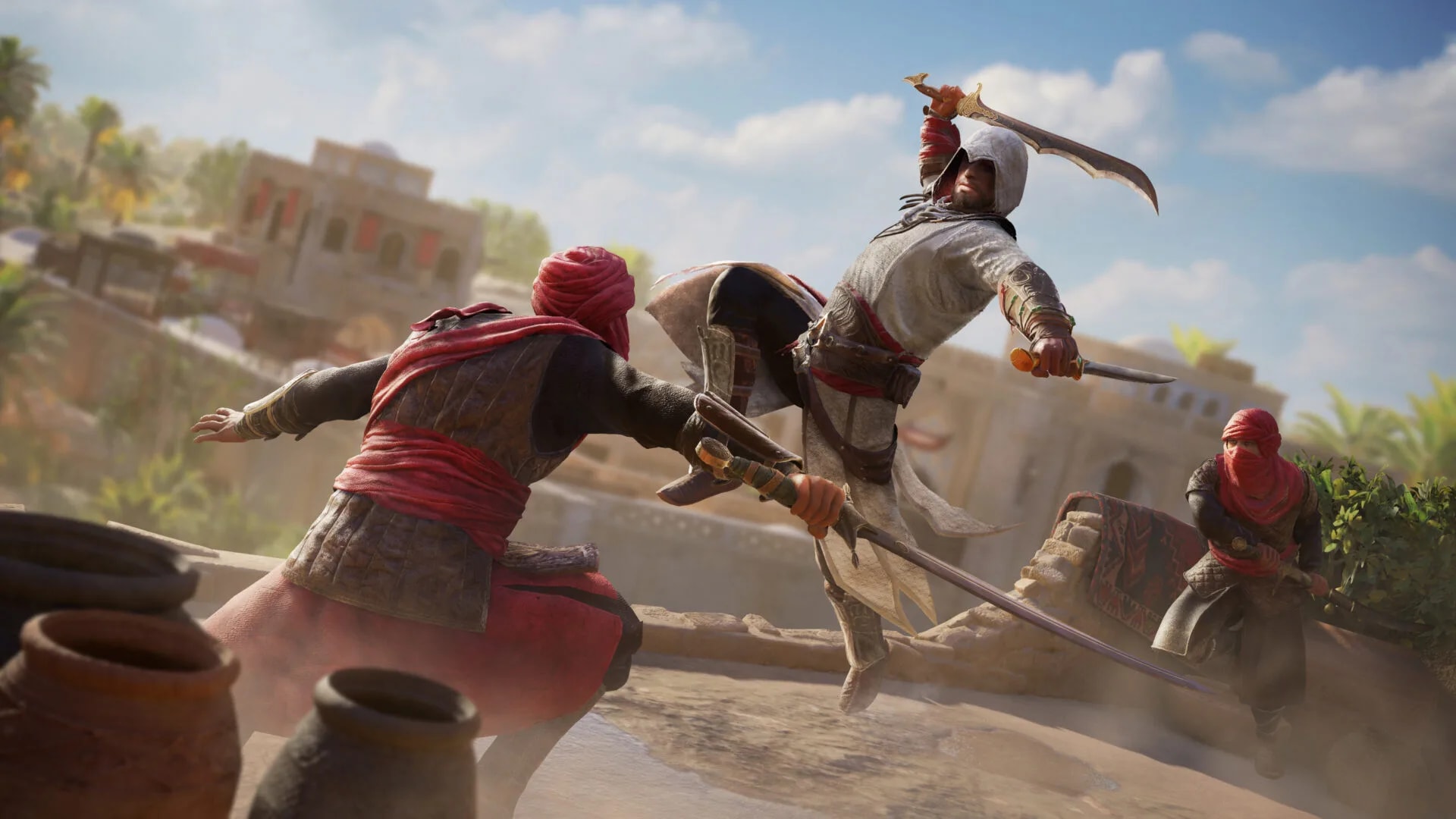

Ubisoft has finally decided to tone down its tendencies of providing us with massive and boundless open-world adventures every year and instead give players what they craved – a 20-25 hour story – and the well-known Assassin’s Creed.
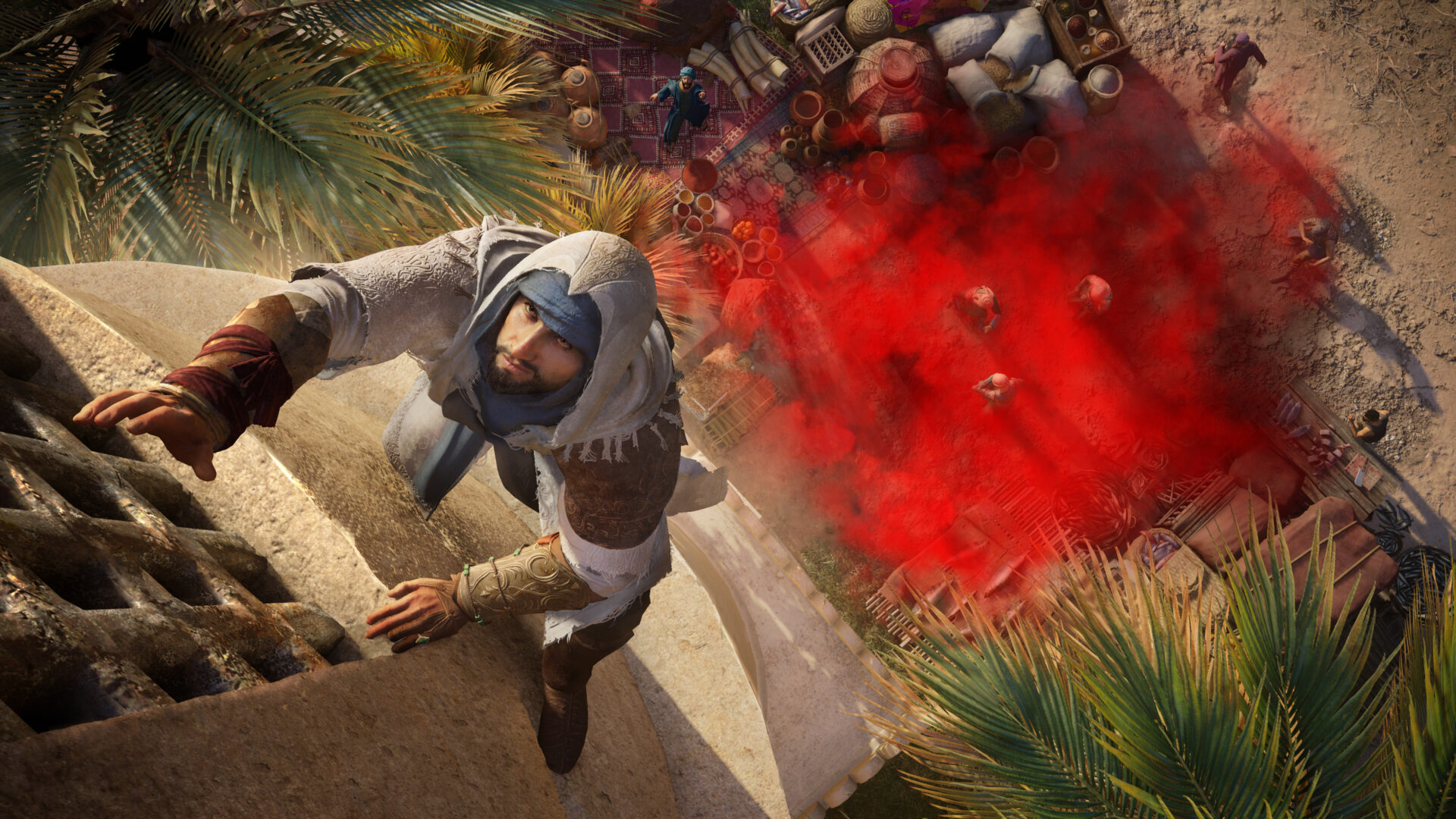
Returning to the well-regarded format of the AC franchise doesn't mean Mirage is free from all sins, even though it’s a decent enough title; however, one notices the indelible mark that its ancestors managed to carve. Set in Baghdad in 861, you take on the role of a young street thief named Basim who has high ambitions of joining the secret order of assassins called The Hidden Ones – named so because if the relentless guards and armed entourage discover them, they will shred Basim as finely as meat in a kebab shop. Basim isn't alone in his first thieving endeavors as he is accompanied by his oldest friend Nehal, and the two of them try to steal from the palace, but the plan goes wrong and Basim initially considers Nehal a traitor, though they later reconcile in the story for reasons that don't seem entirely clear.
A concise and focused experience
The setup of Mirage is quite modest for a core Assassin’s Creed entry because it lacks a compelling punch to drive you forward, especially when Basim becomes disillusioned that The Hidden Ones reject him immediately. Basim eventually gets the free toy in his Happy Meal and is able to join the Hidden Ones, taught by his mentor Roshan, who enables Basim to perform excellently in combat by showing him combat tricks.
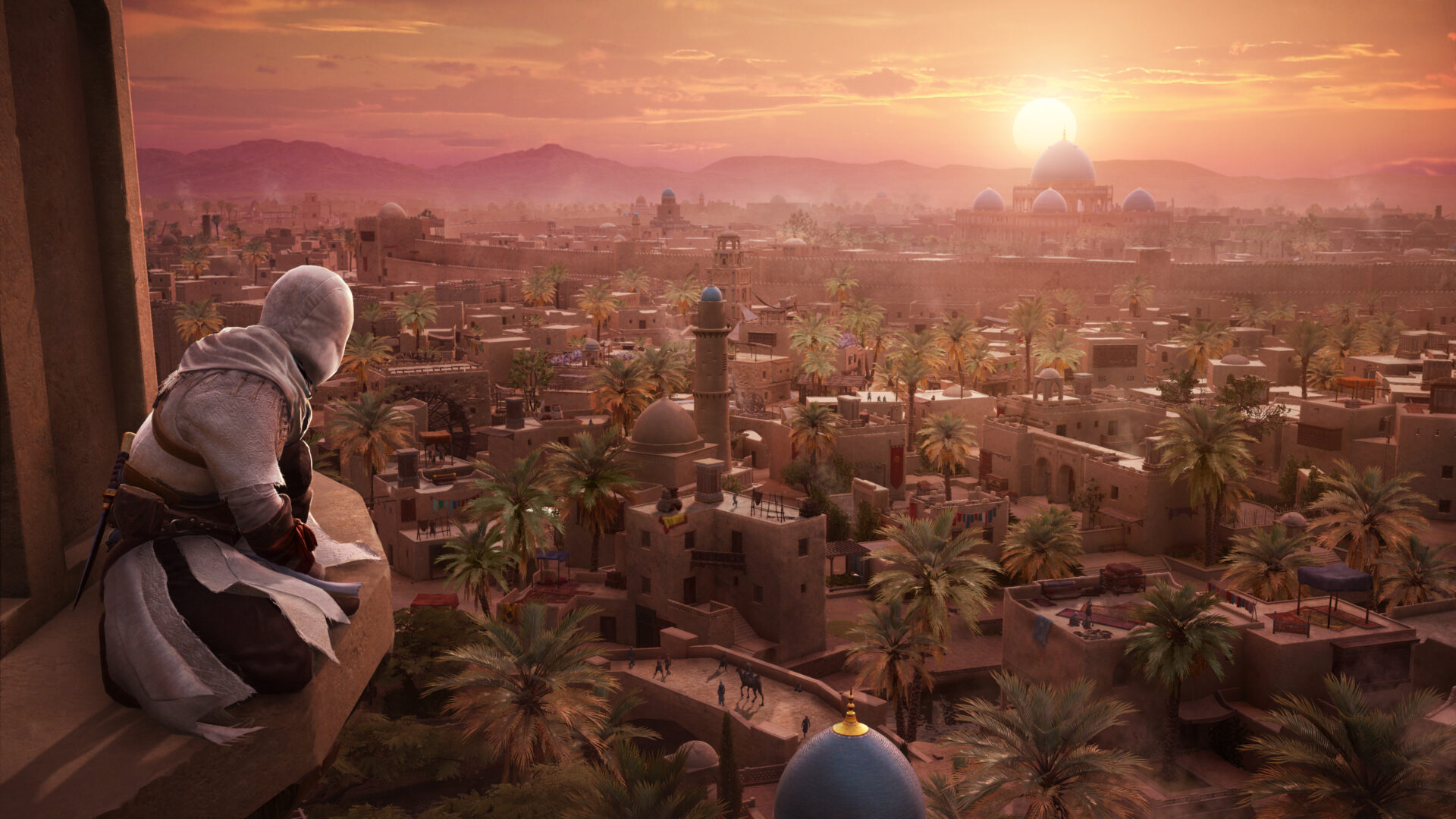
If you are an Assassin’s Creed franchise veteran, Mirage will feel as comfortable as slipping into a pair of soft slippers due to the familiar framework that gives it an accessible edge. No, Baghdad isn't as significant as Egypt, Greece, or Anglo-Saxon England, but the advantage is that the smaller towns and markets give it a warmer core, with an enticing feeling that they don't visually overwhelm you, but soothe you. Unless huge journeys across miles of desert terrain can exhaust you if you don't choose to ride a camel, Baghdad is otherwise a pleasantly unusual place for Assassin’s Creed.
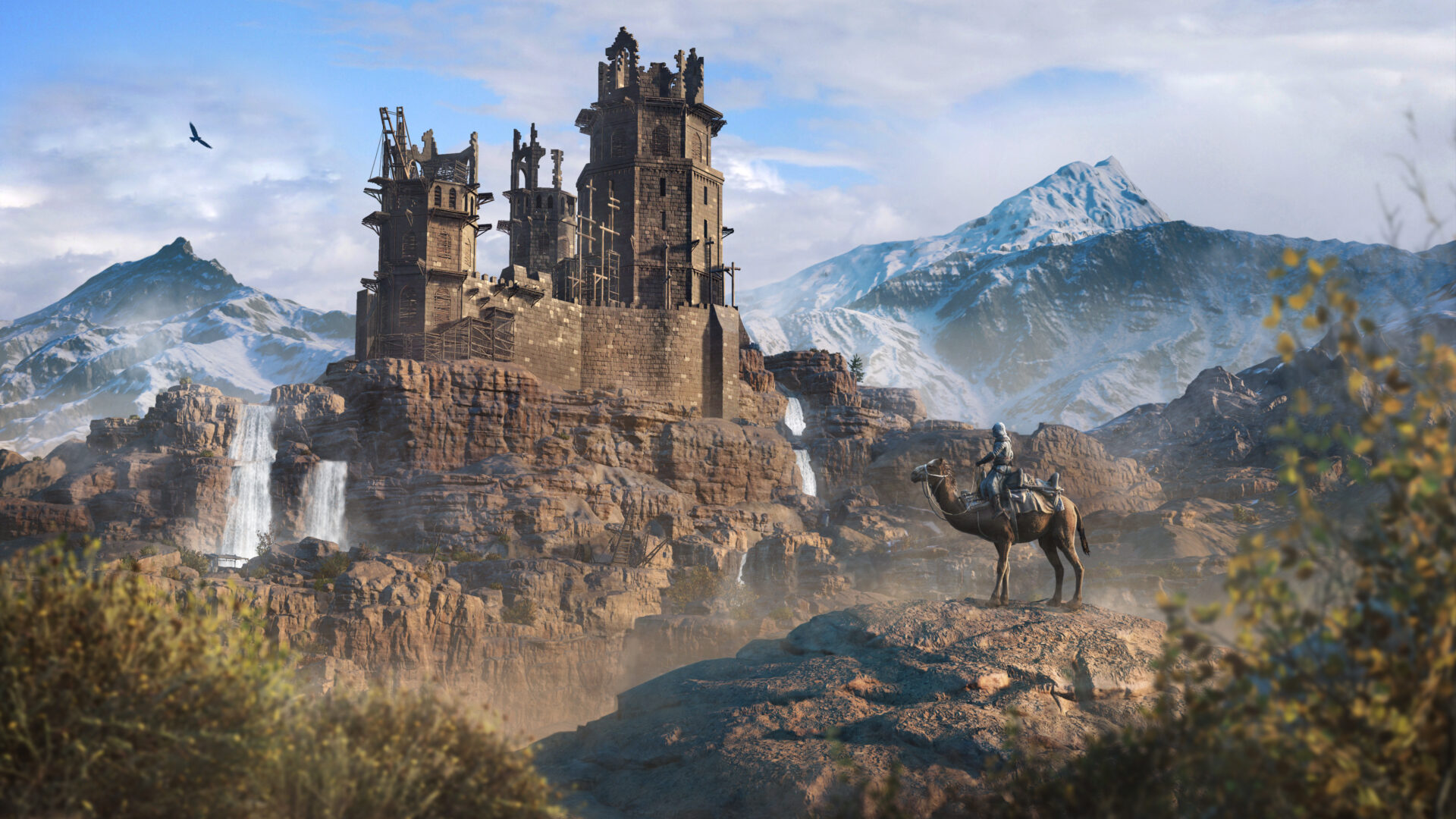
Another plus in Mirage’s favor is that it provides something of a middle ground between the bulkier Assassin’s Creed titles and the classic format before Origins. Aspects from recent titles return like spy-birds, this time with Enkidu as the newest winged observer from the sky, who is excellent at picking out targets during espionage and spotting key figures you need to locate to proceed with story missions. Meanwhile, the way Mirage adheres to the old Assassin’s Creed formula and uses it in an attempt to provide a smaller but finely polished experience allows it to feel concise and focused, far from an overblown open world.
Stealth and combat mechanics
A slight weakness of Mirage is the mission layout structure. Now called “Investigations,” your missions revolve around trekking to your locations and finding hints for your next assassination target, which usually tasks you with finding informants who will guide you by giving you key information in exchange for currency or something else they seek.
Unlike previous entries in the franchise, Mirage is better thanks to complaining citizens who will scream at the guards if they notice you doing your job, regardless of whether your activity is problematic or not. It’s a great idea to give a sense of danger to your endeavors in an Assassin’s Creed game; it really keeps you on your toes and on the rooftops to avoid the angry mob below you, although it’s a bit silly that so many innocent people think you must act like whining school children telling a teacher about your infraction.
Sword-slinging deserves some praise this time as well, putting emphasis on well-timed parries and dodges when garrisons glow red so you don't get cut. A successful parry can deliver a super-satisfying riposte where Basim will perform a brutal finishing move. Again, the element of danger in Mirage is heightened and gives it a pleasant motif.
Technical issues and uninspired viewpoints
Mirage is an unmistakable wannabe classic Assassin’s Creed title, and while its intentions are certainly in the right place, the results are definitely mixed. On one hand, Mirage is smaller, has a welcome emphasis on stealthy action gameplay, and doesn't feel cluttered with map icons that have plagued this franchise since its debut. However, plenty remains as a drawback for Mirage to be placed at the top.
First of all, the characters are ineffective, doing little to step away from the franchise's clichés, and side jobs present themselves as mere chores. You can set off to pick flowers for a grieving woman who recently lost her husband, but that’s all you have; interactions with her are also sterile, as she is initially tired of it, but seeing him dryly explain that he has also lost people, she allows him to help her. Assassin’s Creed games usually involve you poorly in the lives of citizens you give alms to, and here it’s the same old dry thing where interactions don't feel authentic or grab attention.
Compounding Mirage’s troubles is a collection of technical issues that plague Mirage to the point where it feels like a bad joke Ubisoft has. Jittery performance shouldn't be anywhere near as concerning in a smaller AC game like this. Once, the game temporarily froze while I was racing through the streets of Baghdad before the game decided to continue. It's as if Mirage acts like a 100-hour RPG instead of a 20-hour adventure; it’s staggering how poorly it runs from time to time, especially compared to its far more polished open-world predecessors.
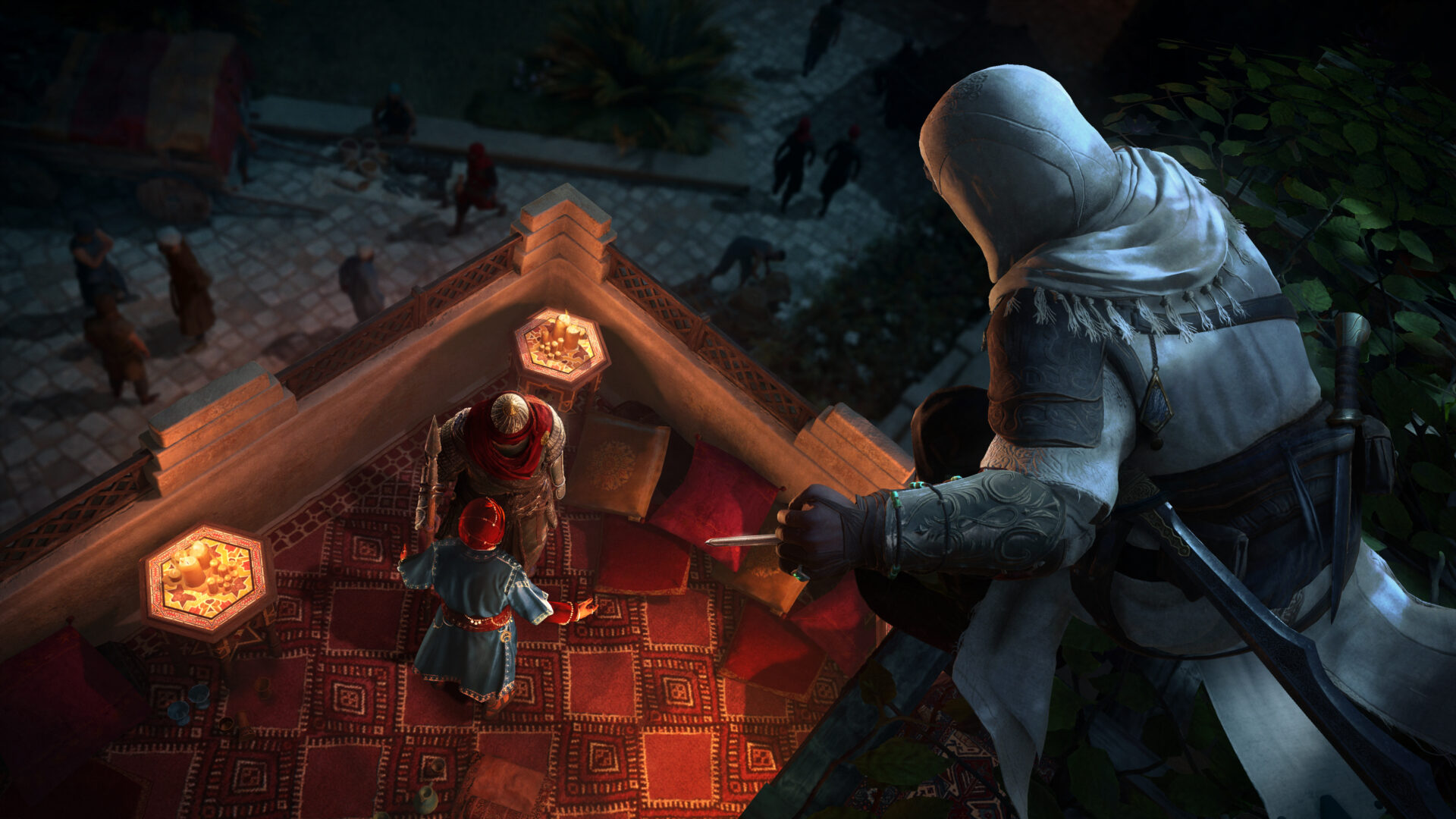
Viewpoints have been a staple of Assassin’s Creed games since their inception, but those scattered across the Baghdad landscape are uninspired, mostly consisting of spherical towers with a wooden stand for Basim to observe the wide-open expanse stretching before him. One of the pleasures of climbing viewpoints is the incredible sense of verticality and the majesty of the view, but this time the sense of scale when maneuvering them isn't exciting, even if the views still take your breath away.
Assassin’s Creed still looks impressive in some places. Yet, in some strange way, Mirage is an uncomfortable reminder of the 14-year-old PSP game Assassin’s Creed: Bloodlines, whether it’s inherent in the way Basim moves or some less-than-impressive visuals; it’s quite disturbing to venture into such a comparison, but given how uneven Mirage is, those doubts are justified. The music is good for Assassin’s Creed, compatibly evoking the time period and setting while feeling coherent with other Assassin’s Creed adventures.
There is no simple way to put it; Assassin’s Creed Mirage is a big mess of good and bad. The setting, the shortened Assassin’s Creed experience, the emphasis on stealth, and the heightened sense of danger give Mirage the worthy ingredients for a small and rich Assassin’s Creed stew. This isn't the kind of quality Ubisoft is truly capable of for Assassin’s Creed, despite being quite welcome thanks to the reduced length of the game. Overall, this latest title has its bright spots, but it could have ended up with serious fine-tuning.

Discussion(0)