

The digital realm of modern tank warfare, defined by the global phenomenon World of Tanks, rests on a fascinating but often frustrating balance between pure skill and mathematical probability. At the heart of this dynamic lies the Random Number Generator (RNG), a system that governs every projectile fired, every millimeter of penetration, and every point of damage dealt. Among players worldwide, the +/- 25% variance mechanic has become a symbol of distrust, a source of endless conspiracy theories about "rigged" matches, and a catalyst for emotional reactions that often end in destroyed hardware. This analysis deconstructs the mechanisms driving this system, examining whether RNG is a necessary tool for balancing a massive simulation or a sophisticated method of manipulating player behavior.
Anatomy of Variance: The +/- 25% mechanic on penetration and damage
The fundamental premise of World of Tanks is that no gun parameter, except reload time and movement speed, is a fixed value. When a player aims at an enemy vehicle and presses the fire button, the game does not use the static penetration value listed in the garage; instead, it initiates a random selection process within a wide spectrum of 50 percentage points. If a gun has an average penetration of 200 mm, the actual performance of the shell can vary from 150 mm to 250 mm. The same rule applies to damage; a gun that averages 390 damage points can, in practice, deal any value in the range of 293 to 488 points.
This variability is designed to simulate the unpredictability of a real battlefield, where factors such as steel quality, atmospheric conditions, and microscopic projectile damage play a role in the final outcome. However, implementing this "reality" in a digital environment creates a paradox: a player can do everything right, aim at a weak spot, and perfectly time a shot, yet still be punished by a system that decided to "roll" the lowest possible value.
Gaussian distribution and the myth of uniformity
A key technical characteristic of RNG in World of Tanks is that it does not follow a uniform distribution, where every number in the range has an equal chance of being drawn. Instead, the system uses a Gaussian or normal distribution (bell curve). This means that values close to the average are significantly more frequent than those at the extreme ends of the spectrum. According to available data and community analysis, there is approximately a 67% chance that an RNG result will fall within +/- 10% of the average value, while extreme "low rolls" or "high rolls" of +/- 25% are reserved for a small percentage of cases.
The mathematical representation of probability in World of Tanks suggests that the game should be predictable in the long run, but the psychological impact of the 33% of cases that deviate more than 10% creates a sense of irregularity. Players tend to ignore situations where they were lucky, while attributing every loss to bad RNG, a phenomenon known as negativity bias.
Penetration indicator discrepancy
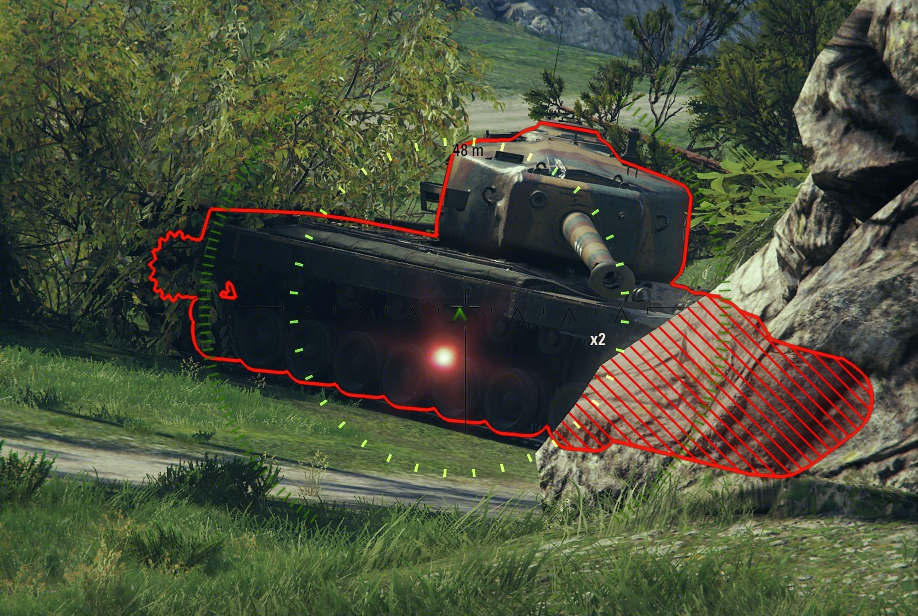
A particularly interesting insight into RNG mechanics is provided by research from independent analysts like Jak_Atackka, who discovered through decompiling client scripts (e.g., scripts\client\AvatarInputHandler\gun_marker_ctrl.pyc) that the in-game penetration indicator—the crosshair that changes color—does not follow the same rules as penetration itself. While the actual RNG range is +/- 25%, the indicator uses +/- 12.5% to determine its color. This means a "green" marker does not guarantee penetration; it only signals that the shell's average penetration is significantly above the armor thickness at that point. This disconnection between what the player sees and what the server calculates is one of the main foundations for accusations that the game is "rigged".
Parameter | Variance Range | Distribution Type | +/- 10% Probability |
Penetration | +/- 25% | Gaussian (Normal) | ~67% |
Damage | +/- 25% | Gaussian (Normal) | ~67% |
Module Damage | +/- 25% | Gaussian (Normal) | Unconfirmed |
Accuracy (Dispersion) | Within Circle | Gaussian (Normal) | Varies |
The Accuracy Paradox: dispersion and hidden "Sigma" parameters
While +/- 25% on penetration and damage causes the most rage, accuracy mechanics are what essentially define a gunner's skill. Accuracy in World of Tanks is defined as the radius of a circle at a distance of 100 meters within which 95% of fired shells will land. However, the mechanism determining exactly where inside that circle a shell will end up is much more complex than a simple random coordinate selection.
Understanding Sigma and Hit grouping
The concept of "Sigma" refers to the standard deviation in the Gaussian distribution of hits. The higher the Sigma, the higher the probability that a shell will land near the center of the aim. While Wargaming rarely publicizes Sigma values for World of Tanks, its sister game World of Warships uses this parameter as a key tool for balancing ships. In World of Tanks, players have noted for years that tanks with similar accuracy stats have a dramatically different "reliability" feel.
Analyses conducted by community members like DezGamez, through testing thousands of shots with various tier IX tanks, showed that hit grouping is not uniform for all vehicles. While some tanks "send" shells to the center 40% of the time, others with identical dispersion do so only 30% of the time, indicating the existence of hidden parameters modifying hit distribution within the aiming circle.
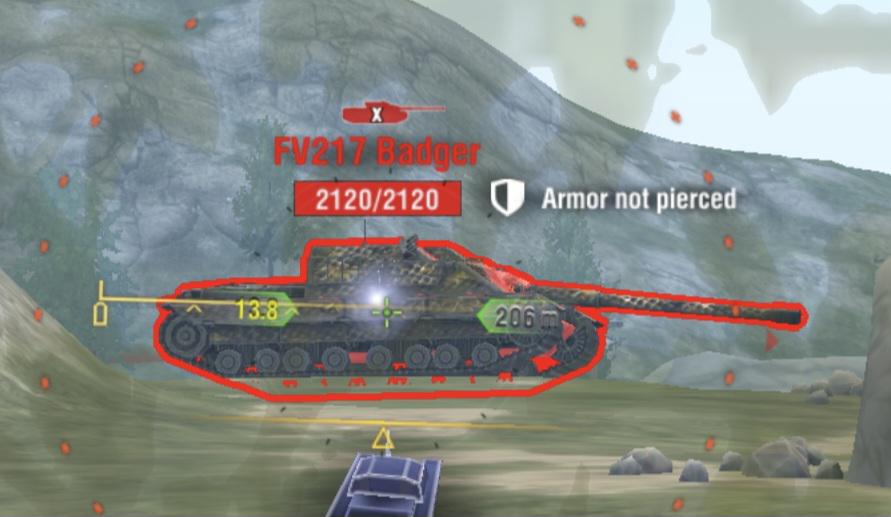
In World of Tanks, this often manifests as a feeling that after a series of excellent games, a player is placed in teams that fall apart in the first three minutes, regardless of individual performance. Psychologically, a loss hurts more than a win feels good (loss aversion), further intensifying suspicion of RNG mechanics.
"Web of Lies" and Cognitive Biases
The World of Tanks community is particularly susceptible to cognitive biases:
Negativity Bias: Players remember the one shot that missed a tank with 1% HP but forget ten situations where they survived thanks to a lucky enemy ricochet.
Confirmation Bias: Every time a suspicious miss occurs, the player sees it as confirmation of their theory that the game is against them, ignoring the statistical inevitability of variance in a large sample of battles.
Modern Battlefield Dynamics: The 15-0 Battle Phenomenon
One of the most common arguments for "rigged" matchmaking is the frequency of "turbo-battles" ending 15-0 or 15-2 within four minutes. While often attributed to deliberate team stacking, analysis of game mechanics offers a more prosaic explanation: the "Snowball Effect".
Why Matches Collapse Faster Than Ever
Several factors in modern World of Tanks contribute to rapid defeats that feel predetermined:
High Burst Damage Meta: The proliferation of autoloaders and autoreloaders means mistakes are punished with instant destruction, which was not the case ten years ago.
Vehicle Speed: Most modern tanks move at speeds once reserved for only the lightest vehicles. This allows a winning team to quickly overwhelm the rest of the map once a single line is breached.
No HP Regeneration: Unlike games with respawning or healing mechanics, all damage in World of Tanks is permanent. Losing just one gun in the first minute creates a numerical and firepower inferiority that is statistically almost impossible to overcome in a 15v15 format.
Streamers and top players often point out that the matchmaker does not look at skill (WTR or WN8), leading to situations where one team has five players with a 60% win rate while the other has five with 45%. Under these conditions, the battle is decided before leaving the base, creating the illusion of systemic rigging.
Wargaming Strategy: The Business of Frustration and Balance
Is RNG a balancing tool or a source of frustration? The answer is—both. From a designer's perspective, +/- 25% RNG is the "great equalizer."
The Role of RNG as Protection for Lower-Skill Players
Without high variance, World of Tanks would become a purely technical game where the better player would win 100% of the time.
RNG allows a "potato" (lower-skill player) to occasionally destroy a top player, providing the dopamine fix needed to keep playing.
If accuracy were absolute, armor would become irrelevant as anyone could hit the smallest weak spots from any distance. RNG preserves the value of heavy armor by making it "statistically" effective.
Economic Aspects of RNG
There is also an undeniable economic motive. Frustration caused by poor penetration RNG directly pushes players toward using "Gold" ammo (APCR/HEAT projectiles with higher penetration). Higher penetration reduces the chance that a negative RNG roll will result in a bounce, effectively buying more consistency at the cost of virtual currency most easily replenished with real money.
Conclusion: The reality behind the rigged game myth in World of Tanks
Analysis of all available data—from decompiled scripts and mathematical distribution models to patent analysis and experimental matchmaking systems—leads to a nuanced conclusion. World of Tanks is likely not "rigged" in the way an average player imagines in the heat of the moment (where the server actively decides they must lose), but the system is deeply optimized to be unpredictable, emotionally draining, and designed to keep the widest possible range of players in the game.
The +/- 25% RNG is intentionally set high to blur the line between skill and luck, creating an environment where everyone can feel like a winner at least for a moment. Matchmaking, although reverted to basic battle-count principles after unsuccessful experiments, still suffers from structural issues leading to one-sided battles, but this is more a byproduct of no-respawn game design than a deliberate conspiracy.
For the player who wants to maintain their sanity, the only path is accepting RNG as a natural law of this digital world. Skill in World of Tanks is not about achieving perfection but about managing risks in a system designed to fail you from time to time.

Discussion(0)