


We can look at the development of video games from many different perspectives, but one thing is certain: they’ve moved far beyond being just a simple medium for entertainment. Today, we can honestly talk about some games as a form of art. There are many reasons for this, but instead of going into all of them, let’s focus on one specific feature—what we usually call "escapism."
By the 90s, gaming had evolved enough to offer deep narrative experiences where players could live out the story of a hero. This wasn't just about following a script; it was revolutionary because we finally had the chance to shape our own characters and truly "step into the shoes" of a new protagonist.
Because of this, gaming is the perfect place to test out things that are unthinkable in the real world. There are no real-life consequences—no social norms, no judgment, and no laws to punish us. It’s just us and a world that follows our lead. On paper, this sounds like the ultimate freedom. But here’s the thing: even with all that autonomy, a huge majority of players still choose to make morally "good" decisions.
What do the numbers say?
Over the past year, and especially this last month, GTA 6 has been one of the biggest topics in the world. I’m sure many people are reading this intro with a smirk, thinking about how they just spent the afternoon blowing up police cars or causing chaos in the streets. Plenty of people play like that, and we’ll get to that part later, but first, we need to see if "being good" is actually the norm.
Any RPG fan has heard of Obsidian Entertainment—the studio behind classics like Fallout: New Vegas, Tyranny, and The Outer Worlds. They released data showing that a staggering 97% of players choose the "good" path in their games. BioWare, the creators of Mass Effect 3, reported that two-thirds of their players chose to be the "good guy," while only a third went the evil route. Most studies show the same trend: in the vast majority of cases, players make ethically sound choices.
There’s one important catch here: this data usually applies to the first time someone plays a game. According to research by Amanda Lange, about 40% of people only play through a game once. This matters because many people only try the "evil" path during a second playthrough. I’m adding this just to be precise, as modern research is a bit scarce and it’s debatable how much this applies to newer, much longer games that take forever to finish. But the exact numbers aren't the most important part—what matters is the psychological pattern.
Mass crimes, crystal clear conscience!
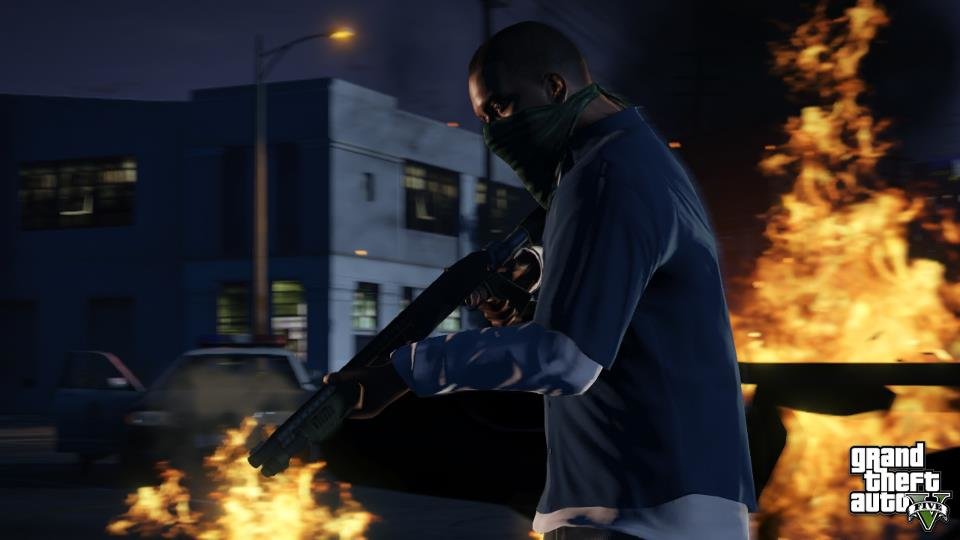
It’s only right to start this analysis with gamers who spent their time on titles like GTA, Hotline Miami, or Postal. These games are famous for violence and the deaths of innocent bystanders. This raises a logical question: are people who enjoy these games monsters, or is something else going on?
There’s a famous quote, often attributed to Stalin: "A single death is a tragedy; a million deaths is a statistic." As cold as that sounds, it describes a psychological phenomenon called desensitization. As humans, we easily empathize with an individual—someone with a face, a name, and a personality. But as the number of victims grows, individuality disappears. Our minds stop seeing them as people and start seeing them as numbers. That’s why running over a pedestrian in GTA doesn't trigger a moral crisis. NPCs aren't presented as people with families or lives; they’re just "props" or "assets" in the game world.
Another thing games like GTA do brilliantly is making a clear distinction between fiction and reality. Even though these worlds are incredibly realistic, there’s always a subconscious (and often intentional) message that "this is just a game." Whether it’s through cartoonish characters, absurd situations, or over-the-top violence, we are constantly reminded that everything we do is fake.
This "it’s just a game" mindset is a form of moral disengagement. It’s a psychological trick where a person ignores their usual moral standards because the context allows them to distance themselves from the consequences. When a player drives through a crowd in GTA, they don't see it as a moral problem because the "real-world rules" don't apply there. Instead of feeling guilt, they use rationalizations like: "they’re just pixels," "it’s just a mission," or the classic—"I just wanted to see what would happen."
I’m using GTA as an example, but this applies to many games. Of course, not all violence in games is just for fun; sometimes it’s there to tell a serious story or show the darker sides of the human psyche. But we don't have time for that right now, and it’s a bit off-topic.
The power of identification
The term "Role-Playing Game" (RPG) is often used very broadly, but it usually means a game where you take on the role of a specific character or create your own. The key here is identification. You aren't just controlling a puppet; you start to accept the motives, values, and goals of that persona. This is why RPGs can present us with moral dilemmas that trigger real emotional reactions.
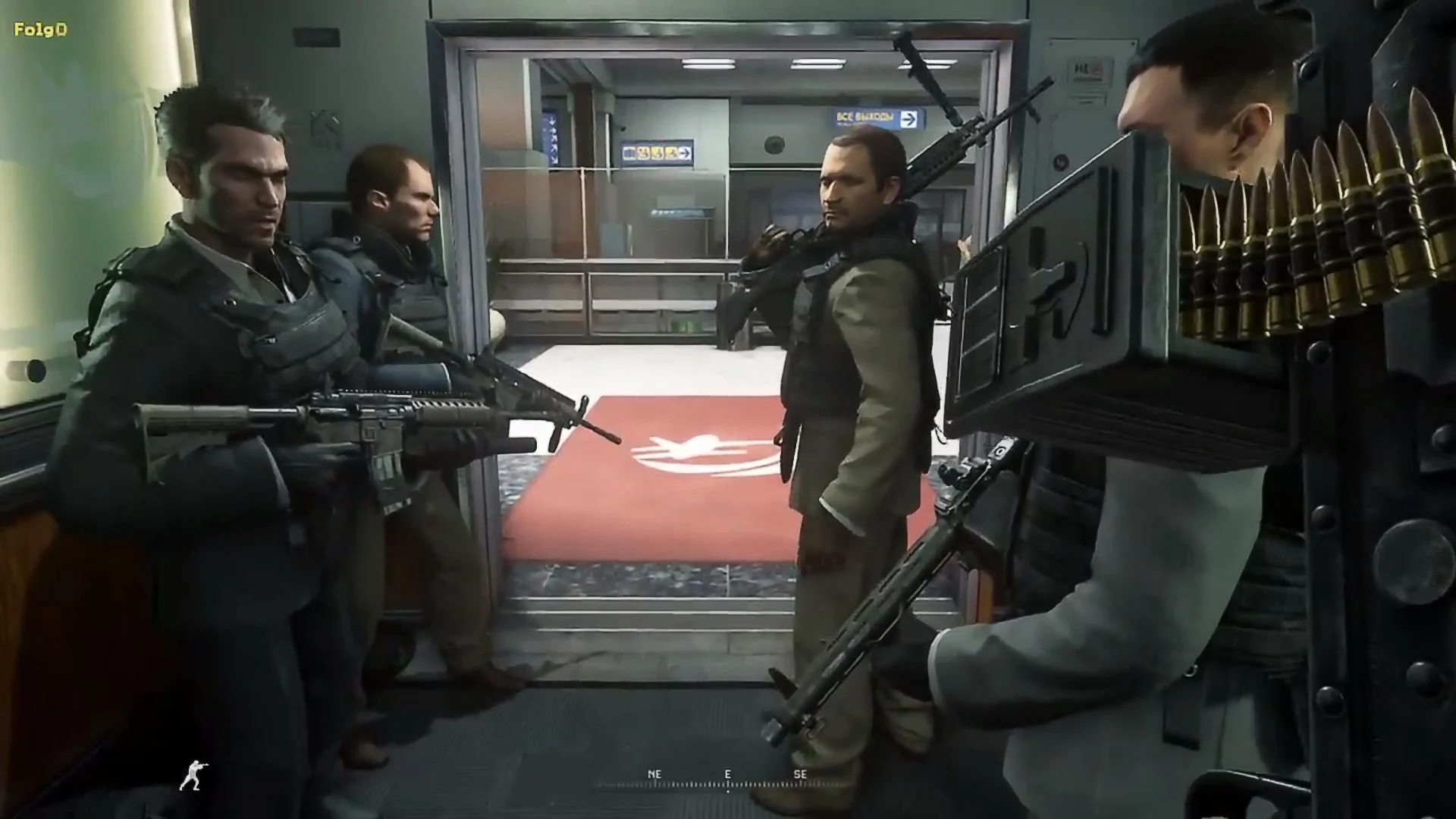
Why does this happen? Mostly because of our natural urge for moral self-affirmation. In simple terms, we want to keep our identity consistent with our real-life moral compass. Our game characters often become an extension of ourselves. Take the controversial "No Russian" mission in Modern Warfare 2, where you join terrorists in an airport attack. The game lets you choose: do you participate in the massacre, do you only shoot those who fire back, or do you refuse to shoot at all? Even though those "civilians" are just code, most players feel a psychological resistance to the violence.
For many, the first thing they think of regarding Fallout 3 is the city of Megaton and the nuclear bomb. For those who haven't played it, there’s a quest where you decide whether to disarm a nuke in the center of town to save the residents, or blow it up for a huge reward from a wealthy businessman. This is "moral activation"—the game wakes up your real-life principles and makes you think about the big picture and the long-term consequences of your actions.
Lastly, there’s the emotional side. In games that focus heavily on the story, we connect with the fictional characters on screen. We start seeing them as real people with hopes, dreams, and feelings. When a world is believable enough, the choices we make become a mirror of our own emotional state.
Being evil just to be evil!
We’ve talked about the human mind; now let’s look at the technical side of the problem. In many big projects, we see a very linear, almost childish way of handling morality.

Again, look at Fallout 3. Morality in Bethesda’s wasteland is incredibly simplified—almost every action gives or takes away "Karma" points. You’re in the desert and see a thirsty beggar. Give him water? The game gives you Karma and calls you a hero. Shoot him just to test your new gun? You lose Karma and become a villain. This highlights two major flaws in game design.
First, many moral choices are black and white. The game rarely cares about your context or personal motives. Help = Good, Hurt = Bad. That’s it. This doesn't make you think; it just makes you click the "right" answer. Morality becomes a quiz, not a dilemma.
Second, the "evil" path is often written as cartoonish. Your character doesn't kill because they have an ideology or a plan; they kill because that choice has a red icon. This makes the evil path feel not just wrong, but stupid. It rarely feels integrated into the story, so it ends up feeling like a side-thought.
Then there’s the issue of balance. Even if a player wants to be the villain, the game rarely rewards them for it. Does being evil get you better loot, cooler powers, or unique allies? Usually, no. Most of the time, the "bad" character is punished both morally and mechanically. It makes you wonder: why would I even play this way?
Ideally, every decision should have pros and cons that make sense. Being "good" could offer emotional rewards, trust, and long-term stability. Being "evil" could offer power, money, and control—but at the cost of being alone or constantly betrayed. Only then do these choices feel real, rather than just a points system.
Final thoughts
When you look at everything, the conclusion is clear: despite the absolute freedom games give us, most people still choose to be "good." This proves that video games are much more than just a way to kill time. They are a place where we test our morals, express our emotions, and project who we are. Being "evil" in a game isn't hard because the mechanics stop us; it’s hard because we naturally want to act according to our own values, even in a world that isn't real.
When a game is well-written, it can do something movies and books can't: it lets us live through a moral crisis instead of just watching it happen. The true strength of this industry isn't just giving us choices—it’s making us wonder why we chose what we did, and what that says about us as people.

Discussion(0)