
Sign In / Register
ABOUT USIMPRESSUMMARKETINGCONTACTOUR RATING SYSTEM
Sign In / Register
TECHPLAYGaming Portal
NEWS
REVIEWS
TECH
VIDEO
GUIDES
CALENDAR
DATABASE
FORUM
SHOP
SUPPORT US
TECHPLAYGaming Portal

Your ultimate destination for gaming news, hardware reviews, and esports coverage. Built by gamers, for gamers. Join our community today and level up your knowledge.

Content

  • News
  • Reviews
  • Tech
  • Video
  • Guides
  • Database
  • Forum

Community

  • About Us
  • Roadmap
  • Impressum
  • Marketing
  • Contact
  • Our Rating System

Subscribe to Newsletter

Get the latest gaming news and reviews directly in your inbox. No spam, we promise.

© 2026 TechPlay Gaming Portal. All rights reserved.

Privacy PolicyTerms of ServiceCookie PolicyImpressumContact Us
The Worldsoul Saga and the future of World of Warcraft
NewsGamingThe Worldsoul Saga and the future of World of Warcraft
Gaming

The Worldsoul Saga and the future of World of Warcraft

adi

Adi Zeljković

Author

Loading...Published
5 min readRead Time
243Views

"The War Within shows that systemic weaknesses can be mitigated and adapted to the modern lifestyles of players. "

When Chris Metzen took the stage at BlizzCon 2023 and announced the Worldsoul Saga—a trilogy of expansions consisting of The War Within, Midnight, and The Last Titan—the message was clear: Blizzard wants to close an enormous narrative chapter that has been building for nearly twenty years. That moment carried a mixture of euphoria, nostalgia, and a cautious hope that World of Warcraft still has the strength to consolidate and find a stable direction.

By early 2026, The War Within has over a year of active life behind it, and the community's attention is slowly turning toward the next chapter, Midnight. In these discussions, the same question arises more frequently: Has WoW truly been saved by this move, or has it simply entered a phase of carefully controlled, dignified aging?

The answer, like much else in Azeroth, is not straightforward.

Adapting to a mature audience

Following the problematic Shadowlands period and the stable but thematically safe Dragonflight, The War Within faced an ungrateful task. It had to restore a sense of narrative weight and continuity while simultaneously adapting the game for an audience that is significantly older today than during WoW's golden years. A large portion of players now have jobs, families, and limited time, and Blizzard has—for the first time in a long while—clearly taken this into account.

The most visible example is the Warbands system, which shifts progression from an individual character to the entire Battle.net account. Reputations, unlocks, and parts of progression are shared among characters, finally embracing the idea that the player, rather than a single avatar, is the true constant in a long-term MMO experience. In practice, this makes WoW considerably more accessible and less frustrating for those who want to play multiple classes without feeling like they are constantly starting from scratch.
World of Warcraft

A similar philosophy follows Delves, a new type of instanced content designed for solo players and small groups. Instead of rigid schedules, guild obligations, and high performance pressure, Delves offer shorter, flexible sessions that still provide meaningful progression. This doesn't replace raids or Mythic+, but it significantly expands the definition of endgame content and acknowledges that not everyone plays WoW the same way.

Narrative and technical reality

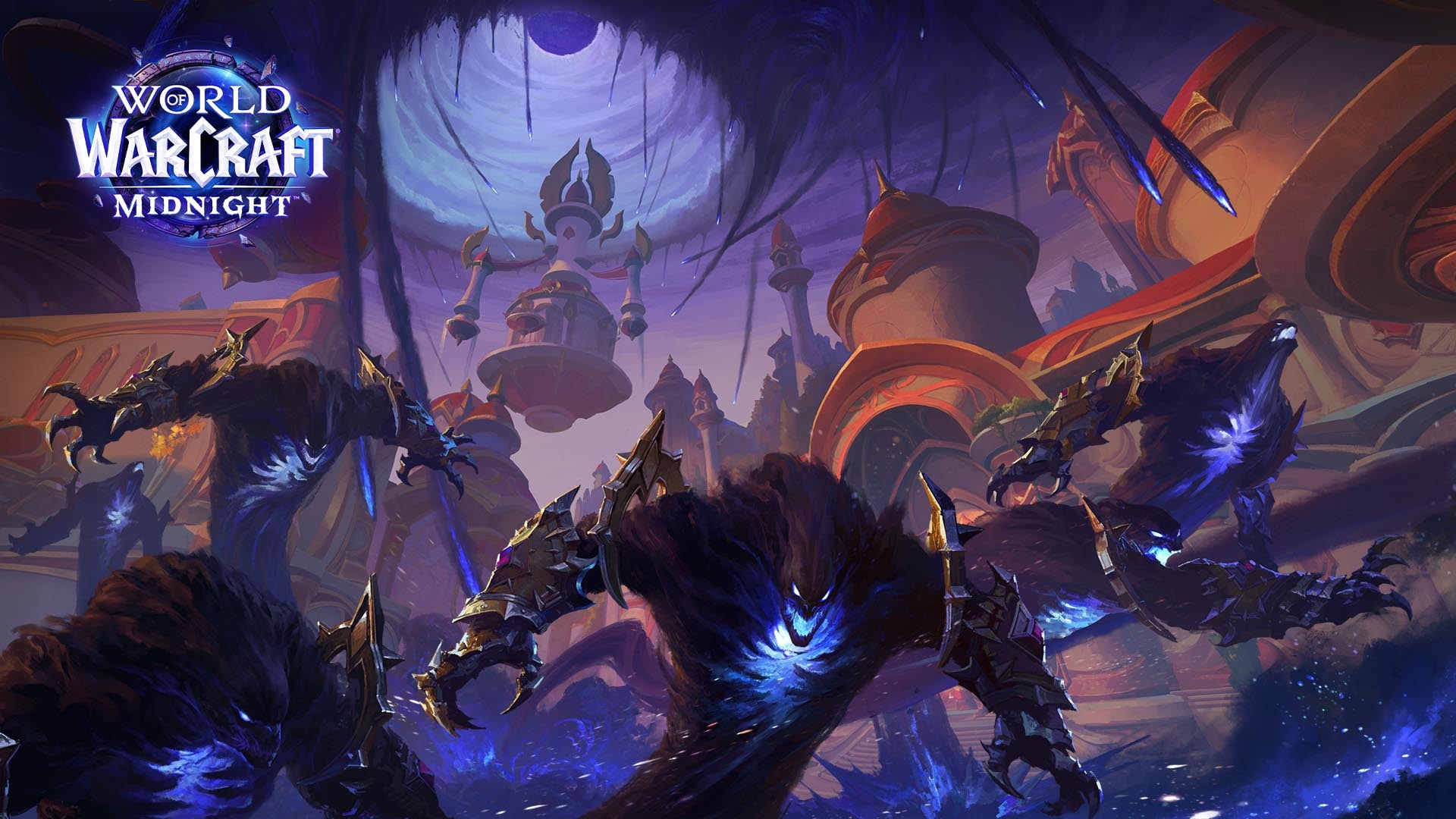
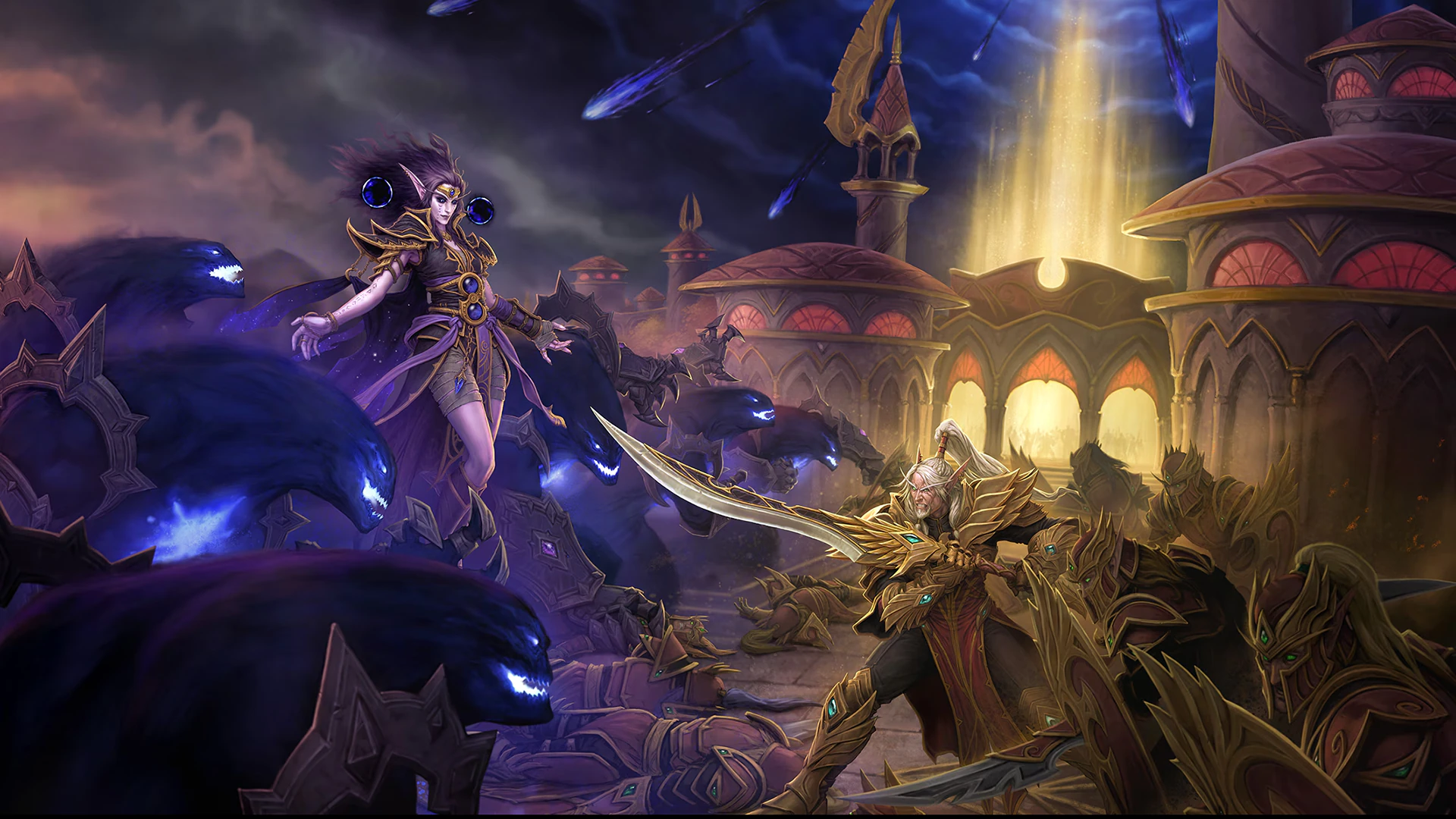
Narratively, the Worldsoul Saga feels like a conscious attempt by Blizzard to re-establish a long-term story structure. Instead of isolated expansions that close in on themselves, the story is now clearly framed as a multi-year arc, with Xal’atath and the themes of the Void and Titans acting as the central axes. This doesn’t mean the story is revolutionary, but it feels more focused and confident than in previous cycles.

However, it is important to separate the feeling of stability from measurable facts. Blizzard hasn't released subscriber numbers for years, so any claim regarding growth, stagnation, or "the best engagement in years" must be treated as an estimate rather than a provable fact. It is reasonable to say that WoW has been systemically consolidated and modernized, but there is no clear data to confirm a spectacular "comeback."

Besides design decisions, WoW in 2026 cannot escape its own age. Although the engine has been significantly upgraded over the years, the game's technical framework still carries the legacy of a long development cycle. The stylized art direction continues to age well and remains recognizable, but compared to games built on modern engines, WoW cannot offer a technological spectacle or photorealistic effects. This is a conscious decision favoring accessibility and stability, but it is also a clear limit the game can hardly cross.

The situation is similar with the combat system. WoW remains deeply rooted in tab-target design, with complex rotations and numerous abilities. For veterans, it is a familiar and comfortable system, but for new players, it represents a significant barrier. Entry is not impossible, but the learning curve remains steep and often requires external help or mentorship.
World of Warcraft

The changing MMO landscape

When looking at the broader picture of the MMO genre, it becomes clear that the problem isn't that MMOs are disappearing, but that they are changing. Market data indicates genre growth, but that growth primarily comes from mobile, free-to-play, and cross-platform titles. Classic subscription-based PC MMOs like WoW increasingly function as specialized communities for a loyal audience rather than mass cultural phenomena.

In this context, World of Warcraft today competes not only with other MMOs but with the entire digital entertainment ecosystem—from streaming platforms to short, intense multiplayer experiences. Attention has become the most expensive currency, and WoW is trying to retain its audience by offering a more flexible and less demanding way to play.

On the horizon, Riot’s MMO is often mentioned, though it remains more of a promise than a concrete threat for now. The project is confirmed and has undergone a design reset, but it still lacks a release date, public gameplay, or a beta phase. For WoW, this means a prolonged period without direct competition of that caliber, but also a constant expectation that "something big" will one day appear.

Conclusion

In the end, the question of whether the Worldsoul Saga "saved" WoW might be misplaced. What is clear for now is that Blizzard has successfully redefined World of Warcraft as a long-term live service for a loyal player base, rather than trying to reclaim its status as a global pop-culture phenomenon from the early 2010s.

The War Within shows that systemic weaknesses can be mitigated and adapted to the modern lifestyles of players. WoW is a technological veteran, but it remains functional, recognizable, and alive. It may no longer be changing the industry, but it still knows how to keep the audience that grew up with it.

Midnight will have the task of proving that Azeroth can still strike an emotional chord—perhaps not for the entire gaming world, but certainly for those who have been returning to that world for twenty years. And for a game of that age, that might just be its most important success.

Stay Connected

Follow us for the latest gaming news and updates

TechPlay.gg

© 2026 TechPlay.gg•All rights reserved. Content sharing is permitted only with a mandatory active link to the original source.

Unauthorized use of text, photos, or video is prohibited.

Tags:GamingTechnologyGaming

Share this article

adi

About Adi Zeljković

They say he never sleeps! He lives in the blur between code and screen. While the world rushed through levels, he transcribed the cries of fallen bosses and the whispers of the machine. After 30 years in the digital trenches, his ink is binary. He isn't here to review games—he's here to archive the chronicle of our digital existence.

View Full Profile

Discussion (0)

Loading discussion...

On this page

  • Adapting to a mature audience
  • Narrative and technical reality
  • The changing MMO landscape
  • Conclusion

Trending Now