
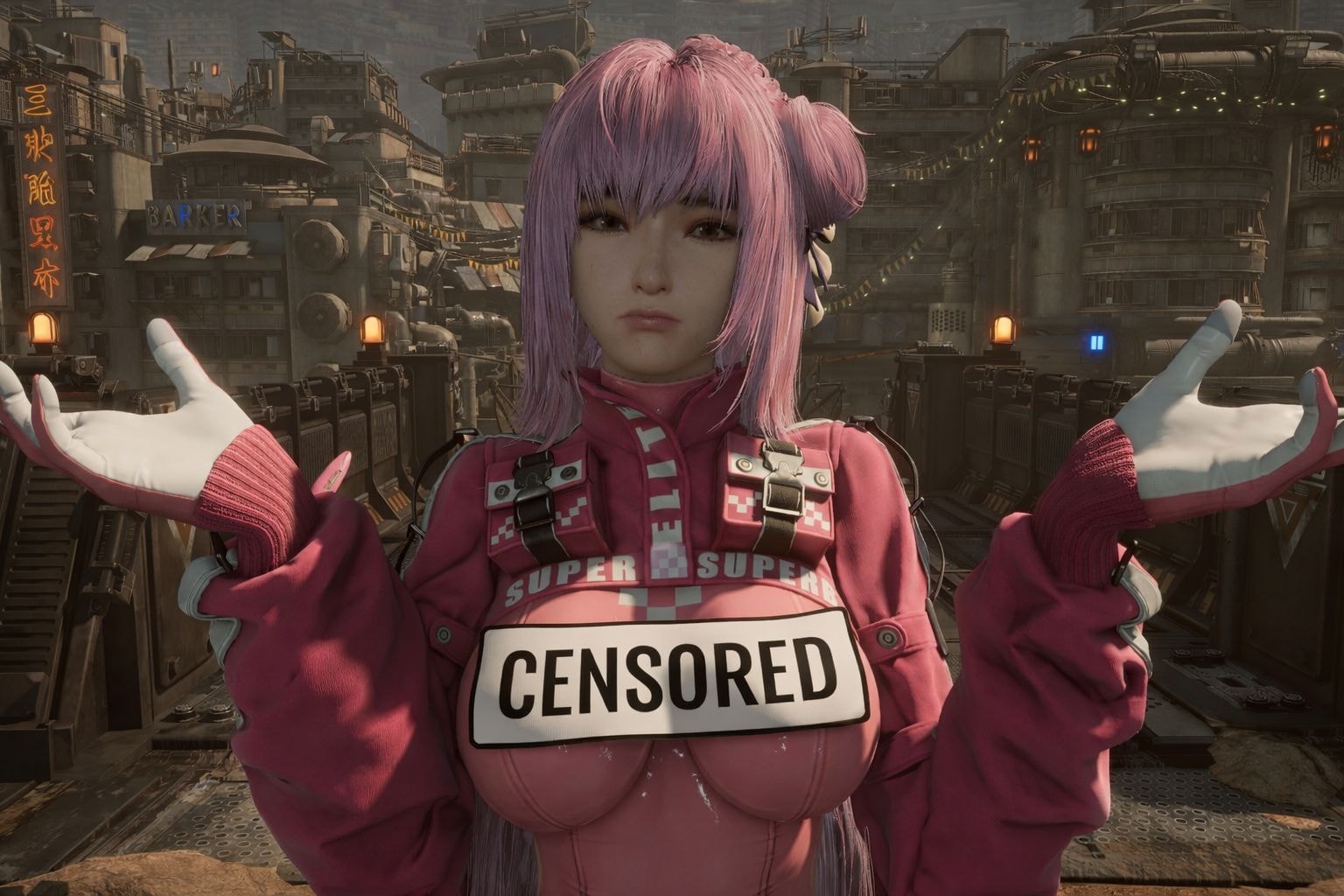

Much was said about the South Korean studio's creation from the start, not because of its complexity or narrative depth, but because it became a battleground for the clash between two modern visions of the industry. We are now talking about a title that unequivocally enjoys the favor of both players and critics, and for the most part, only words of praise can be heard.
I would be lying if I said I didn't harbor a great deal of skepticism toward collective praises of any product, but I would also be lying if I said I didn't buy this game for two reasons: its uncompromising aesthetics and the fact that it is very obviously inspired by NieR: Automata, which for me represents one of the zeniths gaming has reached as a medium.
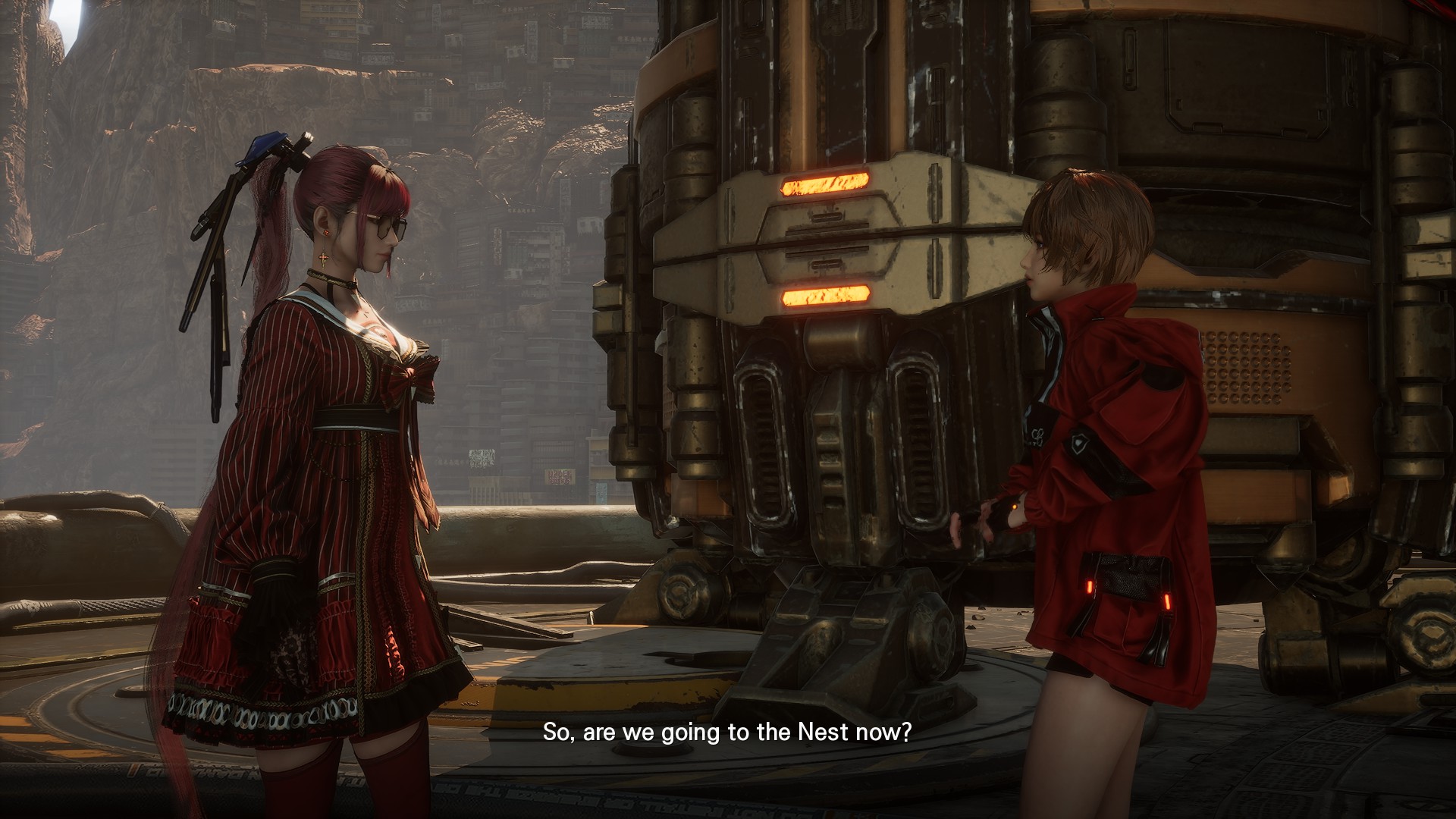
Four playthroughs later, with about 80 hours spent and all the achievements on the Steam version collected, I can say with certainty that my skepticism was justified. The best word to describe Stellar Blade—and this could be applied to the design of a large number of modern games—is shallow.
A compelling plot, a clumsy script
Ever since its announcement, Stellar Blade has gained the status of a game played with only one hand—something I completely agree with. You'll be holding the controller with one hand, and covering your face with the other while yawning because of how boring all the characters are. From a narrative standpoint, Eve's lack of human emotion makes sense, but it still doesn't excuse her complete one-dimensionality and absence of any charisma. Worse than that is the fact that she isn't even the worst character—everyone else is. Her standard cast is filled out by Adam and Lily (who have very clear biblical undertones), and between whom there is absolutely no dynamic, even though the game tries to create some sort of mini-rivalry.
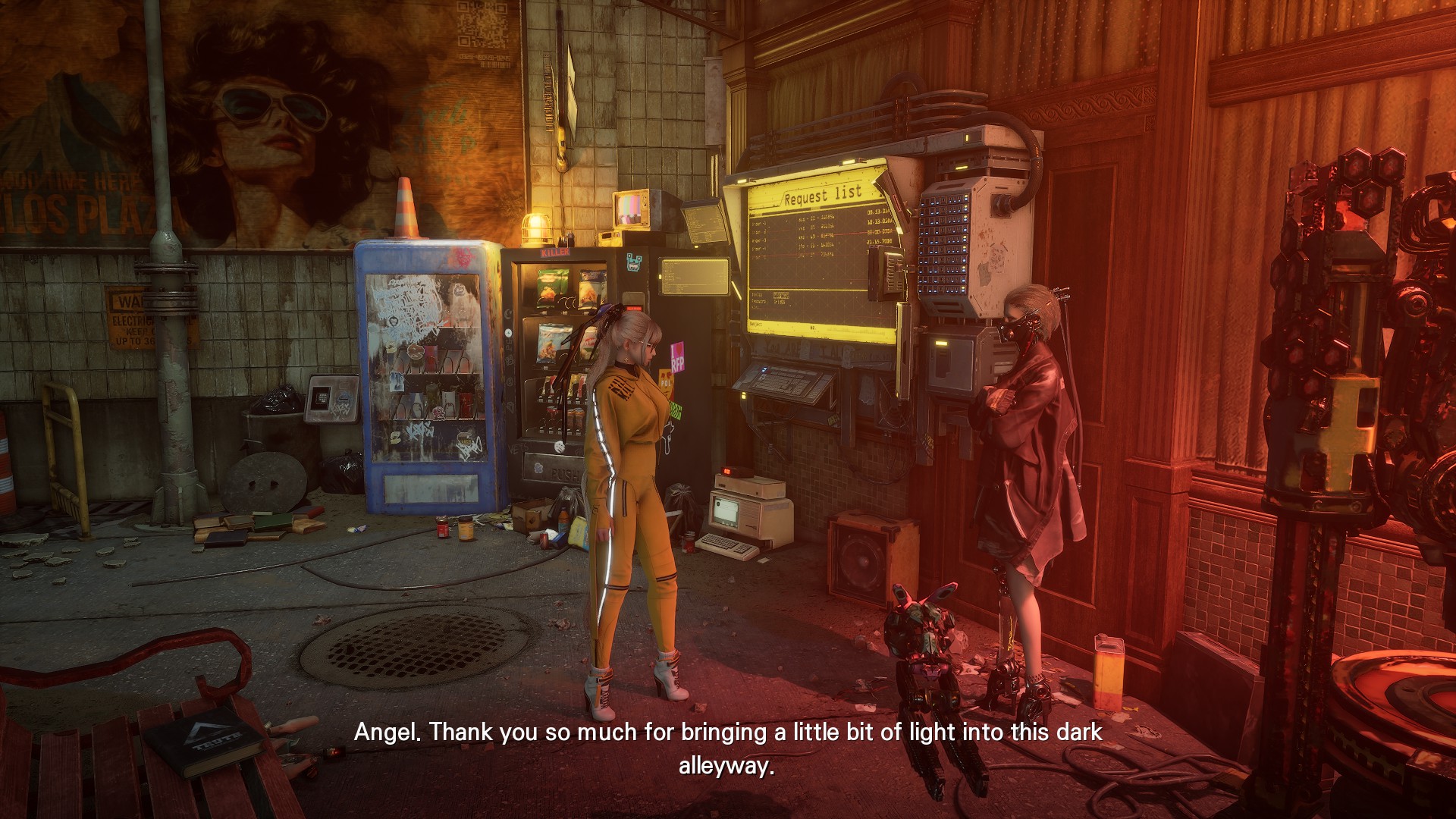
The poor characters aren't helped by the fact that the dialogue is truly, worryingly bad at times. In a very early phase, while the relationships between the main characters are still being established, Adam—who has just met Eve—responds to her comment about not being able to relax and having to move on with "typical Eve." You can't know if something is "typical" for a person you met yesterday. Even worse is the dialogue Eve herself delivers; I think the best example is the first interaction between her and Roxanne (the info dealer), where she responds to the opening line “Ah, Angel. Lovely to meet you” with “you don't seem very likeable.” Don't worry, Eve; no matter what you say, you're still an Angel, so everyone will love you unconditionally.
If we look past the fact that the story is largely copied from NieR: Automata and NieR: Replicant, I can say that the plot itself isn't bad, but the execution is poor. Essentially, the core narrative ideas are very similar to the aforementioned Automata, where the game builds its entire narrative around several mysteries that, unfortunately, lose their mystique far too early if you explore the world. Consequently, by the time they are actually revealed, they carry no emotional weight. This problem of poor storytelling isn't exclusive to games from the East; even the highly acclaimed Clair Obscur: Expedition 33 suffered from many of these same issues.
This is what you call sexy?!
Maybe the subtitle of this chapter seems like a cynical joke, but no, it actually isn’t. Stellar Blade, although hyped and presented from all sides as a "sexy" game, actually isn’t one, and I can say that the entire controversy surrounding the game is pure nonsense. In fact, the whole story goes much deeper, and the problem arises from a very shallow interpretation of sexuality that borders on that of a child in early adolescence—and this isn't characteristic of just isolated examples, but of gaming in general (especially modern gaming). We will set aside the discussions about using sexy characters for the purpose of fan service and focus specifically on why sexuality in artistic media—which gaming naturally is—should not be a taboo.
Sexuality is a part of what makes us human, and the question of sexuality is not just a matter of appearance, but also of behavior and attitude. It is important to emphasize that the expression of sexuality is not just part of fan service and the entertainment aspect, but also a part of who that character is. Body expression can be both a sign of confidence and a sign of insecurity, depending on how it is portrayed. A style of dress can say a lot about a given character and how they relate to their own sexuality.
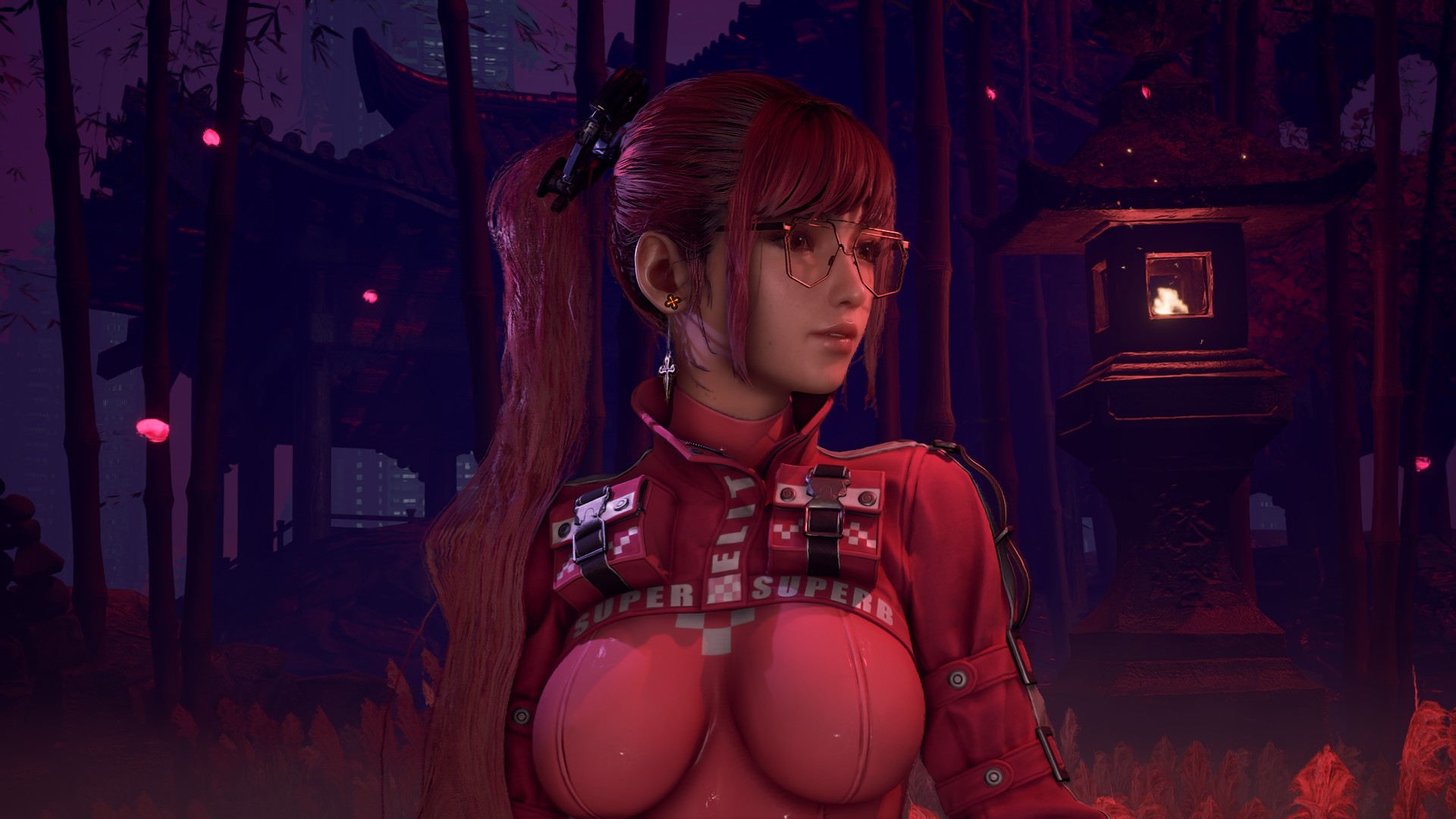
Where games fail time and again to handle this in a good way is precisely that—how a girl reacts to her own body, how others react to her body, how she reacts to the reactions of others, how she reacts during sexual tension, etc. These are just a few examples, but they are enough to realize that the least of the problems is whether a fictional woman from a video game looks realistic or matches the physiognomy of a real person.
Therefore, what Blade fails to understand is that attractiveness isn't just tied to nano suits and specifically choreographed scenes highlighting well-known body parts. From this, one can conclude that sexuality in modern gaming has no connection to gameplay. Just imagine how much more interesting the whole situation would be, and how much artistic value it would gain, if it were coupled with gameplay—say, if Eve could obtain necessary information by triggering a specific cutscene where she utilizes her attractiveness. This is the most basic example, but it still speaks volumes about how shallowly this topic is handled when everything boils down to everyone being sexy, yet no one being interested in any actual sexual interaction.
Illusion of Progress by giving the bare minimum
It’s clear that not every game has—or even needs—an overly deep RPG system to succeed in creating a sense of progression for the player. Games that have gone to one extreme often failed to become mainstream, instead gaining cult classic status and remaining deeply beloved within small, niche groups. For example, we have the Ninja Gaiden series, which, with its gameplay complexity and difficulty, far outshone the entire Souls series and thus repelled the masses. This type of design had its own artistic value, but on the other side of the spectrum, we have projects like Stellar Blade. To cater to a wider audience, modern games have largely abandoned complex RPG systems, but in the last few years, we have reached a level that has become problematic.
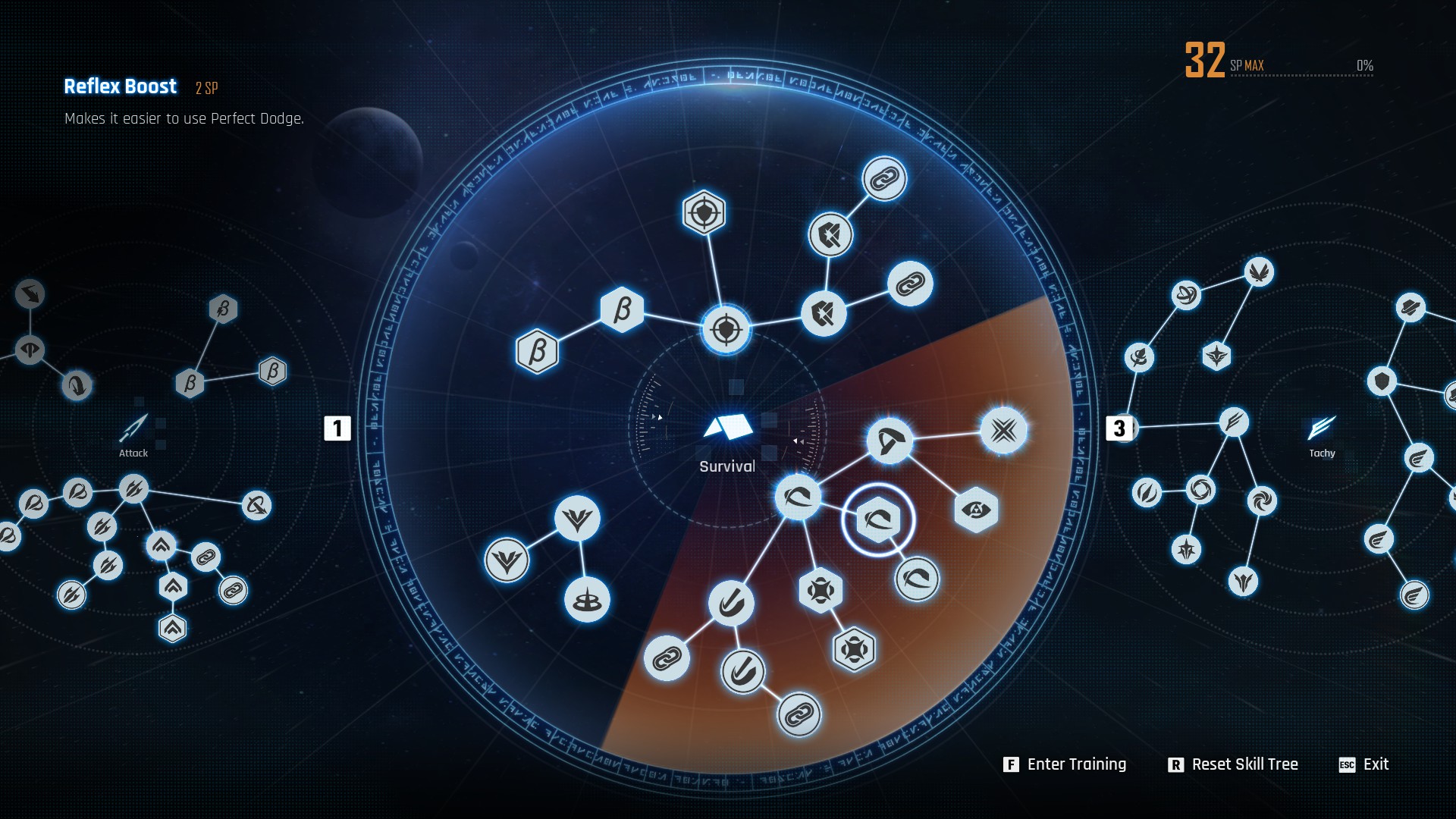
The entire skill tree system consists of treating basic mechanics as skills, thereby creating an illusion of progression. For instance, dodging is treated as a skill—and not just that, there are several different types of dodges that must be unlocked separately. Enemies have specific attack types visually represented by blue and purple indicators; if you want to be able to avoid or counter them, you have to spend your points. If your adventure is still too difficult, you can invest points into skills that ease the parry and dodge windows. All of this should give you a picture of how simplified and, in a way, meaningless this entire system is on its own.
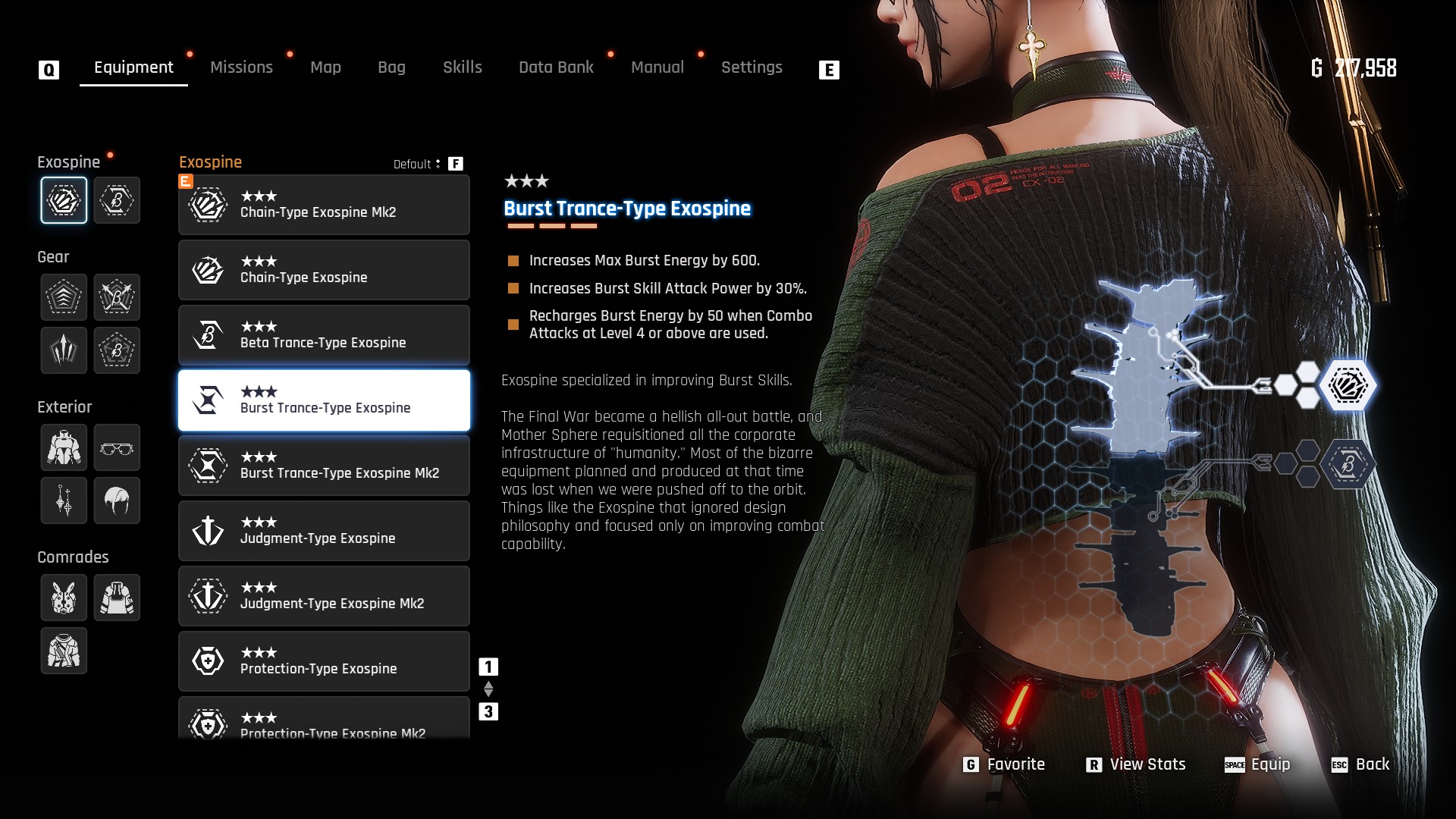
Beyond the visual "eye candy," Nano suits, glasses, and earrings have absolutely no impact on gameplay (at least they shouldn't 😉), so changing them doesn't alter anything from a statistical standpoint. On the other hand, this is replaced by something called Gear and Exospines. Gear practically represents the game's way of separating stat-boosting items from the suits, so that everyone is "equal" in terms of performance impact, allowing Eve to be dressed in the most attractive way at all times. Gear cannot be upgraded; instead, it is divided into three quality tiers represented by stars. For example, a Speed Increase gear will boost your attack speed—the one-star version by 10%, two stars by 12.5%, and three stars by 15%.
Additionally, Eve can be equipped with two Exospines, which are upgradeable pieces of equipment that gain new stat boosts or effects with every new star. Their variety is quite poor considering the size of the world, especially given that the game noticeably favors a single playstyle—combat is heavily focused on the now-exhausting parry system. We probably have the Souls series to "thank" for such a massive popularization of this mechanic, and not just within this genre, but across all genres. Even JRPGs aren't immune to it—just look at Expedition 33. This mechanic isn't a problem per se, but it becomes one when more and more developers decide to build their entire combat system around it. This often leads to games becoming impossible to balance due to their extreme favoritism of one specific playstyle. Ultimately, that is exactly what happens with Expedition 33 in its final third.
All the elements mentioned so far, combined with the fact that Eve can only use her sword for melee (with no variations), lead to a situation where the otherwise solid and fun gameplay starts to feel repetitive. Excessive simplicity can easily lead into another trap: having variety in enemy design, but the same approach to combat. Blade truly has phenomenal and consistent enemy design, but unfortunately, the approach to fighting each of them—both fundamentally and at a higher level—remains exactly the same.
Interactivity
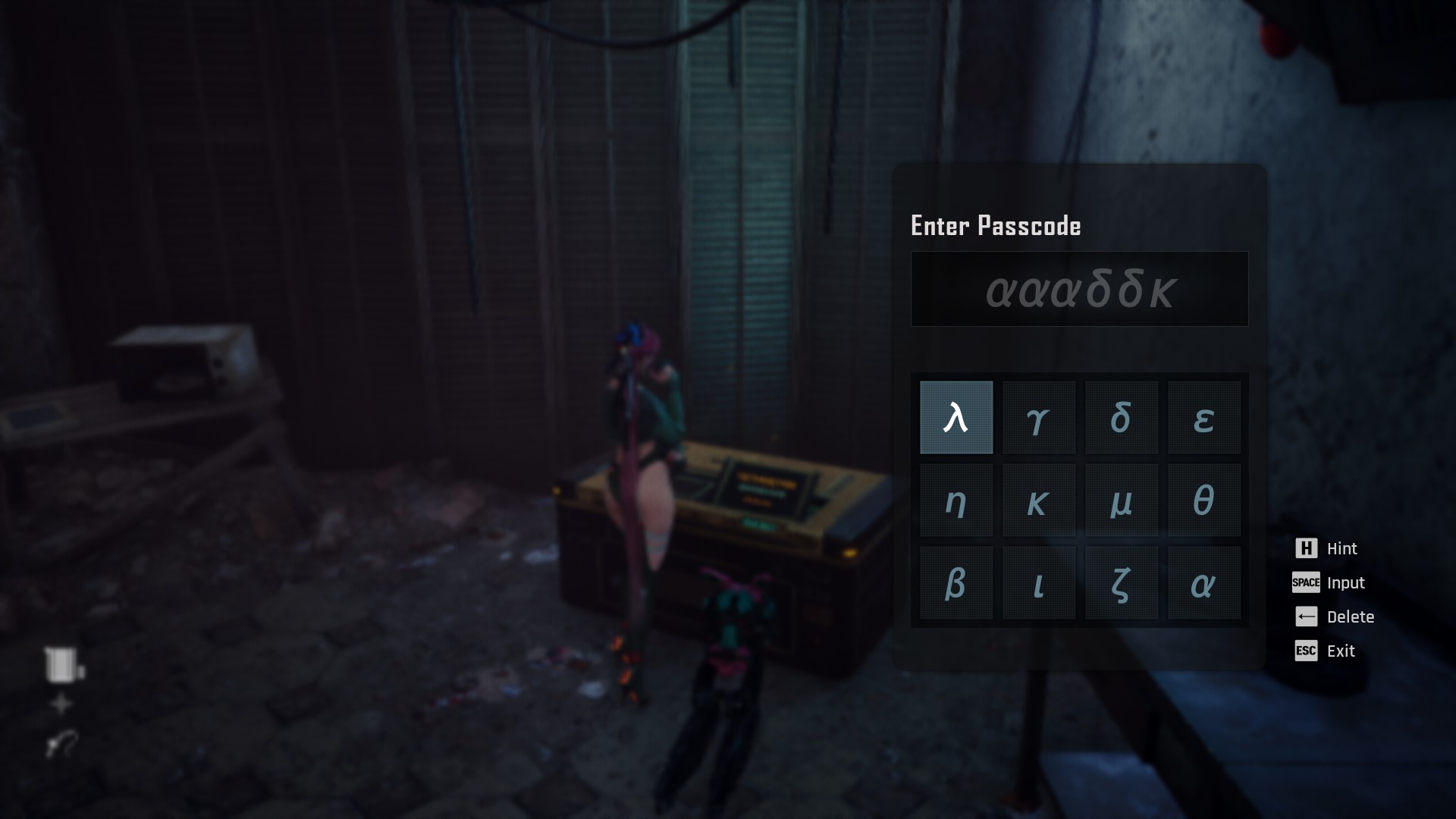
If you aren't fighting Naytibas, your main occupation is exploring the ravaged world in search of resources, lost documents, journals, and passcodes. Passcodes are required to unlock dozens of doors and loot boxes, and they are the perfect illustration of a fundamentally bad practice that is becoming increasingly prevalent—one we can call "meaningless interactivity." Naturally, I’m referring to interactivity that is pointless and creates a false sense of achievement.
In the context of this game, the best example is the terminals where you must enter a specific passcode. The process begins by pressing the "H" button, which displays what needs to be entered; you start typing, but you have to refresh the process by pressing "H" again because the string of characters representing the password vanishes just a few seconds after the initial prompt. This entire mini-segment is mindless, lasts longer than it should, and its only "success" is creating a fake sense of victory while slowing the player down.
It is impossible not to mention the trend of constant degradation in puzzle difficulty that has been present year after year. While some studies suggest that we are seeing a recorded drop in average IQ for the first time in history, modern puzzles wouldn't pose a challenge even to an average chimpanzee. Stellar Blade doesn't deviate from this practice by even a millimeter; most boxes are unlocked by solving a mini-game that boils down to pressing an arrow pointing in the right direction. To top it all off, the Korean developer went a step further: none of these mini-games feature any kind of risk-reward system. There is no timer to add tension or force the player into making mistakes—it all comes down to "take as much time as you need." Puzzles are in the DNA of the God of War series, yet look at what we ended up with in Ragnarok.
Designing puzzles to be inherently trivial is absurd in itself, especially considering that capitalist aspirations could be satisfied by implementing meaningful hints to help players overcome obstacles, rather than compromising the core challenge.
It's true, we're getting old, but we don't want another job
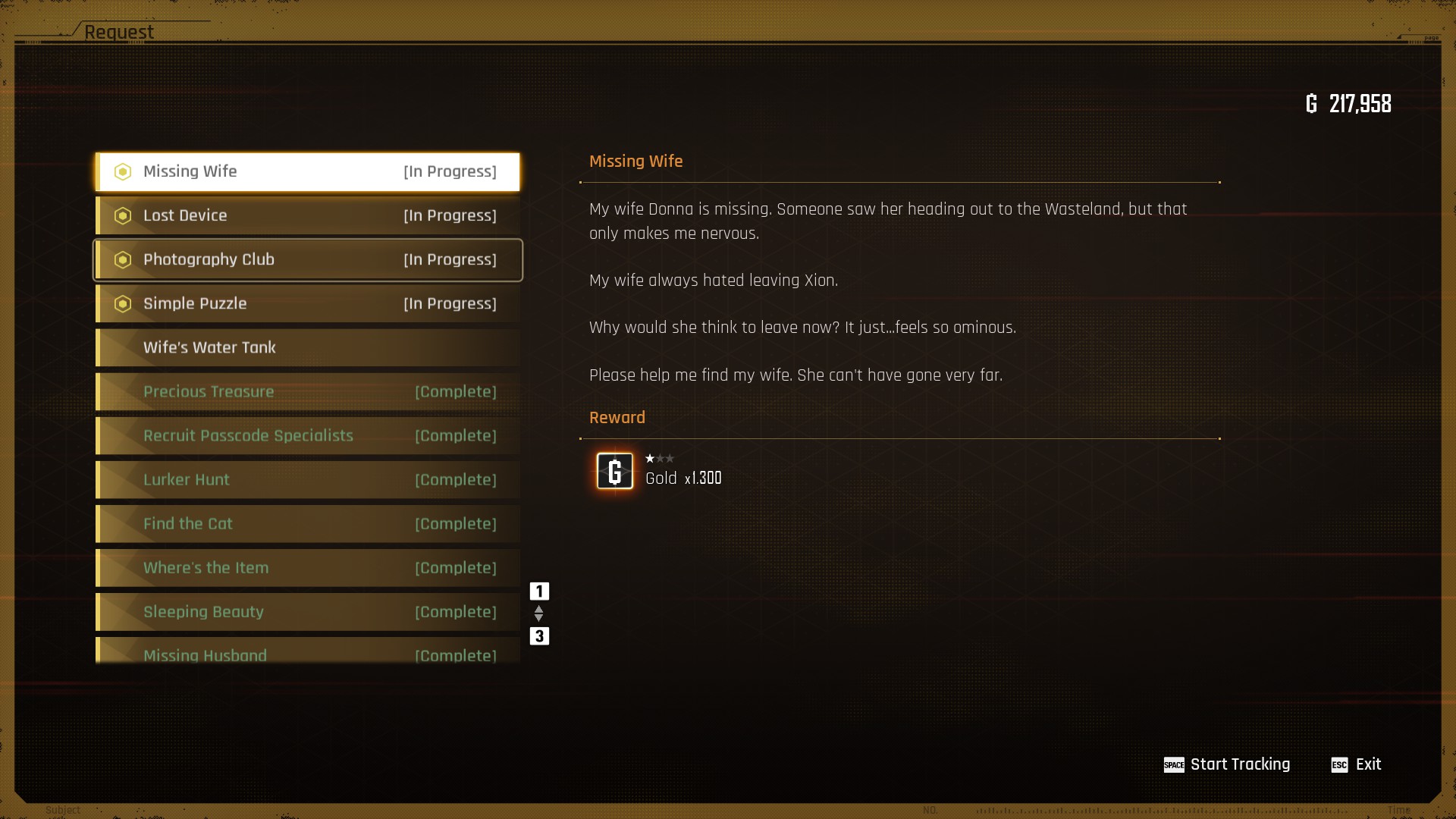
Alright gamer, you’ve finished the main story—time for a ton of side quests. Open your journal and get ready to clear it out. The point of well-designed side missions is to highlight supporting characters and their development that didn't fit into the main plot, while simultaneously fleshing out the world both narratively and through gameplay. Blade does have a few interesting independent narrative threads within its side content, but it all falls flat because the mission design itself is predominantly poor. Ultimately, it all boils down to going from point A to point B, and occasionally to point C, to perform a simple task just so you can fast-travel back to the client, grab your reward, and close the quest.
While the issue is a core concept in Stellar Blade, modern games often end up with plenty of repetitive content due to the sheer pressure of filling massive worlds. Even a title like The Witcher 3, which boasts some of the best quests ever made, isn't immune to having its fair share of rather dull content. It goes without saying to what extent modern Assassin’s Creed or Far Cry games are flooded with standardized and rather monotonous content.
Aside from the narrative, the only other element for which this game receives criticism in popular reviews is its platforming. The platforming is definitely clumsily executed, primarily because pressing the button to move forward causes Eve to take two steps instead of one. Yet, even with that, not a single platforming section in the game poses the slightest problem because precision is never required—even if you miss the platform, as long as you are close enough, Eve will simply grab onto it and maintain her balance.
Looking at it from this perspective, it's paradoxical: on one hand, we have a game that is controversial for its "adult content," while on the other, certain gameplay components are truly so simplistic that it’s legitimate to say the game respects neither us as players nor our time.
It's not all that bad after all
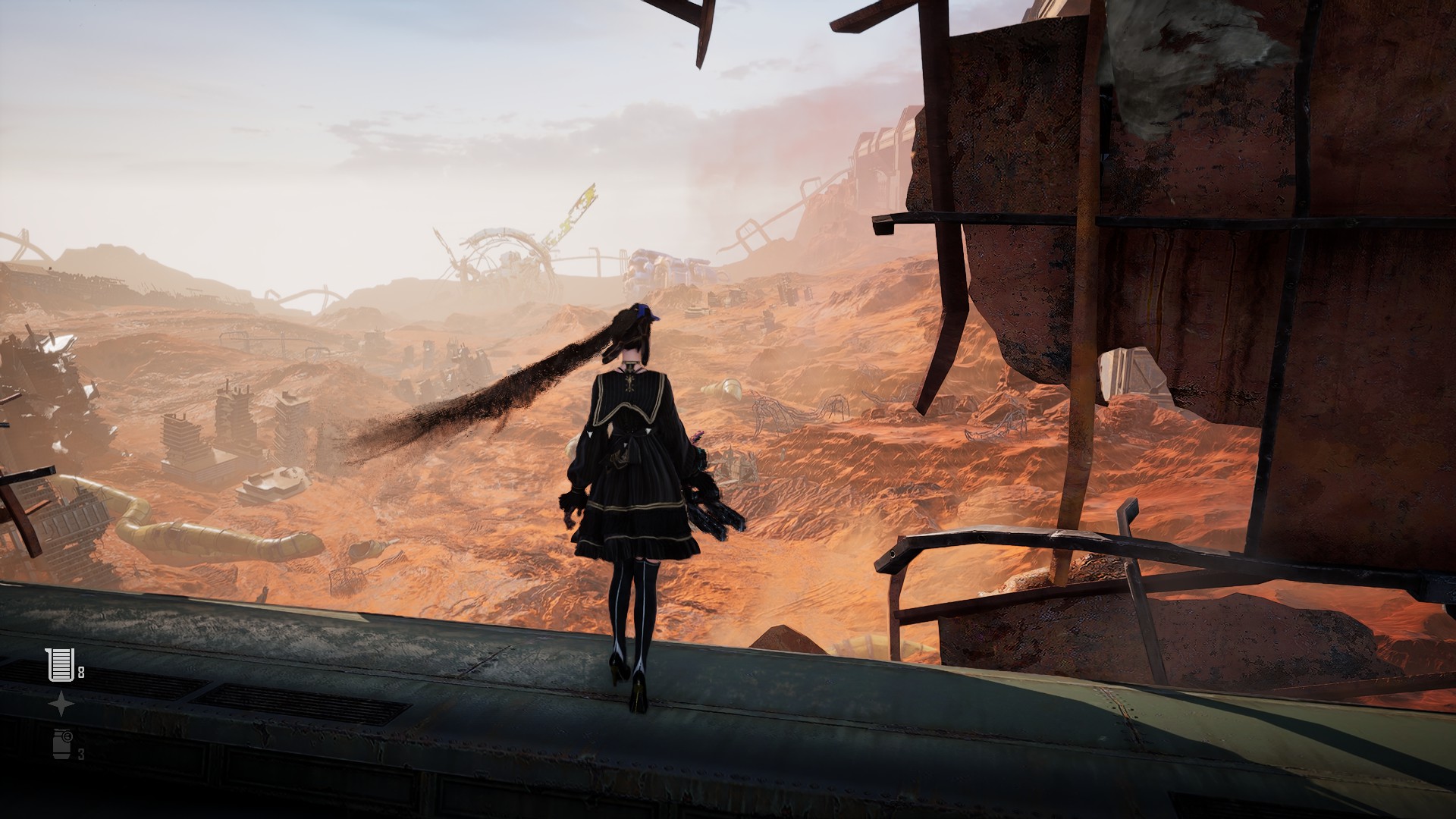
And in the end, it should be pointed out: Stellar Blade is not a bad game, just as modern gaming is not an inferior phase of gaming. Shift Up's first major project is a technically competent and visually striking game, and despite all its problems, it is very fun. The problem arises in the fact that it doesn't go deeper; instead, it is satisfied with everything functioning on a surface level with imitations of formulas that have already been tried many times before.
My text should not be understood as an eruption of hatred toward modern gaming, but rather the opposite—as an expression of love for my favorite art form and for players who deserve to be treated better than chimpanzees. Modern games often suffer from narratives that fail to convey their ideas, characters without any identity, a banalized interpretation of sexuality and other serious themes, and finally, mechanics that only create an illusion of depth.
In that sense, Blade served as a perfect means to illustrate the paradox of modern games, which is reflected in the fact that they have never been more beautiful, larger, and more accessible, yet simultaneously fundamentally flawed. It is not a sign of catastrophe—after all, a kind of toxic love affair exists between me and Blade—but rather a sign of industry stagnation that too often chooses safety over creative risk.

Discussion(2)