


Everyone who loves a good book or movie knows that, from time to time, we like to return and re-watch key scenes, re-read a favorite passage, or simply experience the same emotion all over again. I intentionally used the word "same," even though I am fully aware it doesn't quite fit here; regardless of the fact that we know the plot, it is very likely that every subsequent time we will experience the same work in at least a partially different way. Video games are no different in this regard... To an extent, they are simultaneously very different, and because of that, some of them can be played over and over indefinitely, while others should be experienced only once.
Video games and the space for experimentation!
The answer to the question of why we replay games is quite complex. It is probably already clear to everyone that the main difference between video games and other media lies in interactivity with the world we are in. In the context of this story, this means that when we compare replaying a game with re-watching a film, in a strictly theoretical sense, we can extract much more from the game. A film, a book, or anything else, even if they lack a linear structure, are still experienced in a linear fashion.
In a practical sense, this means that what you experienced on page 16 of a book or during the first hour of a movie will always be the same, while with games, it isn’t quite like that because they, by their nature, provide room for experimentation. This also applies from an abstract perspective, so just changing the difficulty can change our entire approach and the way we see the environment. Then there are hidden things, glitches and exploits, and a multitude of other details that have an impact. From all this, we can conclude that the hypothetical space and possibility for repetition is far greater than it can be in any other medium.
Knowledge-based games
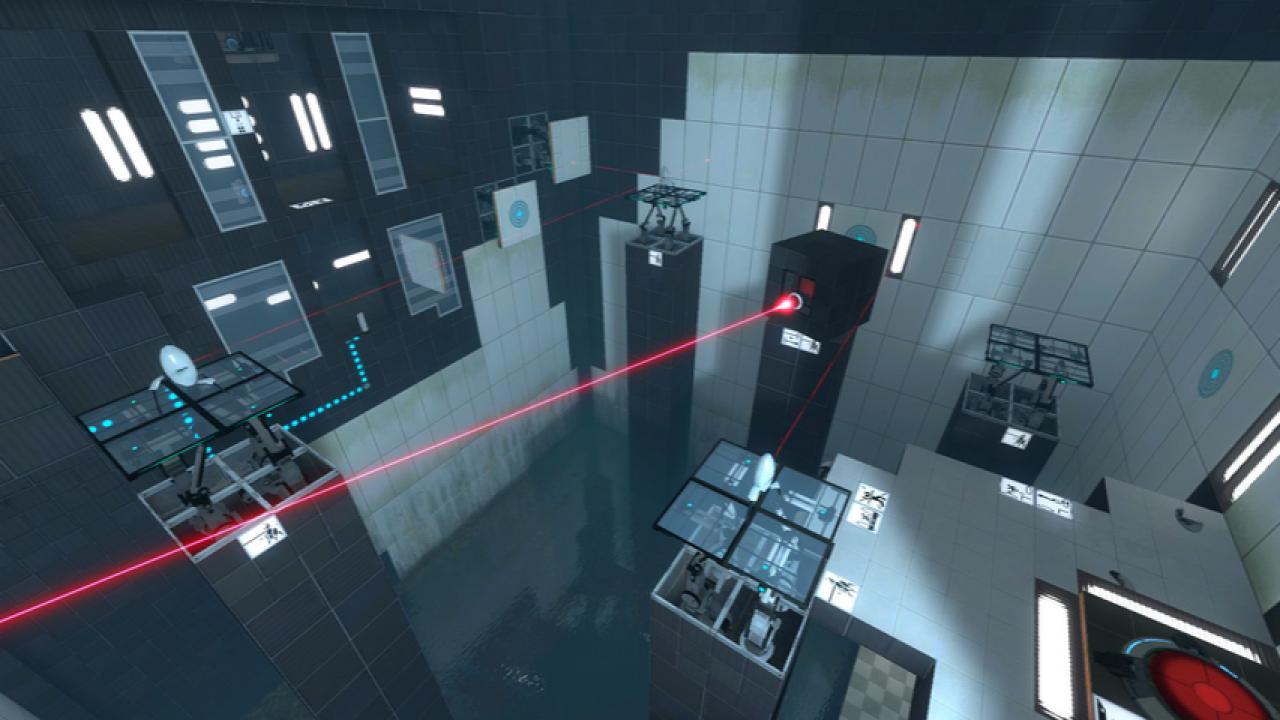
The discussion on this topic should begin with the most obvious group, which are games based on knowledge and its application, categorized by genre as puzzle games. In their case, the core of the experience lies in connecting gathered knowledge and logic to reach that invaluable "bingo" moment. However, it is precisely that moment that forms the foundation of their essential non-repeatability. Once we know the solution, the game loses its primary role – it no longer tests the player, nor does it force them to think. This holds true even if we play something a few years after the initial completion. For instance, I tried playing Portal 2 a few years after my first playthrough, and my entire experience boiled down to trying to remember how I solved a certain puzzle, instead of trying to understand it.
It is worth noting that developers have noticed this and that some of them base their games on randomly generated puzzles, which is certainly an interesting solution, but such projects aren't as interesting to us because replaying them does make sense.
Narrative shock and manipulation of player ignorance
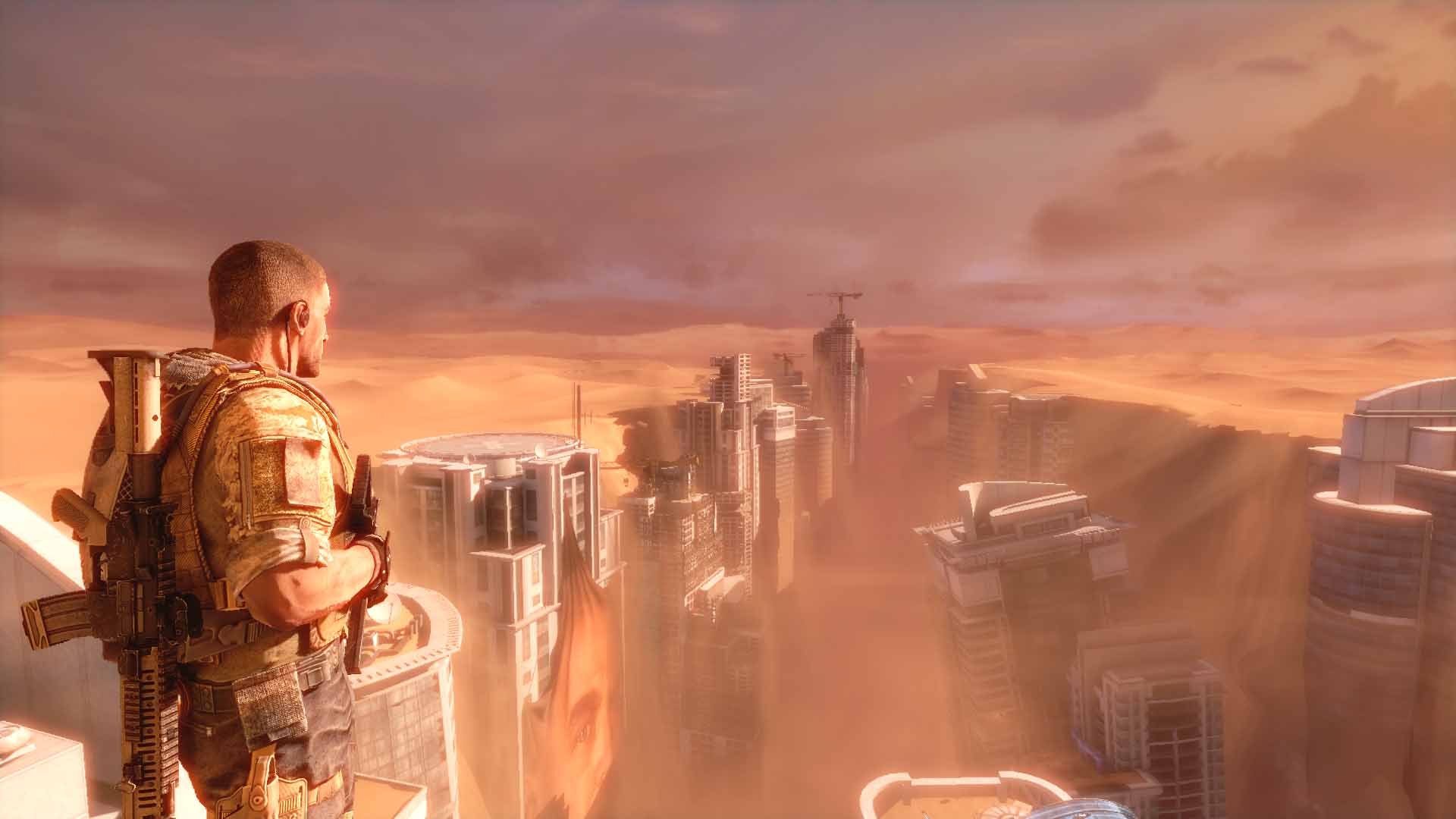
There is a special class of games that relies on something deeper than mere plot or challenge – those that aim directly at our feelings, expectations, and emotional reactions. At their core, they achieve this through the sudden narrative destabilization of the player, and this can only work if the player is unprepared and without prior knowledge of what they are getting into. Spec Ops: The Line begins as a very classic military shooter with a familiar premise: American soldiers, chaos in the Middle East, clear divisions. As the plot progresses, everything becomes more tense, up until the moment a twist occurs and everything collapses. The player, who until then thought they were doing the "right thing," faces the painful reality that they themselves are exactly what they were fighting against.
On the other hand, we have the indie classic called Pathologic, which functions differently. This Russian project skillfully manipulates ignorance and thus turns the player into a stranger, both narratively and in terms of gameplay. The mechanics are intentionally non-transparent, dialogues are ambiguous, and the rules in that world, which is dying of disease, are constantly changing without prior notice. We don't even know who our friend is or who has fatal intentions, and that is precisely the key: Pathologic bases its entire atmosphere and essence on a lack of information.
In this group, we can also include linear horror games which, similarly, strive to create fear and a creepy atmosphere through uncertainty. Despite the fact that we can completely forget the plot, we still remember some things subconsciously, so returning to older horror titles doesn't make much sense, especially if our goal is to be frightened.
Pathologic and Spec Ops: The Line are, as is clear from the previous part, quite different, but their common trait is that replaying them doesn't make much sense, as it can only destroy the beautiful memory that remained etched in our minds.
Telling a story
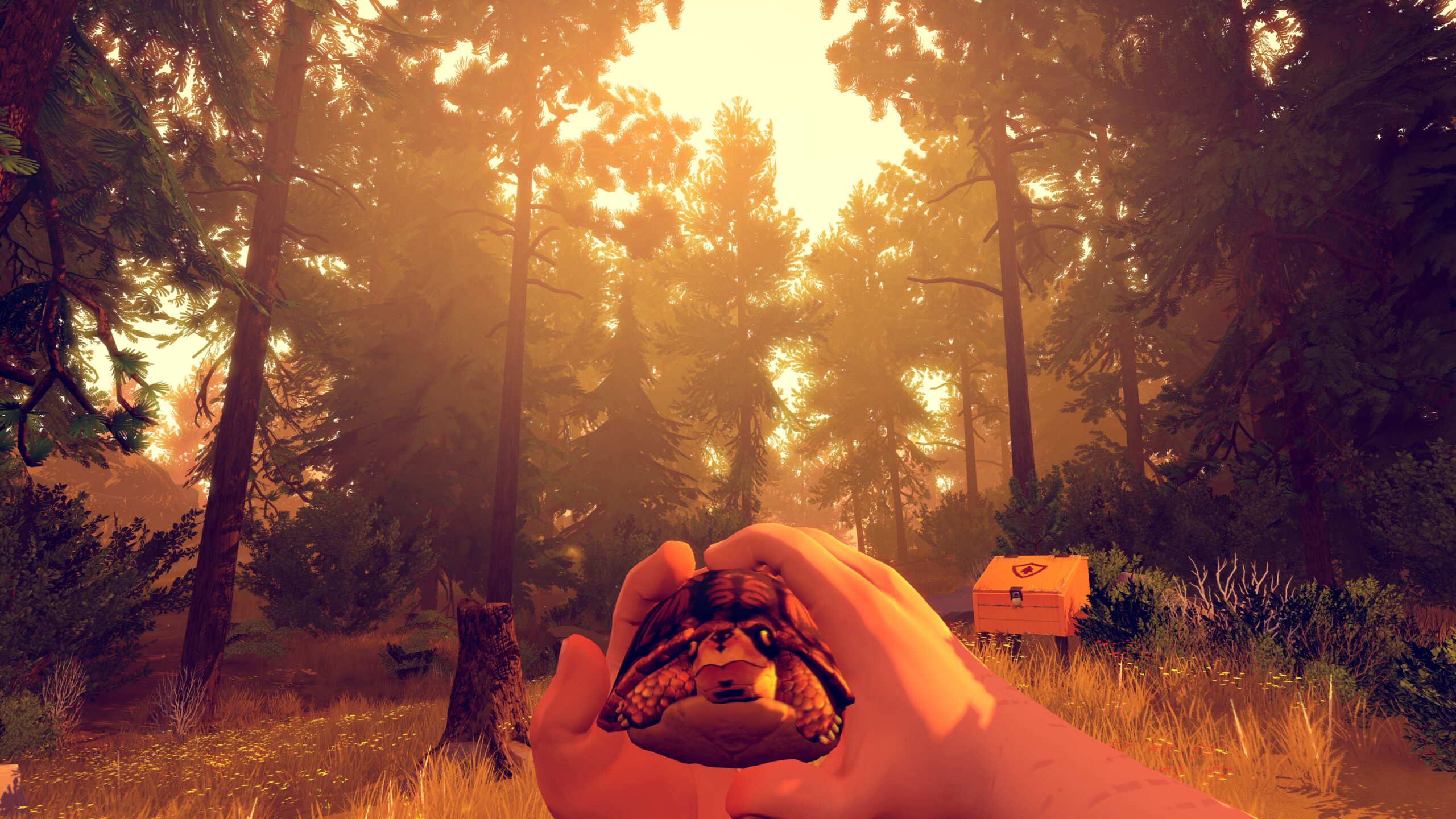
It would be unfair to omit the category of games that base their entire identity on the story they want to tell. These are the so-called walking simulators that do not offer much challenge in the classic sense but instead lead us through a carefully designed world. The best example of this is Firewatch. Campo Santo’s creation aims to provoke strong emotional reactions through tense and well-acted conversations over the radio. Its strength lies not in what we play, but in what we feel.
The problem is that all of this can only be felt the first time. Every subsequent time is not a discovery or a re-experience, but a recollection. This also means that we won't listen to Delilah with an open heart, but analytically, perhaps looking for some tiny detail we missed. Wandering through the forest will no longer be wandering when we know where the paths lead. Most importantly, the emotional uncertainty disappears, and without it, Firewatch is not what it truly is.
And finally, to replay or not...
All the games mentioned so far share something in common – they depend on the first encounter with the player. Some are based on uncertainty, some on the manipulation of ignorance, and some on simple lack of familiarity. When that factor is absent, all that remains is the skeleton represented by technical aspects, mechanics, graphics, and a scenario already recognizable to us.
Ultimately, should one try such games again? Probably not, at least not in the classic sense. Sometimes it is better to keep the memory of something as it is, because as humans, we have a tendency to remember beautiful things as even more beautiful. If we do return to them, then it should be more out of curiosity than the hope that we will live through the same thing again, because, much like in life, some things can only truly be experienced once.

Discussion(0)