

Throughout its long history, the Resident Evil series has gone through various iterations and various attempts to deliver something new. The result of it all is three large groups of fans; the first consists of old-school fans who enjoy the original trilogy and where it all started, the second consists of fans of the action turn that the series experienced with the fourth installment, which went a step further with the fifth and sixth, and the third group is made up mostly of younger people who love the approach to the series that RE7 brought with it.
Capcom was aware of this and wanted to unite all three groups of fans in their love for one ultimate game that would deliver puzzle-solving requiring detailed exploration like in the original, action gameplay like in the fourth, and mainstream horror elements like in the seventh. The result of all this is Resident Evil: Village – the ultimate game based on what we heard, but an identity-less mixture of everything based on what was actually delivered to us.
A new generation Resident Evil game
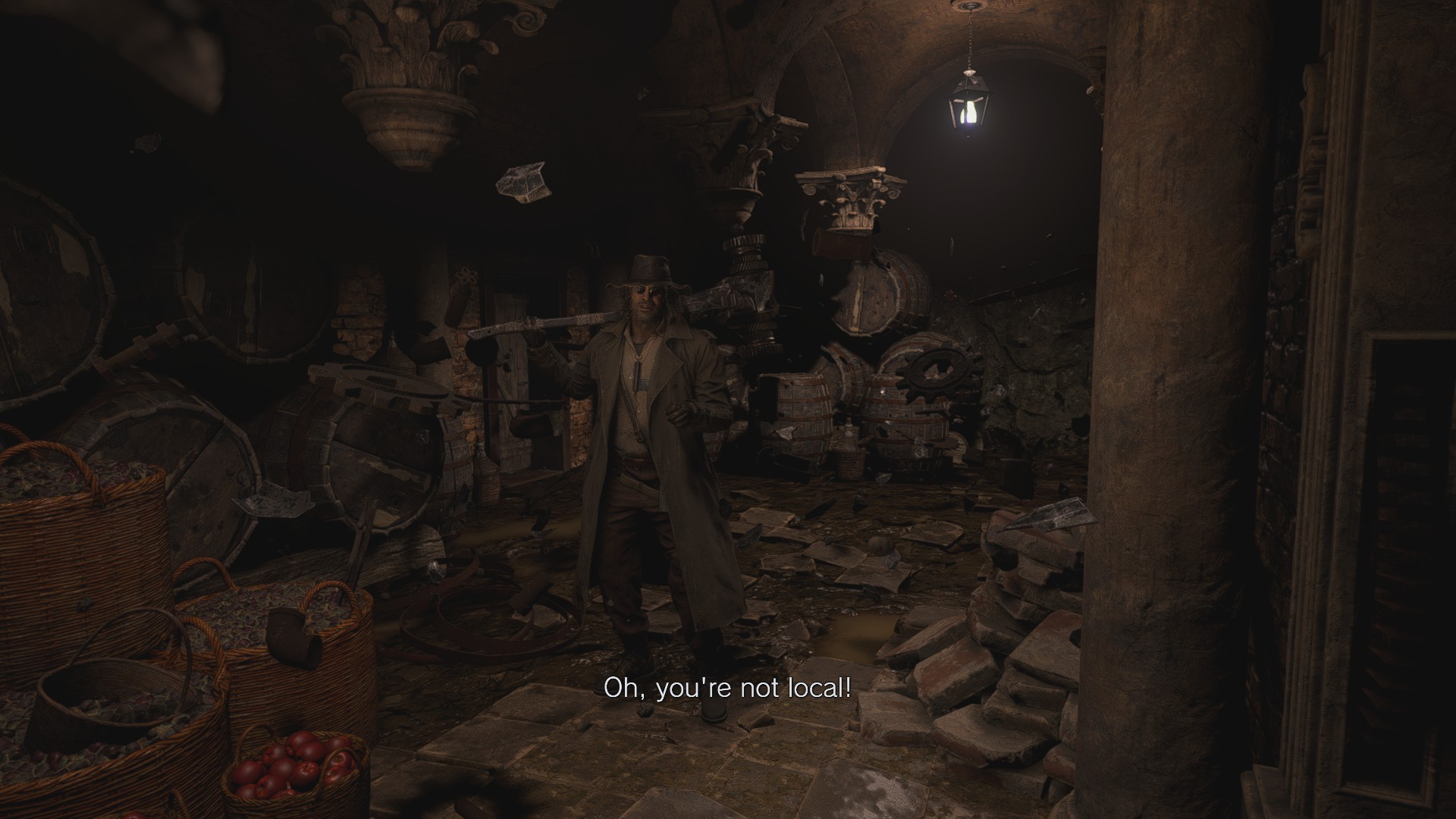
The very beginning of Ethan's adventure is quite similar to his first one, which he experienced in the forests of Louisiana. This time, another female member of his family – his daughter – is kidnapped by a strange cult, and just as RE7 accustomed us to, this involves a long intro with a lot of pointless walking. I must admit I wasn't a fan of the opening scenes in RE7 either, but at least there they made more sense in building the atmosphere, because the whole point was that it was a true horror experience.
When we take into account the nature of the series and the fact that it is meant to be replayed multiple times (which is confirmed by challenges, various items you unlock, etc.), it is completely incomprehensible that this introduction cannot be skipped entirely. Because if we characterize it as a crucial part of forming the atmosphere for the first playthrough, it certainly isn't for the second and subsequent ones, representing nothing more than a frustrating walking simulator devoid of meaning. At least credit should be given for the fact that this time, cutscenes can be skipped.
Death of survival horror
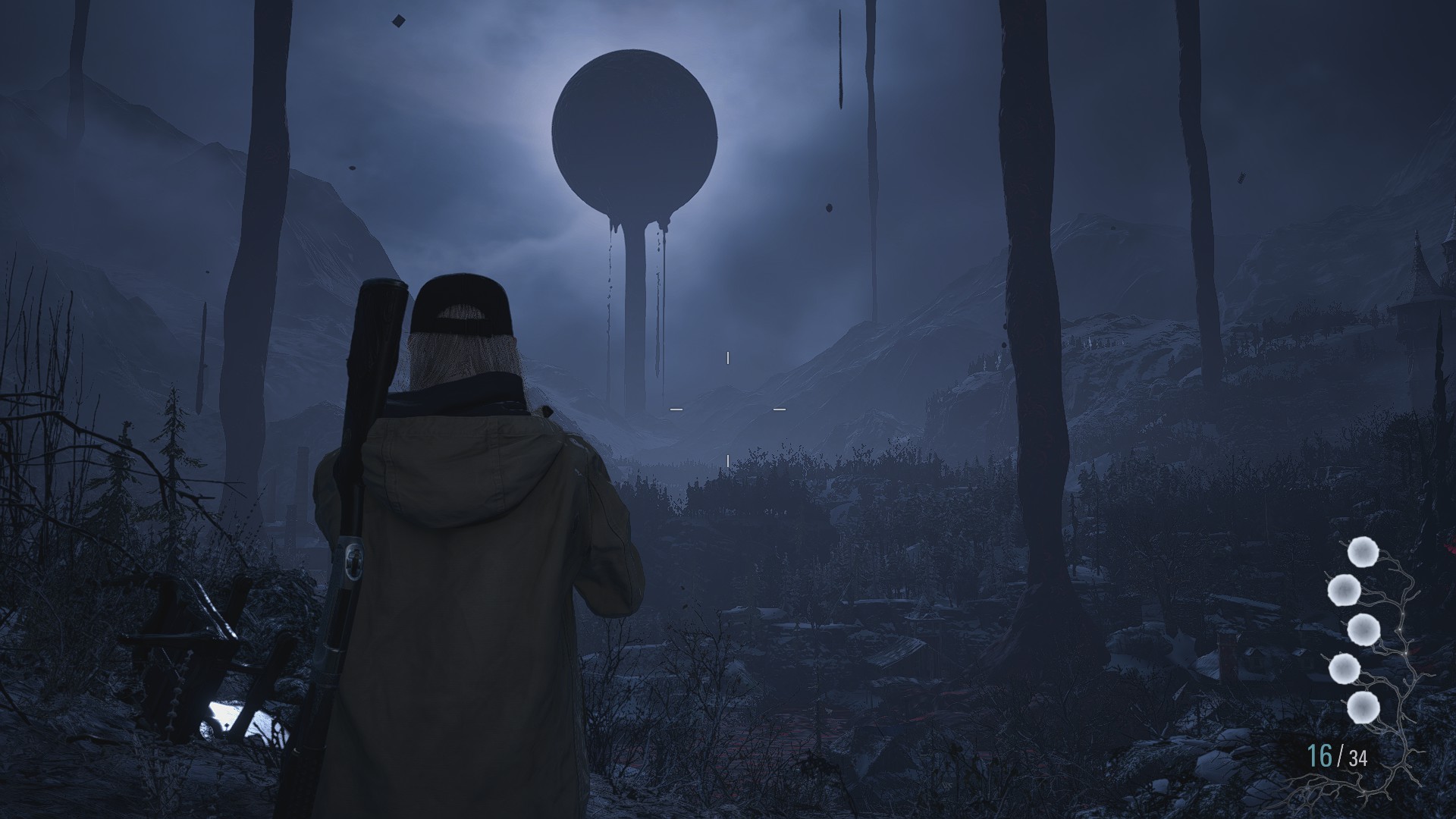
The very first encounter with an enemy revealed two highly important things: first, that this will not be a survival horror game, and second, that the enemies are not your classic, slow-moving zombies. To understand why this is no longer survival horror, we need to understand some key changes, which we will better comprehend through comparisons. At the core of this series lies the idea of constant decision-making. If we go back 30 years and remind ourselves what happens when we kill a zombie, we can easily conclude that nothing happens in terms of a reward – there is no extra ammo, no extra money, nothing. If we went around killing everyone like that, there would be no tension, no resource management, or anything else, and the series would become a classic, generic shooter.
The decisions that a player constantly has to make are tied to whether to kill an enemy and spend worth-its-weight-in-gold ammo, or to instead try to avoid their attack and move into another room. Besides that, there are also decisions related to inventory management – free slots for items are very scarce, it's necessary to balance things, and to carry just one weapon, ammo, and other key items most of the time. Moving into more modern times, RE7 successfully implemented decision-making during crafting because of an overlap, where one key item is used to craft both ammo and health, leaving it up to the player to choose what their priority is at that moment.
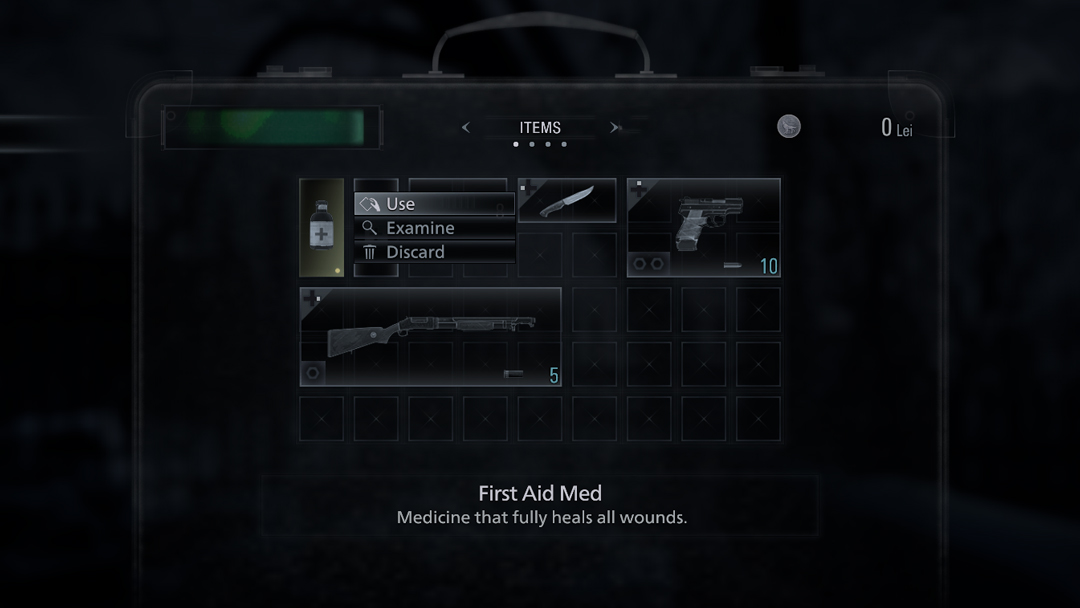
Village successfully failed at everything mentioned above. First, killing all enemies not only pays off, but is actually desirable because we are rewarded with money that we can use to buy upgrades, health, or even ammo. The attempt to implement the RE4 inventory system is extremely poor, because even if you pick up every single item during a playthrough, you won't run out of space due to its sheer size. This negatively impacts the very conception of the game, since Ethan can carry practically every weapon he finds. The fundamentally most absurd problem arose from changing the crafting system of its predecessor; the developers decided it was better to separate the crafting of health items and ammo, and what's more, to separate them from the main inventory into a dedicated one that is infinite in terms of the resource capacity it can hold.
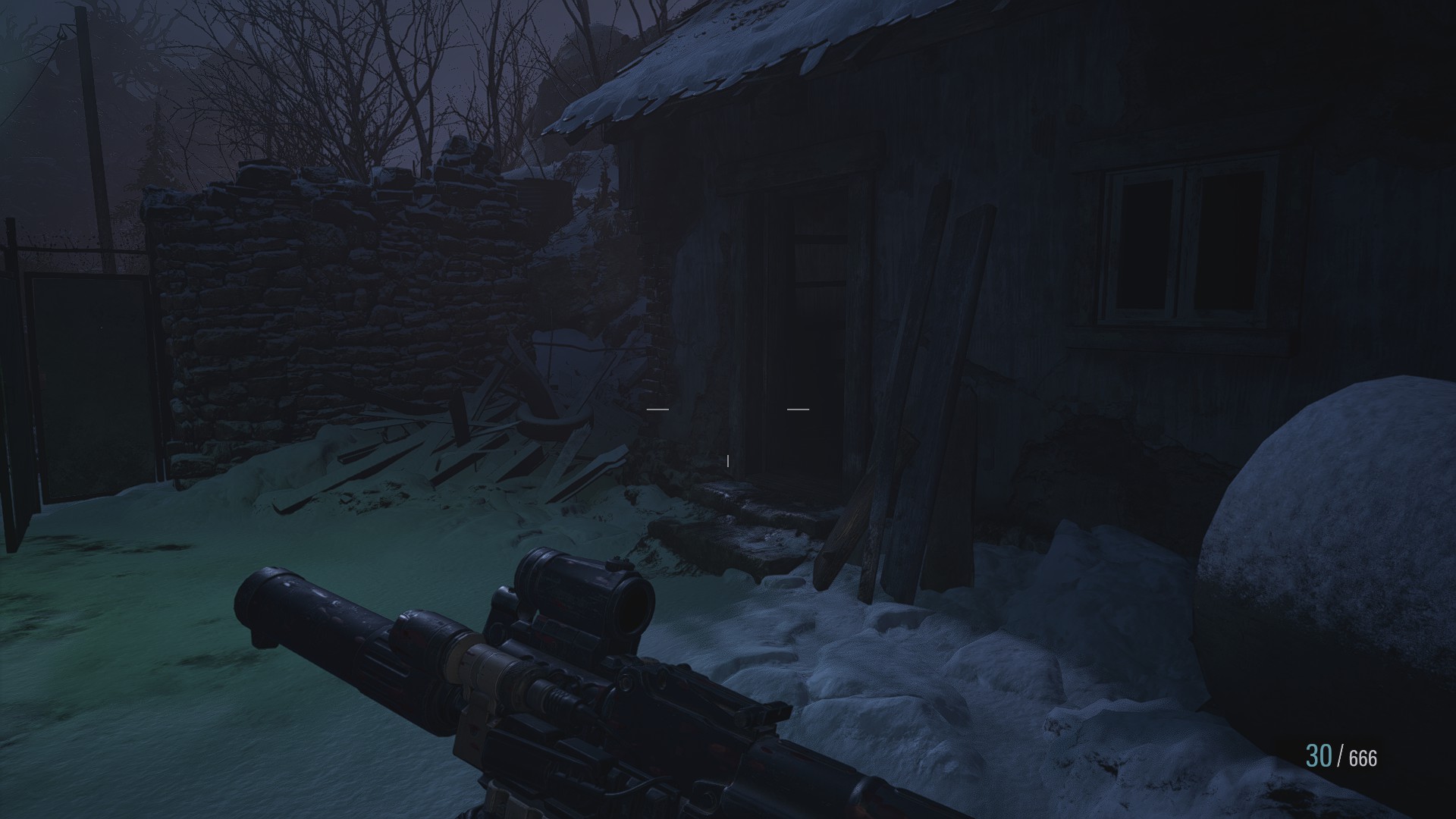
As I emphasized, the second point relates to the fact that enemies are no longer walking targets – which is a change I welcomed with open arms, a bit of freshness doesn't hurt. However, the final feeling was still a deep disappointment when I realized that throughout the entire playthrough I am fighting 80% of the time with that single type, and that for the remaining 20% I encounter the other couple of types. It must be admitted that the variety is extremely small when taking into account the length of the game and the wide assortment of weapons.
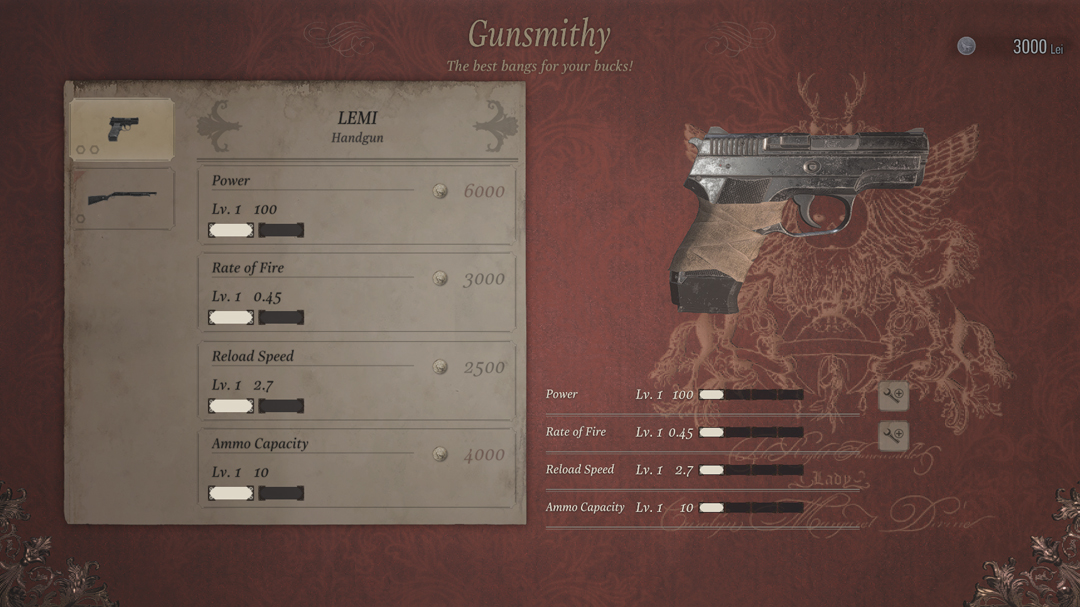
We found this for you, stupid gamer
Another core idea that made the original trilogy so good is the integration of exploration within the progression. This involves many situations in which we find items whose purpose is unknown to us and which we will need much later. This is where Village enters the scene, which is entirely linear in its nature, and it must be emphasized that this refers to linearity in terms of how each section is solved. This happens for a very simple reason – always just one way to go.
Again, we should recall the starting mansion from the original for a moment. When you enter inside, there is no clearly defined path where you need to go, so there are always multiple options left to the player to choose which one to visit first. In that context, Village took several big steps backward, so the castle, which is the first major location to be “explored,” is practically linear to the extent that at almost no point is there anywhere else to go but the predetermined one.
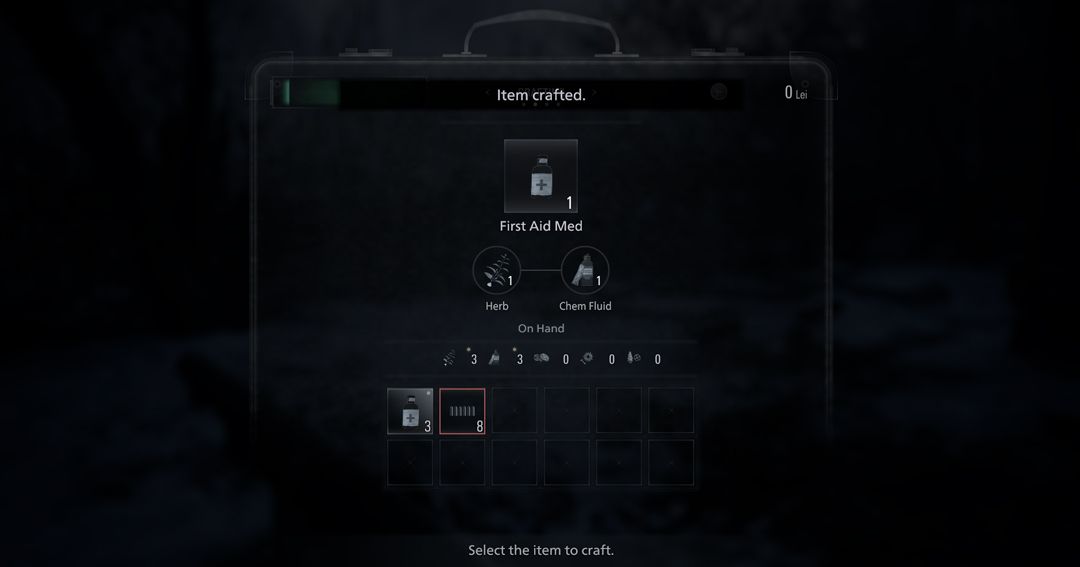
This is where another problem arises, one that is characteristic of the vast majority of modern AAA titles – treating the player like a chimpanzee. As if all this weren't simplified enough on its own for anyone to finish, Capcom went a step further and decided not to allow the player to find items, but to give them to them at the end of scripted sequences. Worst of all, the player is disrespected to such an extent that some items crucial for solving puzzles are located in the same room as the puzzle itself.
It would be wrong to say that there is no exploration at all in the game; there is, and for the most part, it is tied to the village itself, which resembles the original trilogy in its layout. However, this exploration is entirely optional and rewards the player only with ammo and treasures. It is in no way woven into the progression, so you won't find a single key item there; therefore, if you decide to completely ignore it, you won't lose anything fundamentally important. All of this applies to all locations except the Heisenberg Factory, which is by far the most superior in design.
More bad guys, less depth
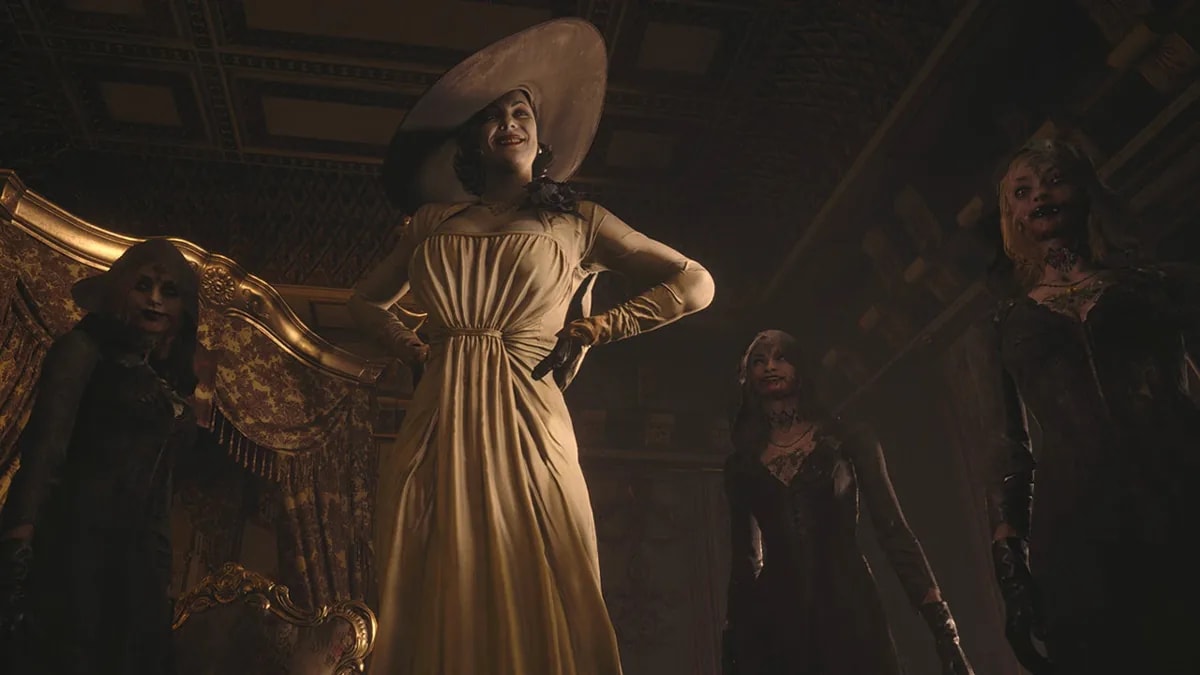
What Village must be given credit for is its great marketing. Lady Dimitrescu was a topic of discussion everywhere for various, and mostly very obvious, reasons. Iconic villains who will stalk us throughout our playthrough are nothing new, but an approach featuring a larger number of them is. RE8 opted for a structure that, from today's perspective, is superficially similar to Elden Ring. It is necessary to kill 4 key characters in order to get to the final one who pulls all the strings. The idea itself is not problematic, but its implementation in the Resident Evil series most definitely can be.
That is exactly what happened. Increasing the number of Tyrant-type enemies—who cannot be killed until the story progresses enough and the boss battle arrives—led to wasted potential. Due to the short-lived and spatially small location that is Castle Dimitrescu, the clash with the nearly three-meter-tall lady barely exists – your total interaction with her boils down to maybe 2-3 chases. The other two lords fared even worse in that sense, where interaction with them barely happens, either in terms of gameplay or story. The one who can be most satisfied with how he fared is Heisenberg, as he is, after all, integrated a bit deeper into the whole plot and appears in more iconic scenes.
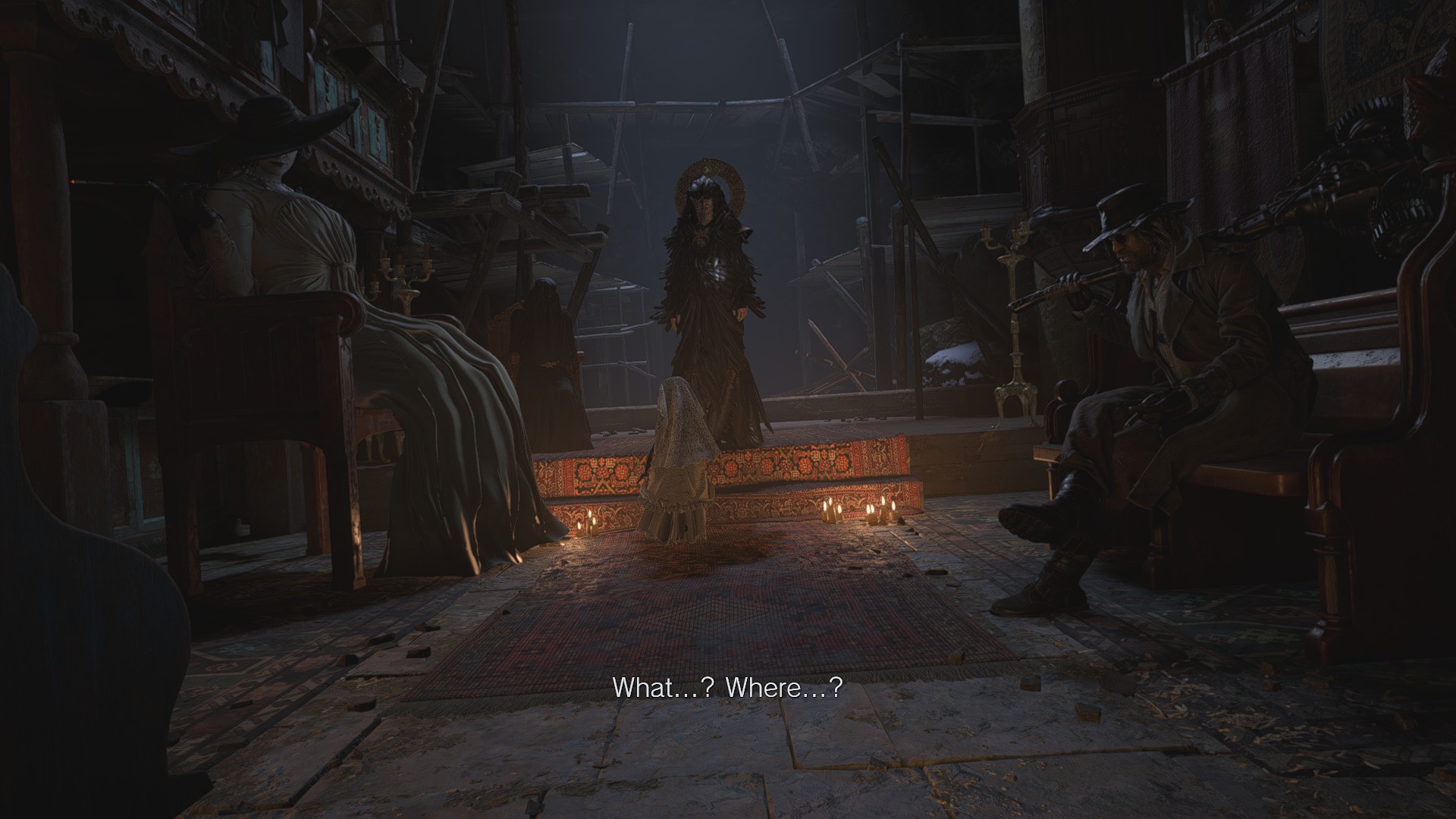
In the category of wasted potential, we can also include the boss battles, which vary between comically bad and solid. For example, the fight against the mutated form of Dimitrescu boils down to two extremely simple actions – shoot and move backward, and that is literally it; the entire fight relies exclusively on those two mechanics. Yet, even though it is so simplified, it still requires at least some skill, which cannot be said for the "fight" with the doll Angie. That simply amounts to Ethan having to find her three times in a house full of dolls, and he does all of this without any complicating circumstances in the form of enemies or the environment, and without any timer – just take your time and do it.
Wait, what? The hell you doin?
To be fair, Resident Evil games have never been known for particularly high-quality narratives and have always leaned more towards those cool moments. Village managed to have an extremely stupid plot and take itself way more seriously than it actually is. Take, for example, Ethan's reaction to Chris literally breaking into his house, killing his wife, and taking his child, which boils down to him saying, "What? Why?". It literally sounds like a reaction you'd expect from a Let's Play YouTuber to a scene like that. If you think that makes no sense, just consider that Chris literally ignored every opportunity to give Ethan any kind of explanation and mitigate potential damage.
RE8 gives serious indications that the story was rewritten multiple times and that certain initial ideas were abandoned. For instance, the entire segment in the only house in the village with survivors who haven't turned into werewolves or died feels like a foundation for a potential relationship between Ethan and a young girl, Elena, but it all ends tragically half an hour after we meet her, making the entire sequence lose a massive amount of weight.
Jack of no trades, master of none
Resident Evil: Village is the best proof of what happens when a developer tries to please everyone by combining many different genres and ideas together. That panic-driven desire to satisfy fans of the original trilogy, lovers of the action turn that came with the fourth installment, and the new audience that entered the franchise through the seventh, led to a game suffering from a major identity crisis. Instead of the initially envisioned ultimate experience, we got a mixture of everything—a game that tried its hand at everything and succeeded in rarely anything.
One more important thing needs to be emphasized—Village is not unplayable. It is mid in the purest sense of the word. It looks nice, runs well, the gunplay is solid, and it has a couple of cool moments and locations. If you enjoyed it, that's great, at least you didn't waste your money for nothing. For the standards this franchise has set, this is several serious steps backward, and ironically, even though Capcom wanted a game for everyone, it managed to make a game that isn't for anyone looking for a more meaningful and deeper gaming experience.

Discussion(1)