
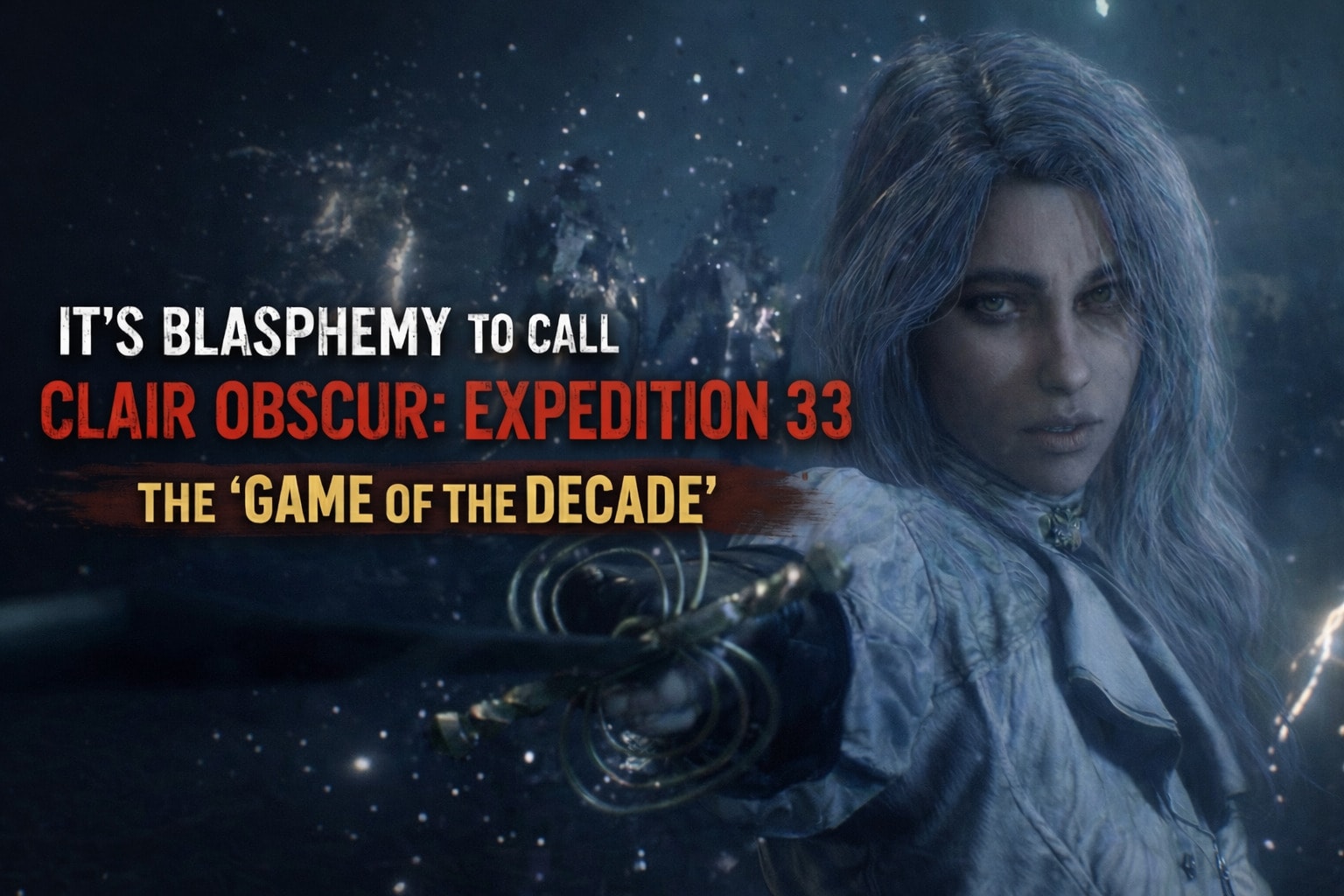
We all watched a single project from a French studio sweep nine categories at The Game Awards, setting an all-time record and proving that a massive budget isn't a prerequisite for greatness.
If Sandfall Interactive had told us a few years ago that they were building a game centered on art and painting, set in an alternate-history France with turn-based combat, what would the reaction have been? Probably a polite nod, at best. Yet, somehow, the discourse has spiraled into absurdity. We are now hearing that Expedition 33 is the "best game of the decade," a life-altering experience that supposedly outclasses The Witcher 3 in narrative and eclipses Persona in gameplay.
To be clear: this isn’t a review in the traditional sense. This is a defense of the gaming industry. Because, frankly, Clair Obscur is not the pinnacle of what this medium has to offer—not in narrative, not in mechanics, and certainly not in its overall contribution to the genre.
Narrative ambition and it’s limits
Let’s start with the narrative side—the aspect for which the game receives the most praise. And I’ll say this right away: no, this is not some modern Dostoevsky uncovering the deepest layers of the human soul, nor is the game clearly designed with a strictly mature, adult audience in mind. The themes Expedition 33 explores include grief, trauma, family, and one’s relationship with art—how it can both elevate and damage a person. Listed like this, it sounds impressive, but with even a slightly deeper analysis, it becomes clear that these are themes tackled by many contemporary games.
Like most competent stories, Expedition 33 opens on a fully mysterious note, and act 1 succeeds at three crucial things: it pulls the player in, makes them curious, and—most importantly—makes them care about what’s happening. The problem arises in act 2, where the player is left without meaningful answers for far too long. By the time act 3 arrives and the story finally attempts to reveal the bigger picture, disappointment is almost inevitable.
I’ll avoid judging the overall quality of the story, since that can always be dismissed as subjective. Instead, it’s more useful to focus on the more obvious structural issues. One of the biggest among them is the sheer lack of answers.
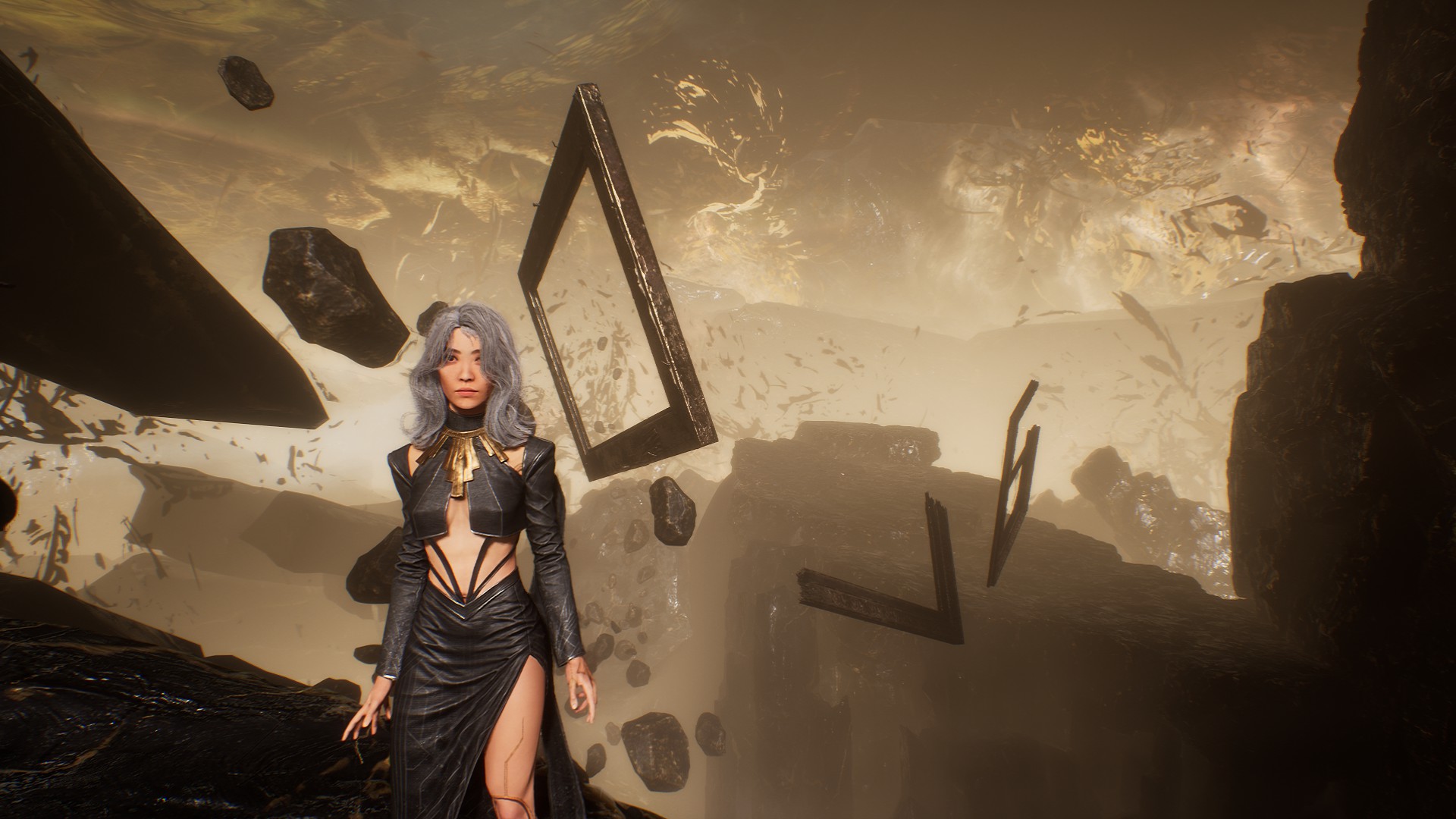
It feels oddly unsatisfying for a project that bases its entire worldbuilding and narrative identity on mystery to leave the player with so many unresolved questions. Who are the Writers? How exactly does the magic that brings these paintings to life work? What is actually happening in the real world? One could argue that this was done intentionally, in service of a potential sequel—but even so, that is far too weak a justification for the meager number of answers the game ultimately provides.
A Cast that says one thing and does another
The next unavoidable narrative segment concerns the characters who—unsurprisingly—are neither particularly well written nor especially complex. I’ll set aside a deeper discussion of dialogue quality, which at its best barely rises above the level of an average teenage anime, and instead focus on the characters’ inconsistencies and the growing rift between what they say and what they actually do.
Take Gustave, for example. While on a mission to save humanity and everyone he cares about, he learns that Esquie is capable of instantly killing a massive creature—one so powerful that it’s unclear whether his entire team could defeat it. His reaction? Essentially, “Yo, that’s crazy.” This is supposedly a discovery of historic, almost mythic importance—something that should immediately shift priorities and prompt serious attempts to enlist Esquie against the Paintress. Instead, the moment is treated with baffling casualness.
There are plenty of moments like this, where character reactions feel oddly hollow or misplaced, but they aren’t the biggest issue. What stands out far more are the actions characters take that simply don’t align with who the story insists they are.
Throughout the game, Maelle is framed almost entirely through her bond with Gustave. Her emotional arc, motivation, and screen time repeatedly emphasize how central he is to her. And yet, when she is finally given the chance to bring someone back to life, she doesn’t choose him. She doesn’t even hesitate or seriously consider it. Instead, she revives Lune and Sciel. While that choice may make sense from a gameplay or player-centric perspective, it collapses completely when viewed through the lens of her character—a character whose identity has been built, for roughly seventy percent of the narrative, around her love for Gustave.
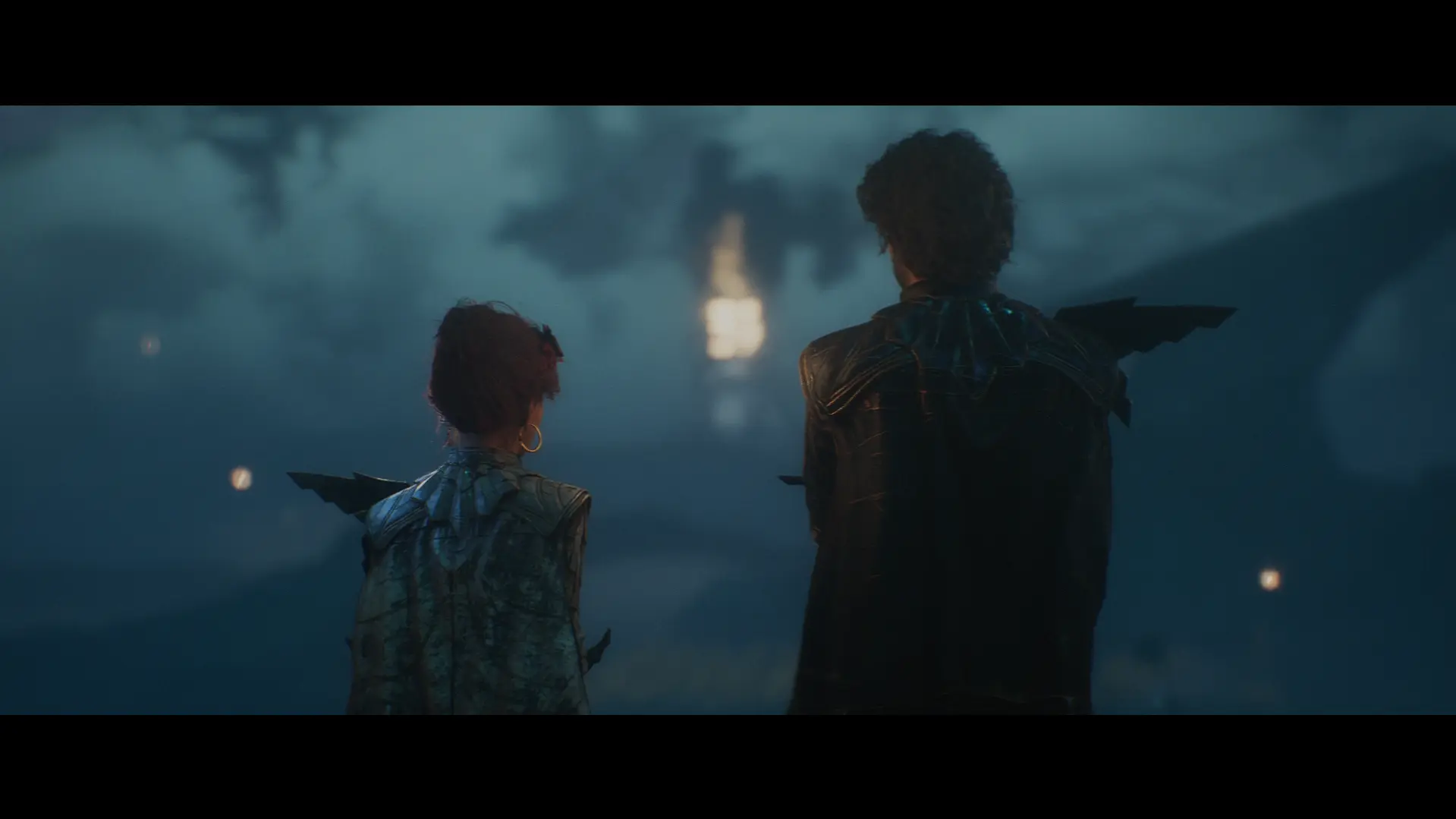
The parry plague - an overglorified Simon says
Let’s be real: the parry is the most overused mechanic in modern gaming. It has become the 2020s equivalent of the early-2000s cover shooter, and we probably have Dark Souls to thank for that obsession. But there’s a key difference: in most games, parrying is just one tool in the shed—a high-risk, high-reward option. In Expedition 33, it’s the entire shed.
The game technically gives you a dodge, but it’s basically dead weight by the end of the first act. By the endgame, your dodge button will be gathering dust. Sandfall Interactive designed this entire project around the parry, which means every boss encounter is eventually reduced to a simple rhythm game. Once you memorize the patterns—which, frankly, isn't hard 95% of the time—the challenge evaporates.
At its core, Expedition 33 plays less like a deep JRPG and more like a series of turn-based quick time events. Even Sekiro, a game famous for being "parry-heavy," offers more tactical flexibility because its action-oriented nature allows for different approaches to the same threat. Expedition 33 traps you in a loop. To make matters worse, the lumina system turns the balance into a joke. The UI becomes a cluttered nightmare because you can stack an unlimited number of them, turning what should be a strategic choice into a chaotic mess.
All of this combined is a death sentence for build variety. On paper, the characters have differences, but when the entire combat loop relies on memorizing reaction-based patterns, your "build" barely matters. Because certain lumina are so laughably superior to others, character progression just turns into a basic exercise in damage scaling. If every fight is solved by the same reaction, why bother with depth?
A world lacking depth
Expedition 33 is a game defined by extreme highs and lows—what can more simply be described as inconsistency. Aside from the music, which truly deserves all the praise it gets, nearly every other aspect feels open to criticism. Visually, the game can be stunning at times, a genuine feast for the eyes, only to suddenly drop into moments where certain elements look unmistakably low-poly. Facial animations occasionally reach near-cinematic quality, yet in other scenes it becomes difficult to read even the most basic emotions on characters’ faces—the first camp scene in act 2 being a clear example.
I don’t particularly mind the touch of French pretentiousness, nor the occasional French word slipping into the dialogue. That, at least, feels thematically appropriate. What does feel unnecessary, however, is the frequent use of words like “f*ck,” which clash with the tone and actively break immersion.
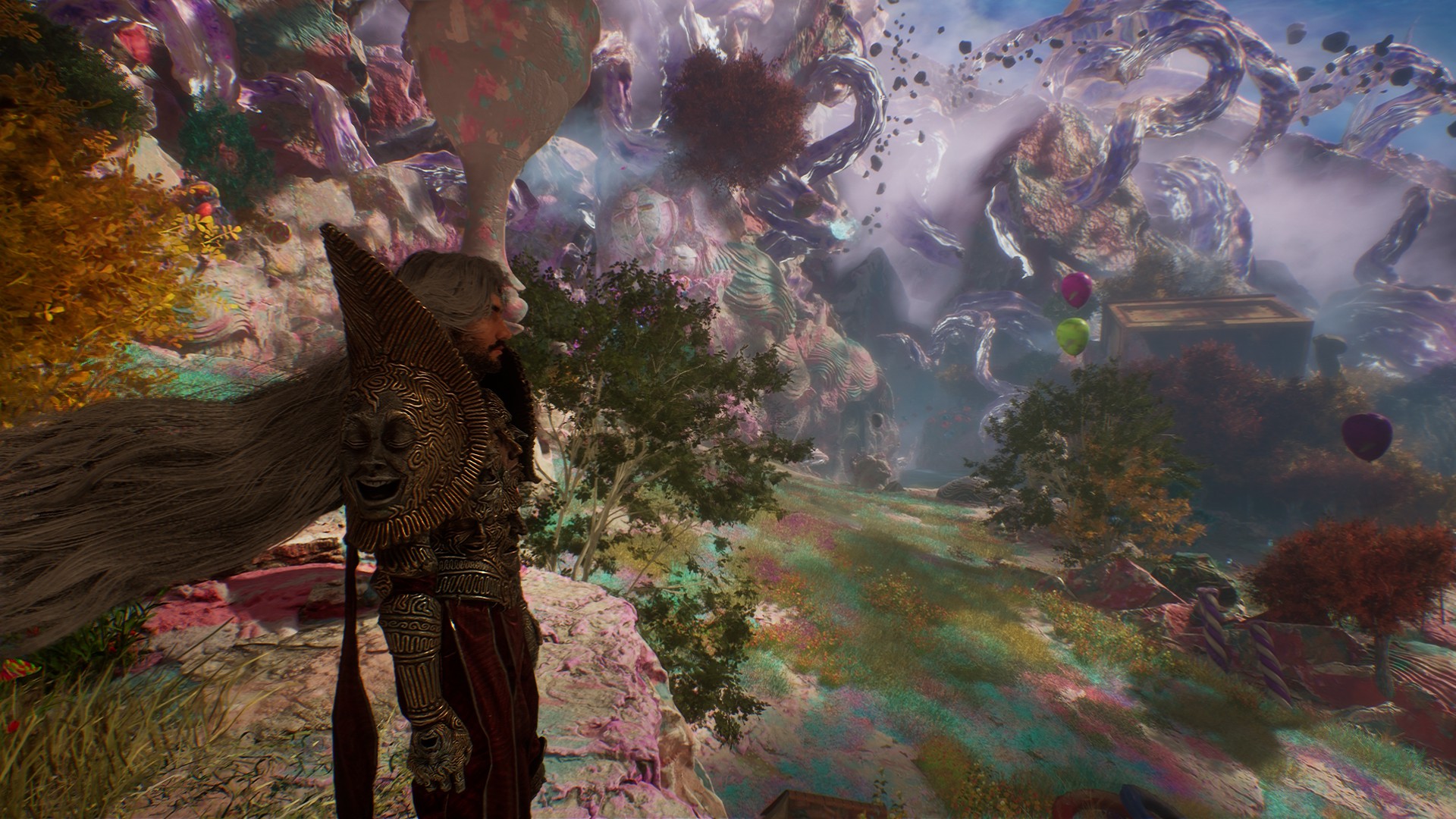
The final aspect worth addressing is world design, which ultimately leaves a lot to be desired. While Expedition 33 isn’t an open-world game in the traditional sense—and clearly never aims to be—it can still best be described as spatially large but functionally shallow. The locations, despite being visually appealing, are highly linear. Any semblance of non-linearity usually boils down to choosing whether to go left or right, only for one of those paths to lead to a dead end with a minor item, forcing you to backtrack and take the other route—the only route that actually moves the game forward.
For those who come after
At the end of the day, Clair Obscur: Expedition 33 is undeniably a very good game, but not a masterpiece, nor a showcase of the absolute peak this industry is capable of reaching. It is a title filled with strong ideas and moments of genuine inspiration, yet burdened by too many inconsistencies to be placed among the medium’s finest without reservation. Much of its reputation seems to be shaped outside the work itself—functioning as a tool within the current online discourse, where it is often used as a symbol or even a weapon in arguments against modern AAA productions, rather than being judged solely on what it actually is.
This text was written both in defense of the gaming industry and as an attempt to highlight shortcomings that could be addressed in Sendfall Studio’s next project—one I am genuinely looking forward to, as Expedition 33 represents a significant step forward toward realizing the full potential of video games as an artistic medium.

Discussion(1)