

Gears of War: E-Day
Gaming

Gears of War: E-Day sales disappoint despite strong reviews

Adi Zeljković
By Adi Zeljković
4 MIN READ
Gaming

“Gears of War: E-Day reportedly sold 230,000 copies while 1.7 million players accessed it through Game Pass, raising questions about Xbox's strategy.…”

Microsoft's return to a more traditional approach to console exclusives under Asha Sharma has faced its first major test with the launch of Gears of War: E-Day. After a period in which the Redmond-based technology giant announced flagship franchises such as Halo and Forza for competing platforms, the latest entry in the iconic Gears of War series skipped PlayStation 5 and arrived as a major exclusive for the Xbox ecosystem.

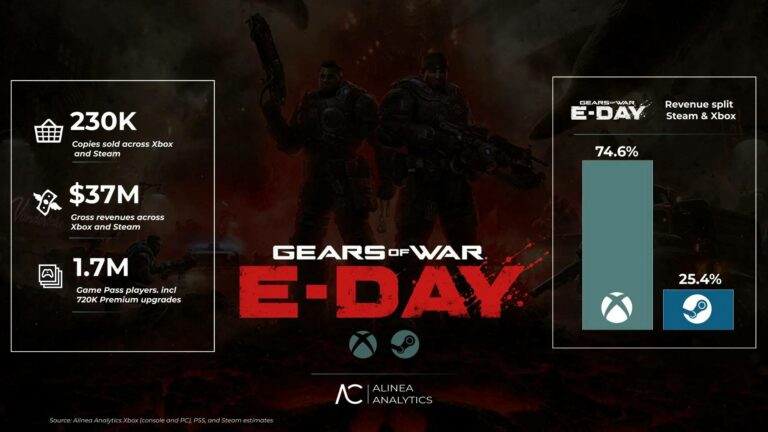
Backed by excellent reviews from critics and players alike, the action-packed release delivered everything fans love about the franchise — a dark atmosphere, outstanding production values, and a return to its roots. On Steam, the game broke the franchise's concurrent player records during early access and ultimately sold approximately 168,000 copies there, out of a total of 230,000 copies sold across all digital storefronts. However, the results on Xbox's home turf have once again reignited one of the most frequently debated questions in the modern gaming industry: Does Game Pass cannibalize traditional premium game sales?

Traditional sales vs. 1.7 million players and the Early Access opportunity

Data from analytics firm Alinea Analytics reveals fascinating insights into player spending and purchasing habits. On Xbox and the Windows Store, Gears of War: E-Day sold a modest 62,000 copies. On the other hand, an impressive 1.7 million players accessed the game through their Game Pass subscriptions.

However, these seemingly disappointing sales figures tell only part of the story. Microsoft implemented a $30 Premium Edition upgrade that allowed Game Pass subscribers to start playing five days before the official release. As many as 722,000 subscribers took advantage of this option, generating substantial revenue. Thanks to this upgrade, the Xbox ecosystem generated $26 million in revenue, accounting for approximately 75% of the game's total launch revenue, while Steam generated $11 million through full-price purchases.

Still, an unavoidable question remains: Would the game's total revenue have been significantly higher if it had been available exclusively as a $70 purchase, without the option to access it through a monthly subscription?

SKWIdEUkA8RG5L9dKQAOvqxnBZH3A0SWUHby4bTU.png

A familiar pattern – from DOOM: The Dark Ages to Indiana Jones

Gears of War: E-Day is not the only example. A similar situation occurred with DOOM: The Dark Ages, where id Software delivered an excellent, high-production-value shooter. Instead of highlighting sales figures, Microsoft emphasized the game's three million players as a measure of success, something that, from a business perspective, often suggests traditional retail sales may have fallen below expectations for a franchise of that scale. A similar situation unfolded with Indiana Jones and the Great Circle, which achieved solid success but undoubtedly lost a significant number of direct purchases due to its availability through the subscription service.

The rare exceptions that appear less affected by this model are generally games such as Forza Horizon 6, whose value comes from long-term multiplayer engagement and regularly returning players, unlike story-driven adventures that most players complete and then move on from.

Should Xbox change its Strategy for its biggest franchises?

With subscription service growth stagnating and direct revenue from major releases declining, discussions are intensifying over whether Xbox should modify its Day One release strategy. Analysts and some industry observers have suggested adopting a model similar to Sony's approach with PlayStation Plus — major first-party titles would launch at full price, driving console sales and maximizing profits, before arriving on the subscription service a year or two later.

With Xbox's hardware division under constant pressure over sales performance, its upcoming system, codenamed Project Helix, reportedly expected in late 2027 (although we believe it will arrive later), will need compelling reasons for consumers to buy it. Smaller and more original games without established fan bases still benefit greatly from launching on Game Pass, as the service provides them with much-needed visibility. However, for major franchises such as Halo, Fable, DOOM, and Gears of War, Day One subscription releases could eventually give way to more flexible launch windows in order to preserve the commercial value of projects that cost tens or even hundreds of millions of dollars to develop.

Add TechPlay.gg as a preferred source on Google

See more of our gaming news, reviews and guides when you search for the latest gaming topics.

Stay Connected
Tags:GamingGaming
Share:
Adi Zeljković
The AuthorAdi Zeljković

They say he never sleeps! He lives in the blur between code and screen. While the world rushed through levels, he transcribed the cries of fallen bosses and the whispers of the machine. After 30 years in the digital trenches, his ink is binary. He isn't here to review games—he's here to archive the chronicle of our digital existence.

View Author Page →

Discussion(0)