
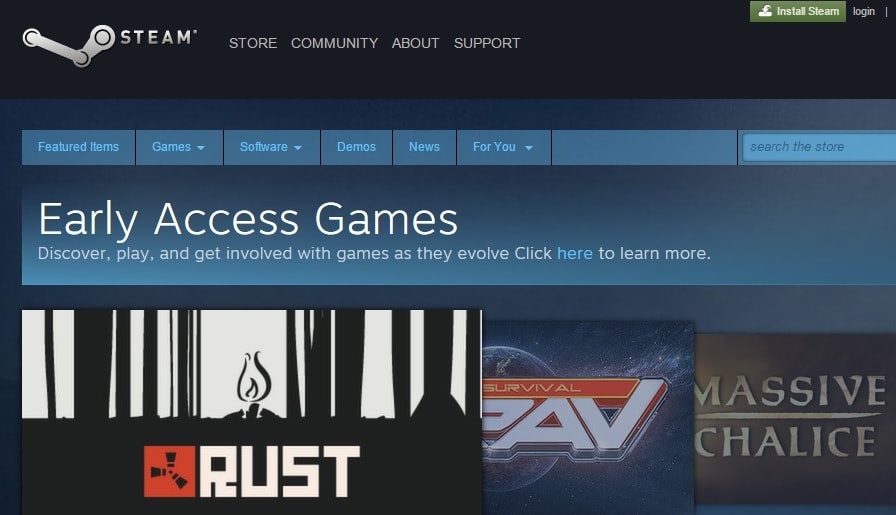

If you spend any time on Steam, you’ve seen the banner: "This Early Access game is not complete and may or may not change further." It’s become the industry standard, but it’s still a double-edged sword that every gamer needs to navigate carefully.
What is early acces exactly?
At its simplest, Early Access is a way for developers to release a game while it’s still being built. It’s not a demo and it’s not a finished product; it’s a development phase that you’re paying to enter.
For developers, especially indie studios, it’s a lifeline. It provides the funding needed to keep the lights on and offers a direct line to player feedback. Instead of guessing what works, they let thousands of people play-test the alpha and beta builds.
Why players buy into early access?
There are several practical reasons to buy a game before its official release. The most obvious is the lower price. Most developers offer the game at a discount during the Early Access phase and increase the price once the 1.0 version launches. For many, this is the cheapest way to own a high-profile title.
Beyond the cost, players get a chance to shape the game’s development. Developers use this period to collect data on bugs, weapon balance, and difficulty spikes.
Successful examples of this model include:
Hades: The developers released regular updates for two years, using player feedback to fine-tune the combat and story progression.
Baldur’s Gate 3: It stayed in Early Access for three years. This allowed the studio to test complex RPG systems and cinematic scenes with millions of players before the full launch.
Darkest Dungeon: This game used the community to balance its high difficulty. The developers adjusted the stress mechanics and permadeath features based on how players actually played the game.
Slay the Spire: Regular weekly updates during its Early Access period helped turn a simple card game into a perfectly balanced genre leader.
For many, the trade-off is simple: you pay less and get to influence the final product, helping indie studios finish projects they couldn't afford to make otherwise.
The risk: Playing the "lesser" version
However, there’s a catch that often gets overlooked: burnout. When you play a great game in early access, you’re experiencing it at its most "broken" and least polished state. You might put 50 hours into a survival game, hit the level cap, and move on to something else. By the time that game officially launches as a polished 1.0 version, you’ve already had your fill. You essentially missed out on the best version of the game because you played it too early.
Then, there’s the risk of "vaporware." Not every developer is Larian Studios. Some games languish in early access for years, never receiving the updates promised on the roadmap, or worse—they get abandoned entirely once the initial sales dry up.
What should you do?
If you’re thinking about pulling the trigger on an Early Access title, ignore the roadmap for a second. Look at the game as it exists today.
Is the current build fun enough to justify the price?
Are you okay with your save files potentially being deleted after an update?
Would you be happy even if the developer never released another patch?
If the answer is yes, then go for it. But if you’re buying a game based on what the developer promises it will become in 2027, you’re not buying a game—you’re making a gamble.
The Verdict
Early Access is great for players who want to be "beta testers" and don't mind a few crashes along the way. But if you want a cohesive, cinematic, and polished experience, your best bet is almost always to wait. Sometimes, the best way to support a game is to let it finish cooking before you sit down to eat.

Discussion(0)