
Cyberpunk 2077 has undergone one of gaming's most remarkable turnarounds, but CD Projekt RED's Paweł Sasko says the success that followed cannot simply erase the scars left by the game's disastrous 2020 launch.
Few stories in modern gaming have seen a turnaround quite like Cyberpunk 2077.
When CD Projekt RED's highly anticipated RPG launched in December 2020, years of extraordinary hype quickly turned into controversy. Severe technical problems, particularly on last-generation consoles, performance issues and a gap between player expectations and the finished product overshadowed what had been one of the industry's biggest releases.
The situation became so serious that the PlayStation version was temporarily removed from the PlayStation Store.
What followed, however, was years of updates, patches and major changes to the game. The release of Update 2.0 and the critically acclaimed Phantom Liberty expansion in 2023 eventually transformed the conversation surrounding Cyberpunk 2077.
But for Paweł Sasko, one of the key developers behind Cyberpunk 2077 and now Associate Game Director on its sequel, the game's later achievements do not erase what happened at launch.
Phantom Liberty's success doesn't erase Cyberpunk 2077's launch
Reflecting on the development of Phantom Liberty and Cyberpunk 2077's long road after its original release, Sasko acknowledged just how important those difficult years became for the studio.
He explained that one of the biggest lessons from the entire Cyberpunk 2077 journey was understanding that a game's technical condition needs to receive just as much attention as its characters, quests and world-building.
A development team can create something it genuinely believes in creatively, Sasko explained, but technical problems can prevent players from ever experiencing that vision in the way its creators intended.
That lesson became especially important during the development of Phantom Liberty, which took place alongside the enormous overhaul that eventually became Cyberpunk 2077 Update 2.0.
CD Projekt RED reworked major parts of the game, including perks, cyberware, police systems, vehicle combat, AI and loot. It was far more than a conventional expansion or collection of bug fixes.
For the developers themselves, the process was also deeply personal.
Sasko has previously described the years spent rebuilding Cyberpunk 2077 and creating Phantom Liberty as something resembling “group therapy” for the team after the difficult reception of the original game.
The studio had to confront what had gone wrong, listen to players and rethink parts of the way it approached development.
The scars of 2020 are still part of Cyberpunk 2077's story
Despite everything the game has achieved since then, Sasko does not believe Phantom Liberty should be used to rewrite the history of Cyberpunk 2077's launch.
“I think that Phantom Liberty doesn't erase that launch of Cyberpunk 2077,” Sasko said while reflecting on the expansion and the studio's journey.
For him, that chapter remains part of CD Projekt RED's history rather than something the studio should simply move past or forget.
When Cyberpunk 2077 received the Best Ongoing Game award at The Game Awards 2023, Sasko said he thought about the developers who continued working on the game after launch, as well as the players who stayed, returned later or decided to give the game another chance.
It is a very different position from where CD Projekt RED found itself at the end of 2020.
Cyberpunk 2077 has now sold more than 40 million copies, while Phantom Liberty has surpassed 15 million copies sold. Nearly six years after its original launch, the game remains commercially successful and continues to reach new platforms and audiences.
From technical disaster to graphics showcase
Cyberpunk 2077's evolution has also extended far beyond fixing bugs.
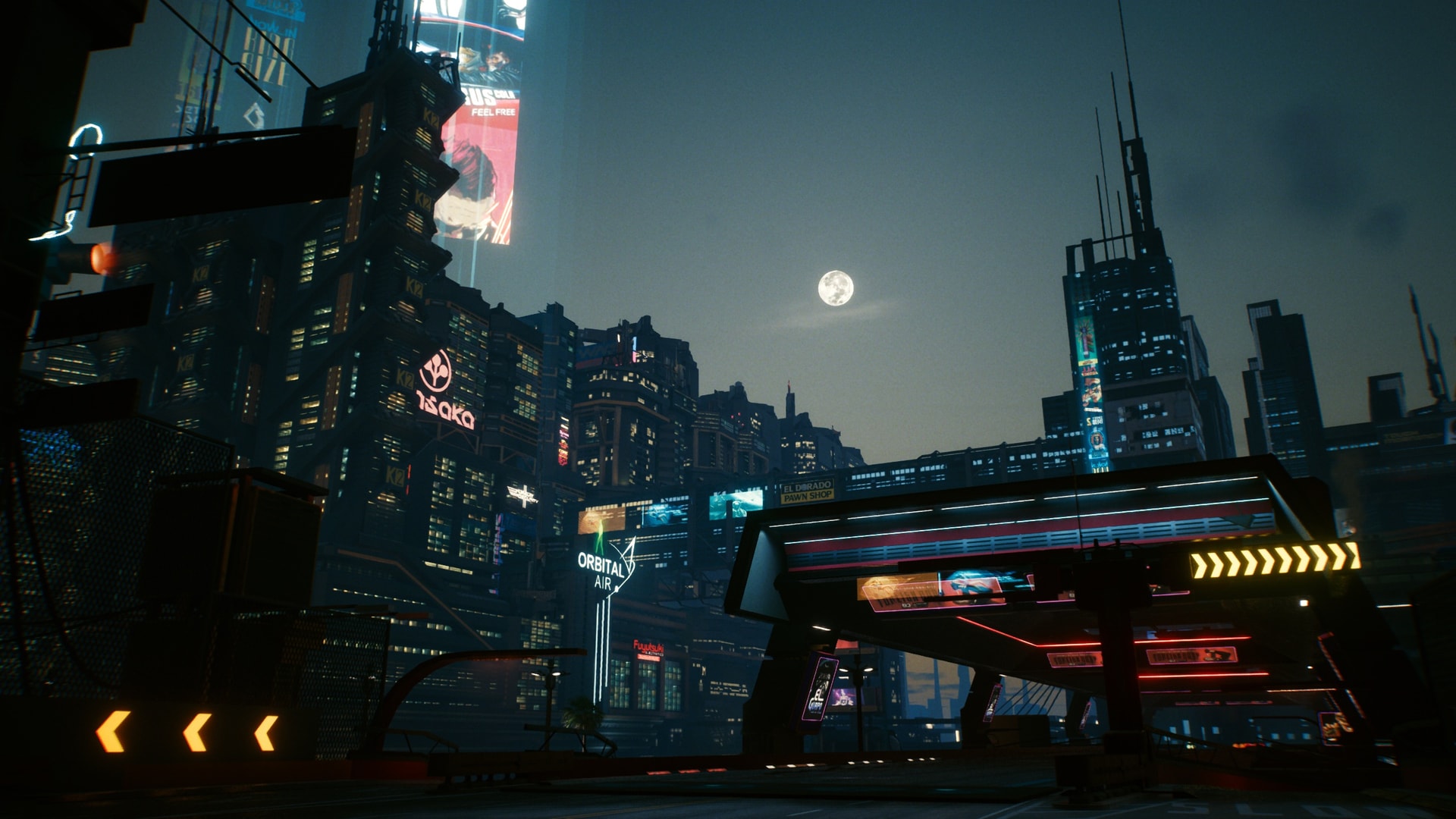
Over the years, CD Projekt RED has continued introducing some of the most demanding graphics technologies available on PC. Features such as ray tracing, path tracing and successive generations of NVIDIA DLSS have helped turn Night City into one of the most recognizable showcases for high-end PC graphics.
The contrast with the situation in December 2020 is difficult to ignore.
Cyberpunk 2077 went from being widely associated with technical problems to becoming a game regularly used to demonstrate what modern gaming hardware can achieve.
However, Sasko's comments make it clear that CD Projekt RED does not consider the turnaround an excuse to forget how the story began.
For the studio, those mistakes appear to have become lessons that will influence what comes next.
CD Projekt RED is already working on Cyberpunk 2, and the experience of rebuilding Cyberpunk 2077 may ultimately prove just as important to the sequel as the successes that followed.
Cyberpunk 2077's comeback is undoubtedly remarkable. But perhaps the more important lesson for CD Projekt RED is that earning back players' trust does not mean pretending it was never lost in the first place.

Discussion(0)