
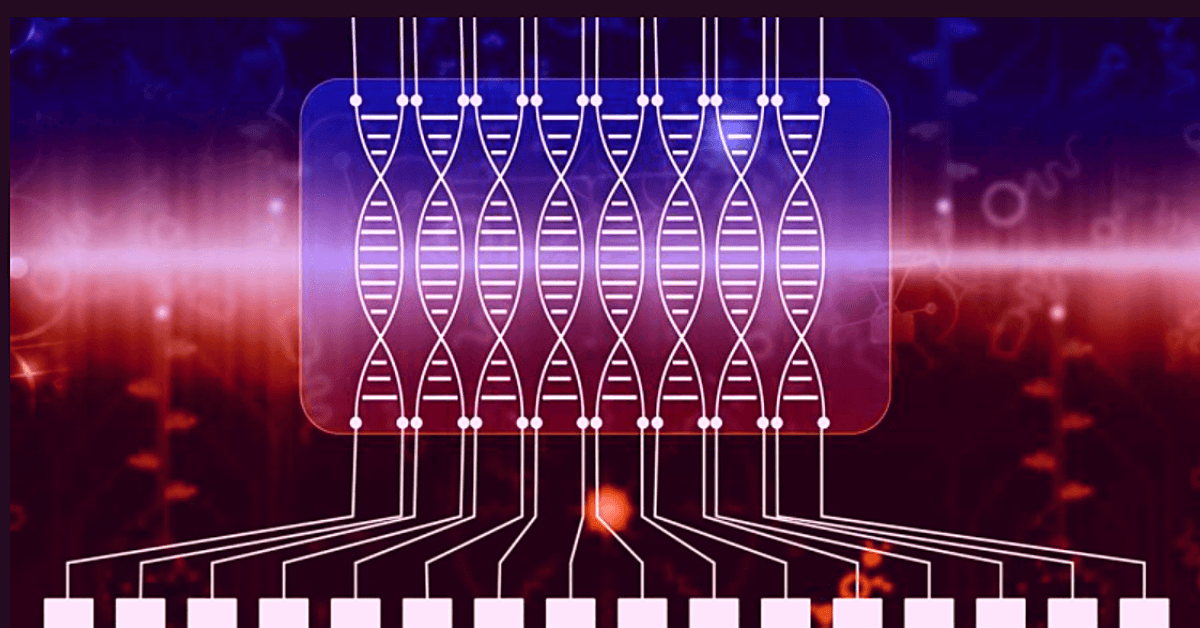
A team of researchers at Maynooth University in Ireland has developed a molecular DNA computer capable of performing complex mathematical operations, including 100-bit calculations, without using electricity.
The system was described on September 16 in the journal Nature and has been named the Scaffolded DNA Computer, or SDC.
According to the researchers, it is one of the most sophisticated and fastest molecular computers developed to date, with potential applications ranging from long-term data storage and energy-efficient computing to, eventually, molecular systems capable of operating inside living cells.
The computer was built using a technique known as DNA origami. With the help of specialized software, researchers designed a single long DNA strand along with hundreds of shorter, specially synthesized DNA "staples." These were then placed in a test tube containing a small amount of water and salt.
After the mixture was heated and cooled, the strands spontaneously assembled into a highly organized microscopic computational grid.
Within this structure, the long DNA strand acts as a scaffold, providing the framework that allows the system to execute molecular programs.
During testing, the SDC successfully completed 10 different molecular programs, including complex 100-bit calculations.
Researchers say the approach could pave the way for future computing systems that consume significantly less energy than conventional electronics, while also opening new possibilities for molecular-scale computing and data storage.

Discussion(0)