
How much electricity will the development of artificial intelligence require? Can the power grid keep pace with the rapid growth of renewable energy, and where do battery storage systems fit into that equation?
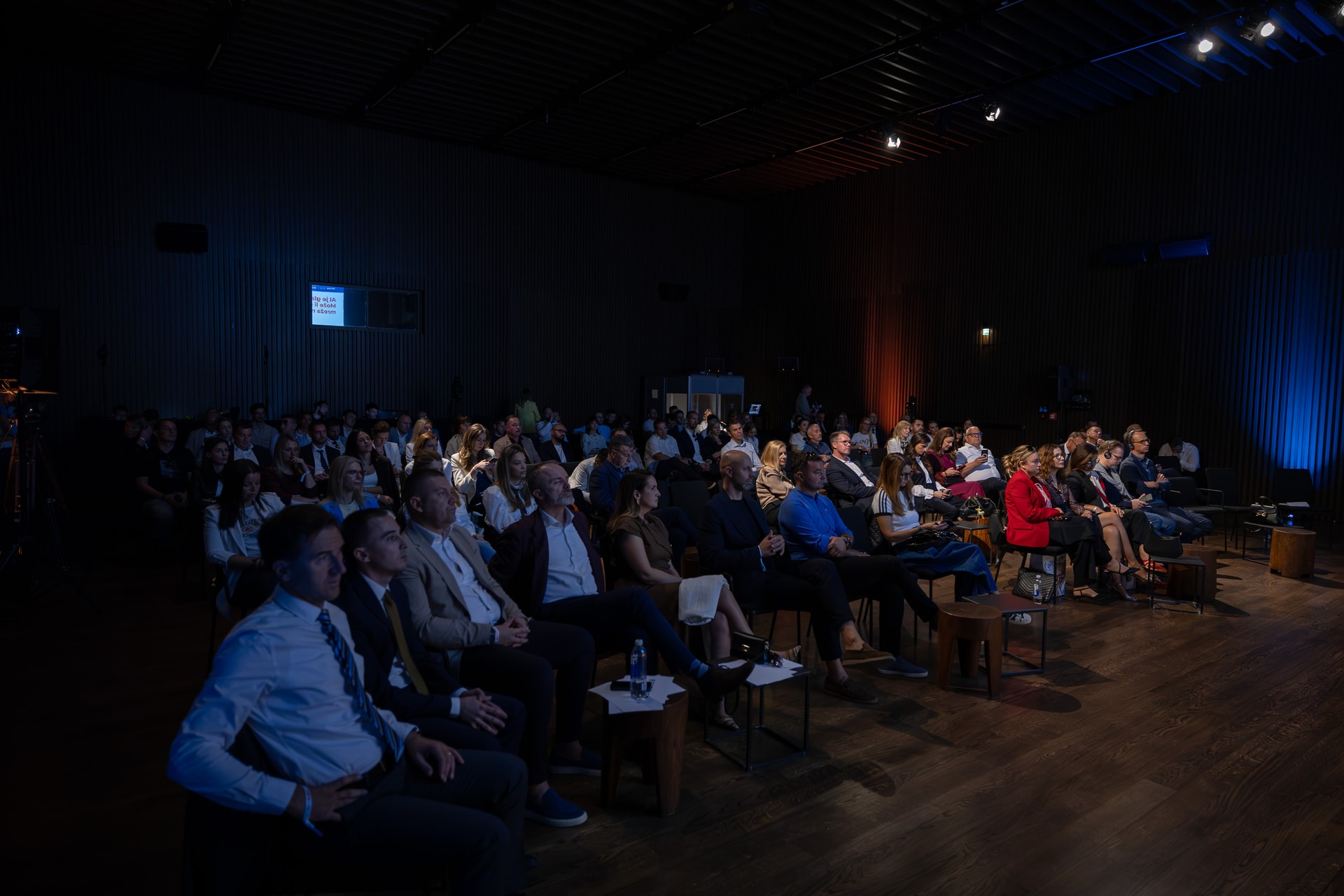
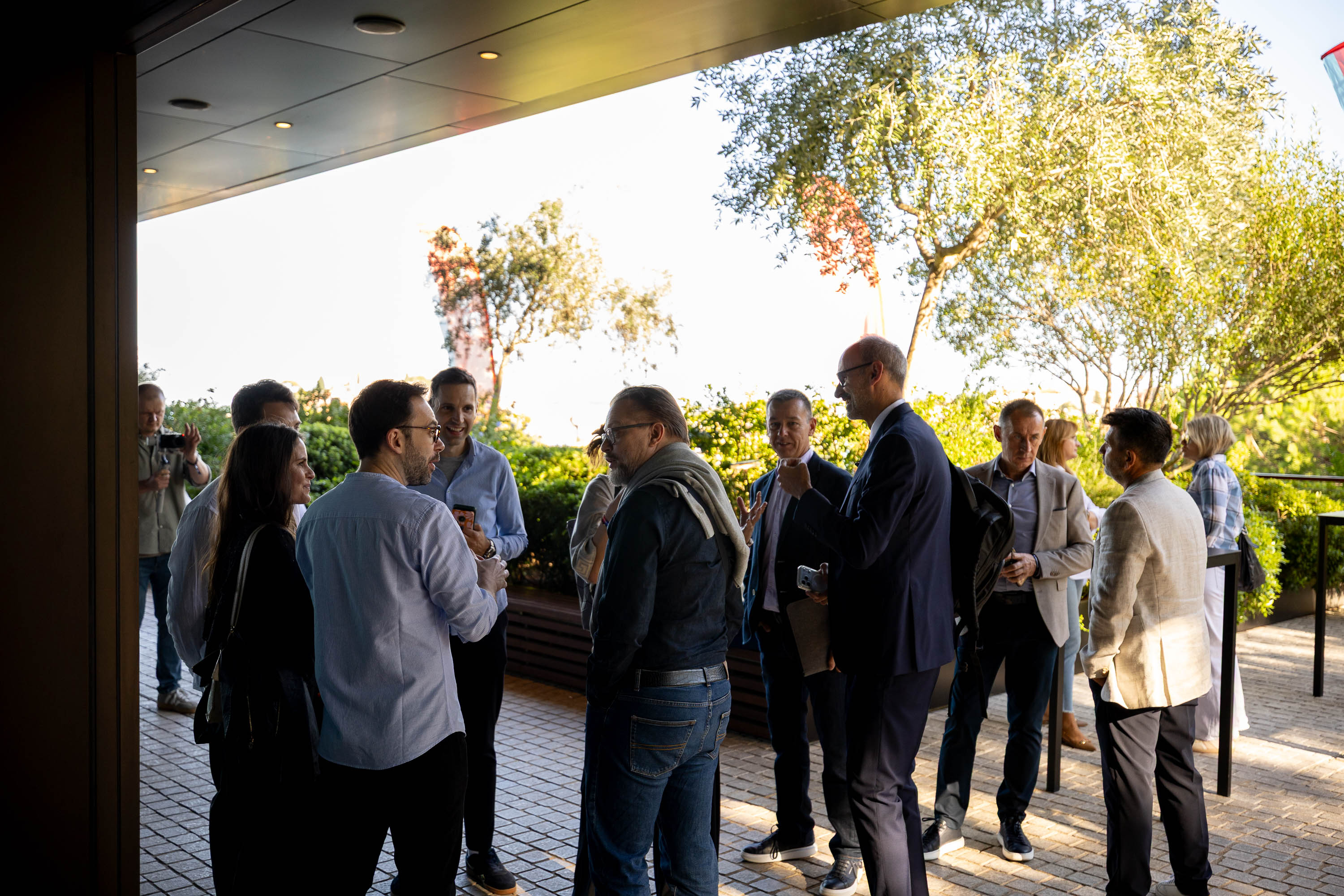
These were among the key questions discussed at the second edition of Energy.Weekend poweredUP by E.ON, held at the Grand Park Hotel in Rovinj. The discussions focused on energy supply reliability, business costs, and the investments required to support the ongoing energy transition.
The festival was opened by Vladimir Sabo, Program Director of Energy.Weekend and Director of E.ON Energy Infrastructure Solutions (EIS) for Croatia and Slovenia, alongside Andreas Rörig, Chairman of the Management Board of E.ON Croatia.
“Energy must become a topic that we, as a society, discuss openly and educate ourselves about, particularly in the context of global changes and the growing importance of a reliable energy supply,” Rörig said.
Can the Power Grid Keep Up With Artificial Intelligence?
The growth of data traffic and artificial intelligence is driving increased demand for energy.
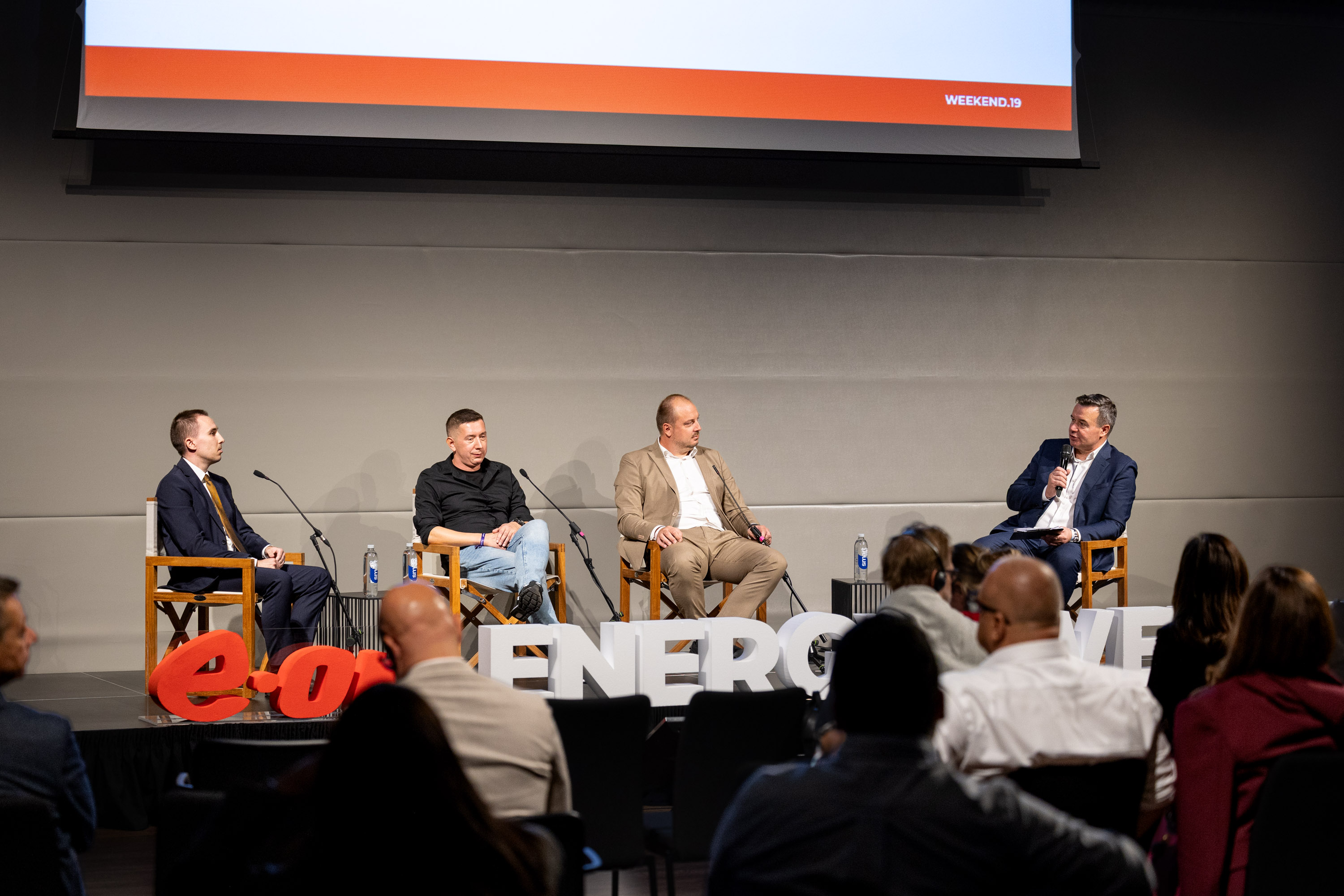
During the panel “AI Is Hungry. Can the Power Grid Feed It?”, speakers discussed how to secure the infrastructure needed for data centers, whose investors increasingly seek locations with sufficient energy capacity or the possibility of being connected to the grid quickly.
Mario Valčić, Director of Smart Infrastructure at Siemens Croatia, emphasized the importance of dialogue with local communities. According to Valčić, the question is not simply whether a data center should be built, but where it should be built and why.
He also pointed out that such projects can encourage further development of the electricity grid while creating opportunities to reuse waste heat for heating purposes.
Marko Dagelić, CEO of Datum, highlighted the imbalance in the global data center race. The United States has twice as many data centers as Europe, while US companies control around 70% of the European cloud market.
Marijana Bačić, Management Board Member at Hrvatski Telekom and Chief Operating Officer for Business Customers, said data traffic on HT’s mobile network increased by 40% during the first eight months of the year. She also noted that modern AI infrastructure requires significantly more power as well as advanced cooling systems.
Another major question was how to increase renewable energy generation while maintaining grid reliability and keeping costs under control.
The issue was discussed during the panel “Power Grid or Freedom? Decentralization vs. Regulation,” moderated by Maja Pokrovac, Managing Director of Renewable Energy Sources of Croatia.
Anton Marušić, Director and Chairman of the Management Board of HEP ODS, warned that it is not economically viable to build electricity grids around the maximum possible level of energy generation. He therefore stressed the importance of battery systems and energy storage located close to where electricity is consumed.
Darjan Budimir, Director of HROTE, argued that decentralization and regulation should not be seen as opposing concepts, emphasizing that clear rules are essential for integrating new technologies into the energy system.
He also pointed to the growing share of renewable energy in the European Union, which increased from 15.9% in 2004 to 47.5% in 2024.
Nikola Vištica, President of the Council of the Croatian Energy Regulatory Agency (HERA), called for stronger cooperation between private investors, system operators and regulators, as well as transparent and predictable rules.
Batteries Are Becoming a Business Tool
Battery energy storage systems can help maintain the balance between energy production and consumption, while also opening new revenue opportunities for their owners.
The topic was discussed during the panel “Flexibility Is the New Currency – BESS and Balancing Markets,” featuring Matija Melnjak, Head of the Electricity Portfolio Department at E.ON Energy, Aleš Koželjnik, Director of KOLEKTOR sETup, and Dino Mileta, Director of Uprise.
“The entire business model is based on a combination of revenue streams,” Melnjak said.
He explained that the profitability of a battery storage system does not depend solely on revenues generated through balancing markets, but also on the requirements of the industrial facility using it and the available options for connecting it to the electricity grid.
Koželjnik emphasized that flexibility has value precisely where and when the energy system needs it.
Melnjak pointed to Bulgaria and Romania as examples of countries experiencing rapid growth in battery storage deployment, adding that Croatia also has significant potential for further development in this area.
The Energy Transformation of a Football Club
A practical example of the energy transition came from Dutch football club Sparta Rotterdam.
Dennis van den Broek, Design Engineer at Essent, and Dave van der Meer, Commercial Director of Sparta Rotterdam, presented a project in which gas- and diesel-powered systems are being replaced with thermal energy storage, heat pumps and solar panels.
The project was developed through a long-term partnership and a financial model that does not rely on subsidies, forming part of the club’s broader strategy and its relationship with the local community.
Energy in the Boardroom
The impact of energy on corporate decision-making was discussed by Zsuzsanna Ortutay, President of the Management Board of INA, Neven Vranković, Vice President for Corporate Activities at Atlantic Grupa, and Iva Rogović Lekić, Executive Director of GrECo Specialty, during the panel “Energy in the Boardroom.”
Ortutay warned that prolonged government intervention can weaken incentives for reducing energy consumption and improving energy efficiency.
She also emphasized the need for more flexible regulation capable of keeping pace with changes in the energy market.
From data centers and electricity grids to battery storage systems and decisions made in corporate boardrooms, the second edition of Energy.Weekend demonstrated just how deeply energy issues have already become embedded in everyday business decision-making.

Discussion(0)