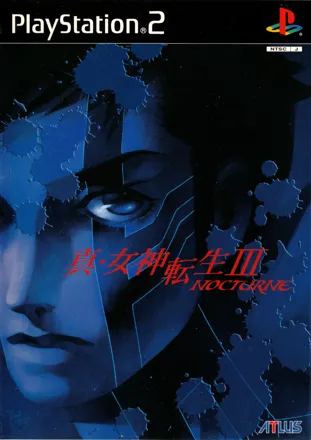
Shin Megami Tensei III: Nocturne
Reader score
7.3/ 10
10 votes
Where to get it
Trailer
About
An ordinary Tokyo high-school student sees a strange dream. A mysterious woman warns him of an upcoming destruction, in which the sins of humanity will be purged. She tells him that her name is Yuko Takao. When the young man comes to his senses, he realizes that he is in the subway, on the way to Yoyogi Park, where he intends to meet his classmates and visit their sick teacher, Yuko Takao, in a hospital. Yoyogi Park appears to be off limits: recent riots have already claimed several victims, and Hikawa, the top executive of Cybers Communication, is missing.
The student heads to the hospital and meets his classmates; however, the hospital is overrun by demons shortly afterwards. After having fought his way to the roof, the studentwitnesses the Conception - a colossal destruction of the city, which destroys the world as we know it. Only the hero, two of his classmates, and a few other humans have survived. The rest of the world is populated by demons, and the hero is transformed into a demon himself. He must communicate with the demonic inhabitants of this horrifying realm, find out what happened to his classmates, and ultimately shape the future of the world.
Shin Megami Tensei III: Nocturne is the third installment in the main series of the Megami Tensei universe. The game retains many traditional elements of the series. Like in the previous entries, the player navigates a character over a large map of a post-apocalyptic city, accessing and exploring complex, maze-like dungeons, which are viewed from a third-person perspective in this installment. Enemy encounters are random, and combat is turn-based. Demon conversation and fusion features from the previous games have been preserved, and function similarly. The player may opt for engaging in a dialogue with demons during the battle, selecting responses and recruiting the demon into the party if it is pleased by them. Demons can be then fused in specific locations to create more powerful ones.
The active party includes four characters, as opposed to six in the previous games in the series, and contains no human characters whatsoever. Being a demon himself, the protagonist does not use weapons; instead of equipping armor, he ingests symbiotic creatures known as Magatama. Various types of Magatama affect the hero's parameters, strengths and weaknesses to particular elements or attack types, and teach him magic and special abilities. When the protagonist levels up, the player can manually increase his parameters. Leveling up also allows the hero to learn the abilities contained within the Magatama. Once an ability is learned, a different Magatama can be equipped, but the player can still retain the mastered ability and use it in battles. The hero can use up to eight different abilities in a battle.
A new feature called "Press Turn" has been added to the combat system. Each demon has certain resistances, immunities, and weaknesses to different elements or attack types. By using an ability of a type that the enemy is weak to, the player not only inflicts extra damage, but also gains an additional turn. These turns can be used in succession by continuously exploiting enemy weaknesses; naturally, enemies can do the same to player-controlled characters. This feature shifts combat challenge to tactical preparations and memorization of enemy properties, and encourages creation of balanced parties with a varied arsenal of abilities.
The Law and Chaos ideologies and alignments are absent from this installment. The Vortex World, in which the hero of the game finds himself, is conceived by its creators as an intermediate period leading to a new world order. The nature of this order must be defined by the few surviving human beings, who alone have the capacity of forming new ideologies. Being a demon, the player character is unable to shape his own ideology; however, he can choose to join forces with one, or oppose all of them. There are many instances during which the player is prompted to make choices, steering the main character towards a certain ideology, eventually branching the storyline and leading to one of the five possible endings.
Ways to play
Modes
Perspective
Expanded into
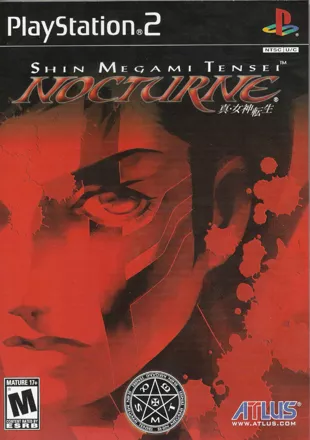
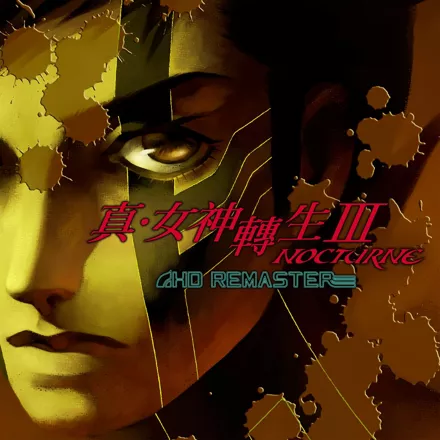
Remastered as
Game details
Media Type
DVD-ROM
Number of Offline Players
1 Player
Box art
Also known as
SMT 3 — Common abbreviation
Reader ratings
Rate this game
Nobody has rated this yet.
Facts
Developer
Publisher
Released
20 February 2003
Series
Shin Megami TenseiPlatforms
Age ratings
Standing
Top 27% by want to play