Hyrule Warriors
by Omega Force, Team NINJA·published by Koei Tecmo Games, Nintendo
Reader score
7.6/ 10
17 votes
Where to get it
Community
Trailer
Gallery
9Screenshots
Key art
About
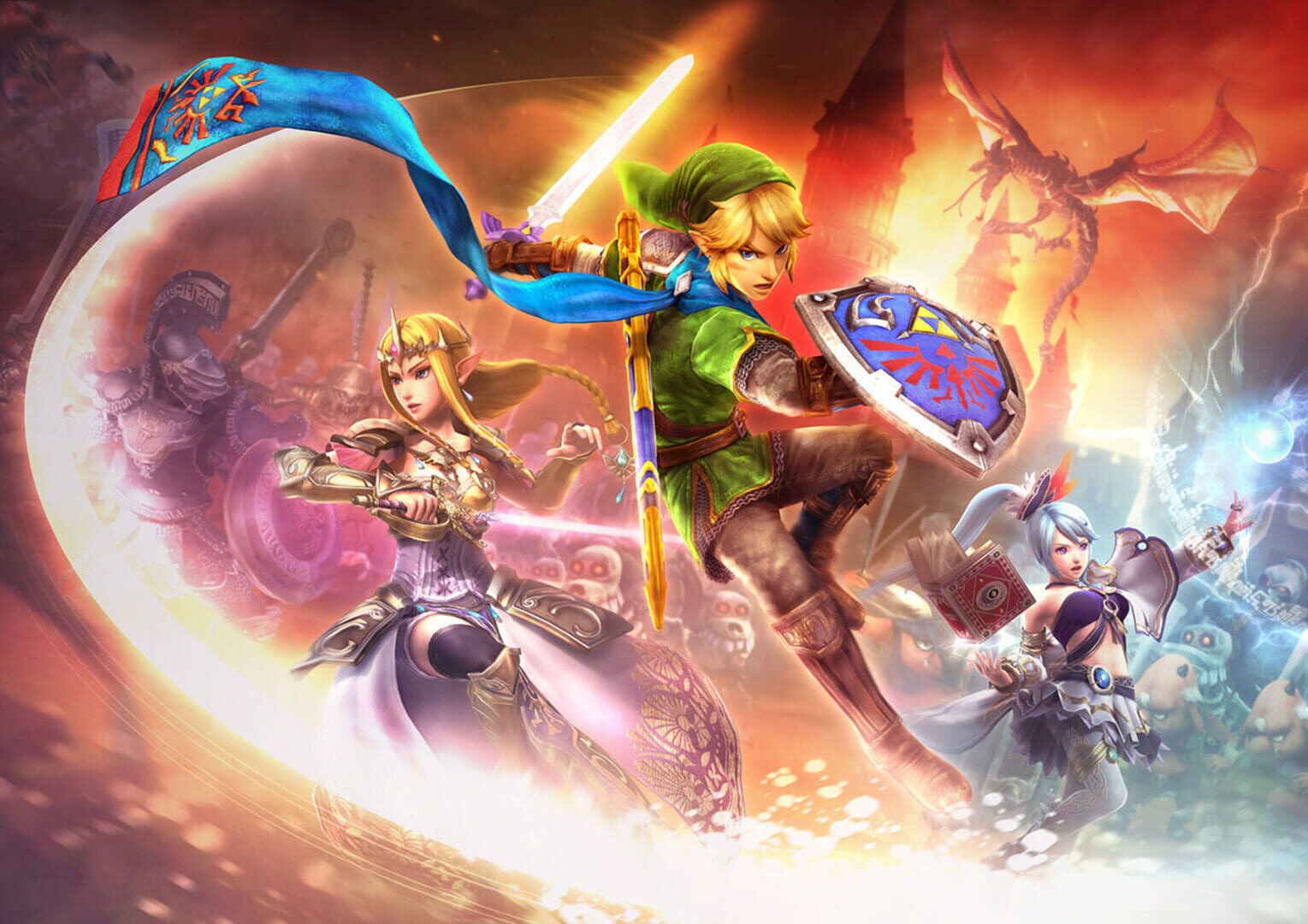
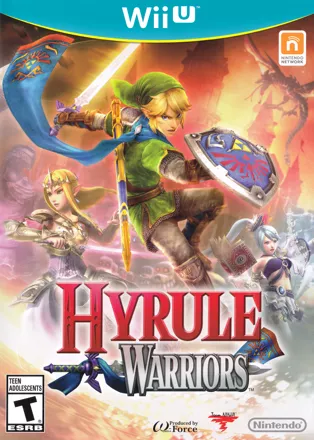
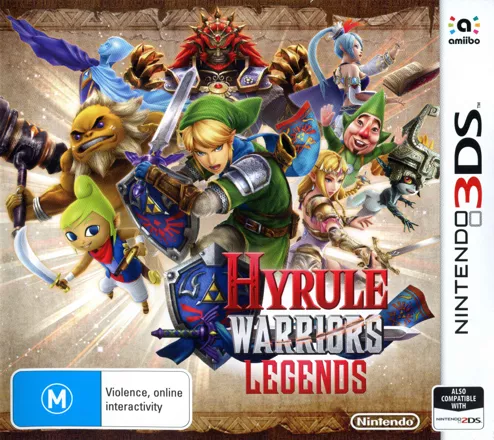
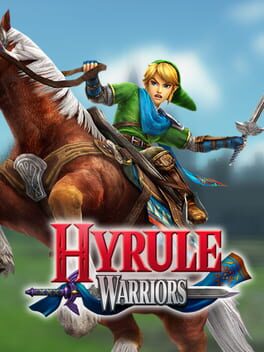
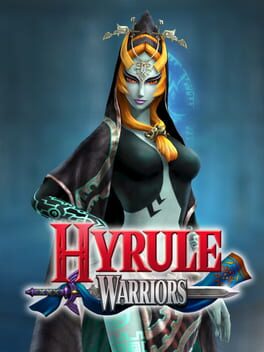
Hyrule Warriors is a hack and slash action game set in the Legend of Zelda universe with gameplay very similar to titles from Koei Tecmo's Warriors franchise, where characters fight in battles against hundreds of enemies at once. The game is set in the Zelda world of Hyrule and you start with Link as a Hylian soldier trainee. The evil Ganondorf was once defeated and his soul was split into four fragments that were hidden in different places. However, his evil presence lingered, allowing him to influence the sorceress Cia into opening portals in time to summon various monsters. At the start of the game, Hyrule Castle is under attack and rookie Link manages to impress on the battlefield. In the confusion, Zelda disappears and Hyrule Castle is captured. Link investigates with Zelda's trustee Impa and is given the trademark green outfit, offered to the hero who can restore the balance of the Triforce.
In the main Legend Mode, Link travels through different environments connected together on a world map, fighting to meet the victory conditions. Progressing through the story also unlocks other playable characters, such as Impa, Sheik, Zelda, Lana, Darunia, or Fi. Fighting is based on fast combos, often attacking multiple enemies at once, while incoming attacks can be avoided through dodge rolls. It is possible to lock the camera onto a single enemy to keep it in view and then cycle between different ones. Defeating enemies adds to a global experience level used to level up and also fills up a yellow attack gauge, which once full enables to unleash a powerful attack that can hit a much larger group of enemies. Picked up magic jars fill up a green magic gauge that allows to activate Focus Spirit when full. Focus Spirit temporarily increases the attack power and speed, reduces knockback damage and provides bonuses when killing many enemies at once. While in Focus Spirit, it is also possible to consume entirely the magic gauge to perform a Focus Spirit Attack, knocking down opponents and exposing their weak points.
Many large opponents have weak points which will display a full weak point gauge above them once exposed. Attacking them repeatedly while in this state will chip away at the gauge and allow to perform a powerful special attack called a Weak Point Smash if the gauge is emptied. Items can be found in treasure chests or collected during battles, and include rupees, bonuses for magic, health and items, weapon fragments, vases to destroy for health, materials and temporary power-ups from enemies. Multiple items can be collected and equipped at once, with the ability to cycle between them quickly. Bombs are among the most important items as they are not only used to deal damage, but also to clear obstacles. The maps are generally very large with multiple areas to control. The main character almost never fights alone and has to keep track of different goals and objectives to move around quickly. These include capturing areas, defeating bosses and protecting certain characters. Not fulfilling those objectives can sometimes lead to an early defeat in the current level, even without dying. They can be tracked either in the Options menu, or on the mini-map in the top right corner. Green arrows appear in the level to help navigation and the fairy Proxi provides tips and suggestions.
Levels often contain multiple keeps that will endlessly spawn reinforcements when under enemy control. By defeating enemies in such areas, its Keep Meter will decrease and cause a Keep Boss to appear when emptied. The enemy loses control of a keep if its boss is defeated, but keeps can be recaptured. Other levels have outposts with a similar mechanic, where defeating their Outpost Captain allows to spawn allied soldiers to help in the ongoing battles. Armies have a morale system, shown through colour, which can be improved when fighting alongside them. There are also 100 Gold Skulltulas in the game that will sometimes appear on the map in sections marked with a spiderweb, only staying for a limited time before fleeing again. Defeating them provides pieces of five different illustrations which can be completed to get rewards such as perks and potions. Rupees are awarded for completing a level and bonus ones can be earned depending on clear time, the number of enemies defeated or the completed objectives.
Before starting a level, a character must be chosen along with weapons of different types, and outfits. Rupees can be spent at various stores in the Bazaar. At the Badge Market, for instance, rupees and materials can be used to craft attack, defense or assist badges with various enchantments. The Training Dojo is used to spend rupees to have characters level up quickly, and the Apothecary provides temporary mixtures and restorative potions for empty bottles. Many skills and badges are tied to the character they are crafted with and these can be transferred afterwards at the Smithy.
Next to the main Legend Mode, there is an Adventure Mode with an 8-bit map similar to the first Zelda game. By completing objectives, new parts of the grid can be unlocked and there are segments where classic Zelda items are used. The third mode is the Free Mode, where players can experiment with all available characters freely. The final game mode is the Challenge Mode, where specific challenges need to be completed. New challenges have been regularly added through further content updates. Many characters, enemies and environments are inspired by earlier Zelda games.
The game supports local cooperative multiplayer, either by playing split-screen or by having one player use the TV while the other one has their own screen on the GamePad. Off-TV play is also supported for single-player games. Certain achievements can be shared in the Miiverse.
Ways to play
Modes
Together
Perspective
Engine
Expanded into
Editions
Pack contents
Languages
6 languages, with audio, subtitles and interface
| Language | audio | subtitles | interface |
|---|---|---|---|
| English | — | ||
| French | — | — | |
| German | — | — | |
| Italian | — | — | |
| Japanese | — | — | |
| Spanish (Spain) | — | — |
Also known as
Zelda Musō — Japanese title
Reader ratings
Rate this game
Nobody has rated this yet.
Facts
Developer
Publisher
Released
14 August 2014
Series
The Legend of ZeldaPlatforms
Age ratings
Standing
Top 8% by visits