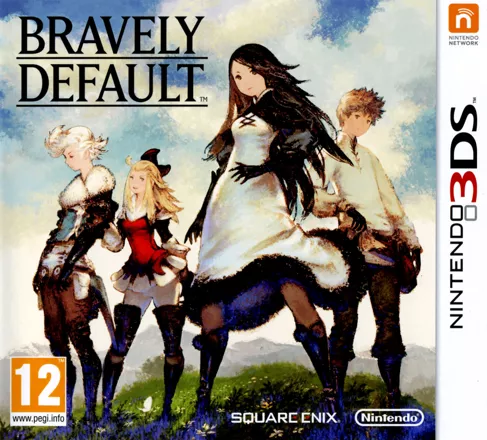
Bravely Default
by Silicon Studio, Square Enix Product Development Division 7·published by Nintendo, Square Enix
Reader score
8.2/ 10
14 votes
How long to beat
only 1 report57h
Rushed
main story only
76h
Normally
story and some extras
93h
Completionist
everything in it
Where to get it
Community
Trailer
Gallery
24Screenshots
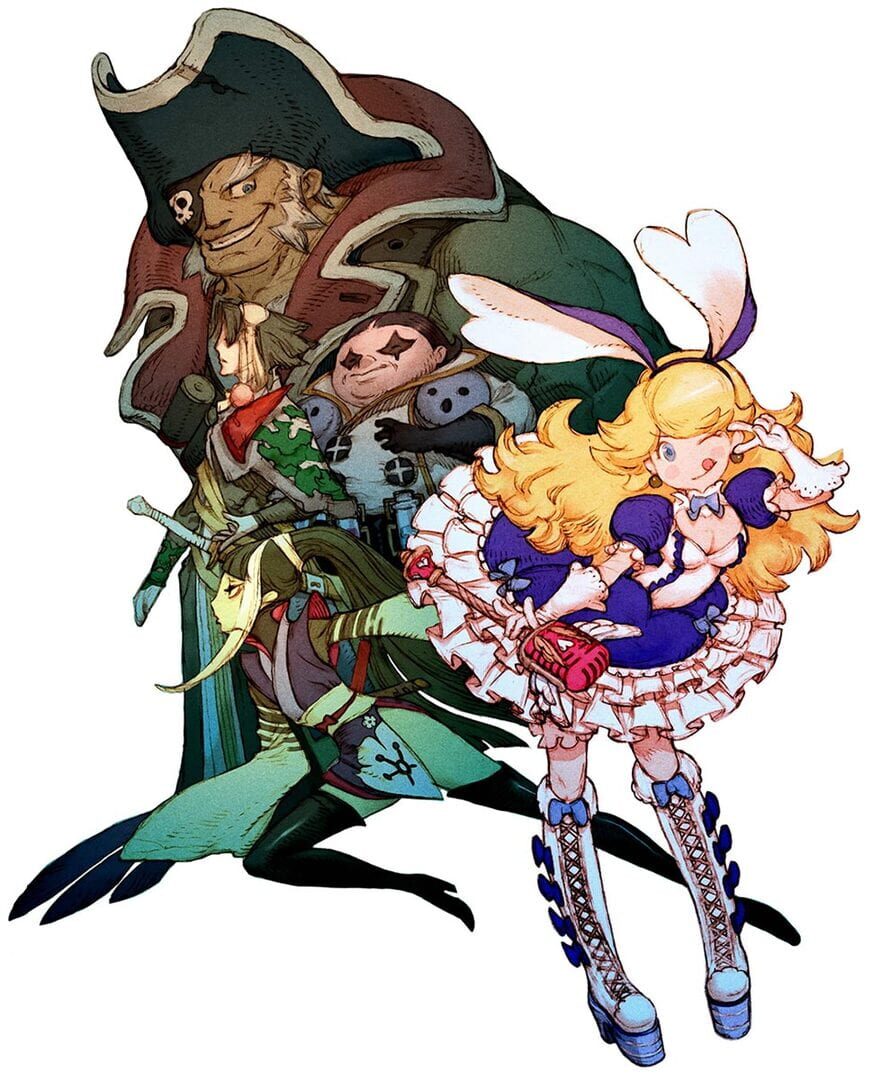
Key art
About
Bravely Default is a role-playing game that follows the adventures of four heroes in the world of Luxendarc, as they journey to find and awaken four elemental crystals: wind, water, fire, and earth. The party consists of Tiz Arrior, a young man whose village was destroyed by a Great Chasm; Agnès Oblige, the Wind Crystal vestal who seeks to awaken all four crystals at the urging of her cryst-fairy companion Airy; Ringabel, a devil-may-care cad with amnesia; and Edea Lee, a former Sky Knight who turned against her country and comrades in order to assist Agnès with her quest.
The game is considered a "traditional" Japanese RPG in that it sticks to classic mechanics such as accumulation of experience points, the equipping of weapons and armor, item usage, and turn-based combat. Bravely Default is heavily influenced by the Final Fantasy series, to the point where various spells and items are named identically to those in Final Fantasy (like Fire, Fira, and Firaga, or Phoenix Downs), and similar job classes. Bravely Default uses a job system where the characters are assigned a job class, and they earn "Job Points" in battle which go toward leveling up that character in that particular job. Each level brings with it new skills for the characters to use; the maximum job level is 14. Each job has a default ability assigned to the character while they hold that job; a secondary ability can also be selected from among the other jobs that have been unlocked. Skills can be equipped cross-job for each character as well. To unlock a job, the player must defeat an antagonist with that job class, either in the main story or through a side-quest.
Combat is, on the surface, a standard turn-based system where the player selects actions from a menu for each character and then each character acts in turn according to their speed stat. Bravely Default distinguishes itself via its use of "Brave Points" (BP), with at least one given to each character every turn. To act, the player must spend a BP for that character. Choosing "Default" from the battle menu lets the selected character bank a point, to be used in future turns or to be spent on actions that may require extra BP. Choosing "Brave" as an option allows the character to act more than once per turn, with a maximum of four actions allowed. The character need not have BP banked to use the "Brave" option; extra turns are essentially bought on credit, paid back by not having character act for that number of future turns. In battle a player may also activate "Bravely Second," which stops time and allows one character four actions (BP is not consumed). In order to use Bravely Second, the player needs "Sleep Points," which are earned by leaving the 3DS system in sleep mode with the game still running. The player earns one point for every six hours the system sleeps, for a maximum of three points stored.
Bravely Default makes extensive use of the StreetPass functionality of the 3DS. Passing players are stored in the game, and can be summoned during battle to perform an action; the type and effectiveness of the action depends on how far the other player has gotten in the game, how much they've leveled up, the strength of their characters, and the skills they've learned. It does not cost anything to summon a friend, but that player cannot be summoned again until they have been tagged again via StreetPass. Bravely Default also features a mini-game to rebuild Tiz's home village of Norende; StreetPass-tagged players are added to the village's population and can be used to help rebuild the businesses in Norende. Rebuilt businesses will give the players free items occasionally. The town also comes under attack from monsters generated by StreetPass visitors; these monsters can be battled at any time and yield generous XP, JP, and items.
The Western versions of Bravely Default are localized from an updated version of the original release, with the update called Bravely Default: For the Sequel in Japan. This version features several enhancements to the original, such as more save slots, auto-battle, the ability to set the random encounter rate, improved interfaces, and a story event viewer.
Ways to play
Modes
Perspective
Expanded from
Editions
Remastered as

Languages
6 languages, with audio, subtitles and interface
| Language | audio | subtitles | interface |
|---|---|---|---|
| English | — | — | |
| French | — | — | |
| German | — | — | |
| Italian | — | — | |
| Japanese | — | — | |
| Spanish (Spain) | — | — |
Also known as
Bravely Default: Flying Fairy — Japanese title
Bravely Default: For the Sequel — Japanese updated title
Reader ratings
Rate this game
Nobody has rated this yet.
Facts
Publisher
Released
6 December 2013
Series
Bravely DefaultPlatforms
Age ratings
Standing
Top 7% by visits